
In the field of construction waste recycling, the selection of appropriate crushing equipment is crucial for the success of a project. This article focuses on the comparison between impact crushers and the combination of jaw crushers and hammer crushers, aiming to provide a comprehensive guide for professionals in environmental engineering and recycled aggregate production lines.
The moisture content and impurity level of construction waste have a significant impact on equipment selection. For instance, if the moisture content is high, it may cause clogging in some crushers. According to industry research, when the moisture content exceeds 15%, the efficiency of traditional jaw crushers may decrease by about 20%. Similarly, a high impurity content can accelerate the wear of crusher components. In a real - world project in a large - scale urban construction waste recycling site, the high impurity content in the waste led to a 30% increase in the replacement frequency of hammer crusher hammers.
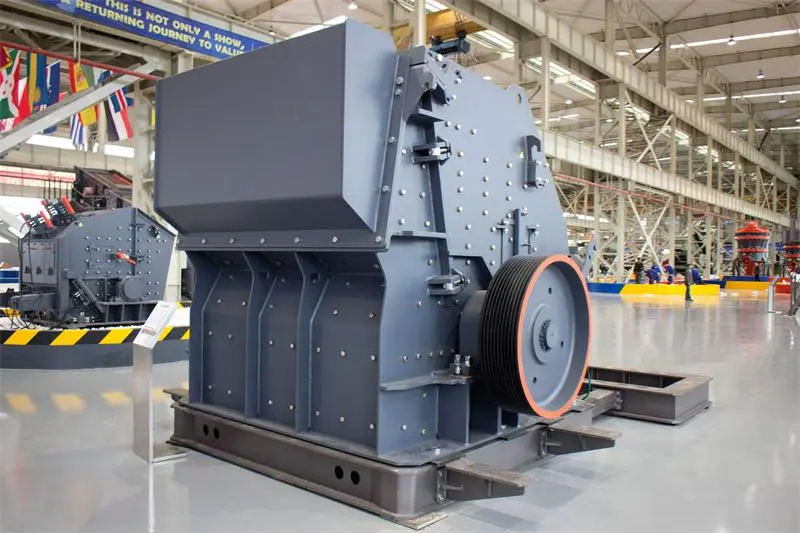
Impact crushers are known for their excellent particle shape control. They can produce more cubical - shaped recycled aggregates, which are highly desirable in high - end construction projects. In terms of energy consumption, they generally consume about 10 - 15 kWh per ton of processed waste. However, their maintenance cost can be relatively high, especially when dealing with hard and abrasive materials. A case study in a European recycling plant showed that the annual maintenance cost of an impact crusher was approximately $50,000.
The combination of jaw crushers and hammer crushers has its own advantages. Jaw crushers are good at primary crushing, with a high reduction ratio. Hammer crushers can further crush the materials to the desired size. This combination is more energy - efficient in some cases, consuming about 8 - 12 kWh per ton. But the particle shape may not be as good as that produced by impact crushers. In a domestic recycling project, the proportion of non - cubical particles in the aggregates produced by this combination was about 25% higher than that of impact crushers.
When selecting crushers, core parameters such as rotor diameter and motor power need to be carefully considered. For example, a larger rotor diameter in an impact crusher can handle larger - sized materials and increase the production capacity. Generally, for a production line with a capacity of 50 - 100 tons per hour, a rotor diameter of 1.2 - 1.5 meters is recommended. The motor power should be matched according to the production capacity and the hardness of the materials. A 200 - 300 kW motor is usually suitable for medium - scale recycling projects.
Space layout and environmental standards are important factors in equipment selection. In a confined space, a more compact crusher combination may be required. Moreover, with the increasing emphasis on environmental protection, crushers with lower dust emissions and noise levels are preferred. For example, some advanced crushers are equipped with dust - suppression systems, which can reduce dust emissions by up to 80%.
In a large - scale construction waste recycling project in Asia, the use of an impact crusher with high - wear - resistant materials significantly improved the equipment's stability. Despite the complex working conditions with high - hardness and abrasive materials, the crusher only needed major maintenance once a year, compared to the previous combination of crushers that required maintenance every three months. This case clearly demonstrates the importance of high - wear - resistant materials in ensuring long - term operation.
In conclusion, choosing the right construction waste crushing equipment requires a comprehensive consideration of various factors. By understanding the characteristics of different crushers, matching the parameters accurately, and taking into account system integration and real - world application cases, professionals can make more informed decisions. To help you further in your equipment selection process, we invite you to download our Construction Waste Crushing Equipment Selection Self - Check List and schedule a technical consultation. Make the smart choice for your project today!
 74
|
74
|
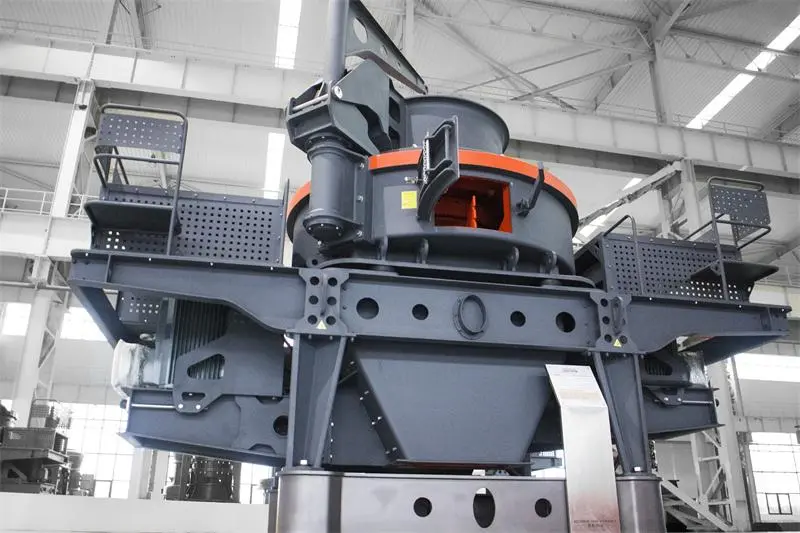
 VSI6X Sand Making Machine
Sand Shaping Equipment
New Favorite in Sand Making Industry
Efficient Low-Cost Sand Making Machine
VSI6X Performance Advantages
VSI6X Application Scenarios
206
|
impact crusher wear parts lifespan extension
high manganese steel hammer selection
complex environment crusher maintenance
sealing system for impact crusher
intelligent lubrication monitoring technology
182
|
Crusher maintenance techniques
Jaw crusher fault diagnosis
C6X jaw crusher maintenance
C6X crusher maintenance plan
High - output crusher maintenance
483
|
jaw crusher feed size optimization
ore particle size effect on crushing efficiency
jaw crusher wear analysis
metal ore crushing process improvement
jaw crusher selection guide
450
|
PEW jaw crusher
non - metallic mineral crushing process
crushing equipment selection
on - site debugging techniques
process bottleneck breakthrough
VSI6X Sand Making Machine
Sand Shaping Equipment
New Favorite in Sand Making Industry
Efficient Low-Cost Sand Making Machine
VSI6X Performance Advantages
VSI6X Application Scenarios
206
|
impact crusher wear parts lifespan extension
high manganese steel hammer selection
complex environment crusher maintenance
sealing system for impact crusher
intelligent lubrication monitoring technology
182
|
Crusher maintenance techniques
Jaw crusher fault diagnosis
C6X jaw crusher maintenance
C6X crusher maintenance plan
High - output crusher maintenance
483
|
jaw crusher feed size optimization
ore particle size effect on crushing efficiency
jaw crusher wear analysis
metal ore crushing process improvement
jaw crusher selection guide
450
|
PEW jaw crusher
non - metallic mineral crushing process
crushing equipment selection
on - site debugging techniques
process bottleneck breakthrough
.jpg?x-oss-process=image/resize,h_800,m_lfit/format,webp)











 Facebook