

In the realm of infrastructure development, crushing plants represent a significant chunk of project investment. Yet, many municipal road projects encounter budget overruns due to inefficient crushing line designs. This article unpacks key methodologies enabling project managers and technical leads to minimize upfront and long-term costs through optimized crushing plant process design.
Consider a city road expansion project that experienced an overrun of 18% on its crushing line budget. The root cause was a misaligned crushing stage configuration resulting in oversize material recirculation and frequent breakdowns—causing costly downtime and excess energy consumption.
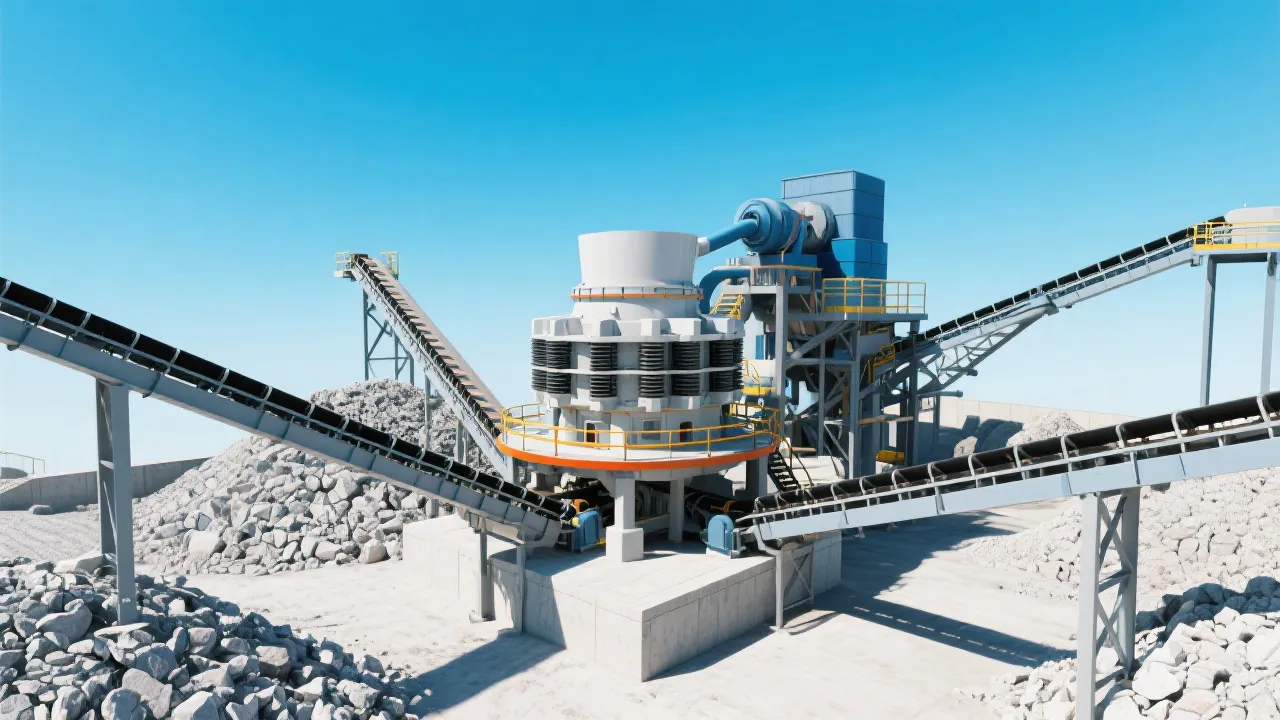
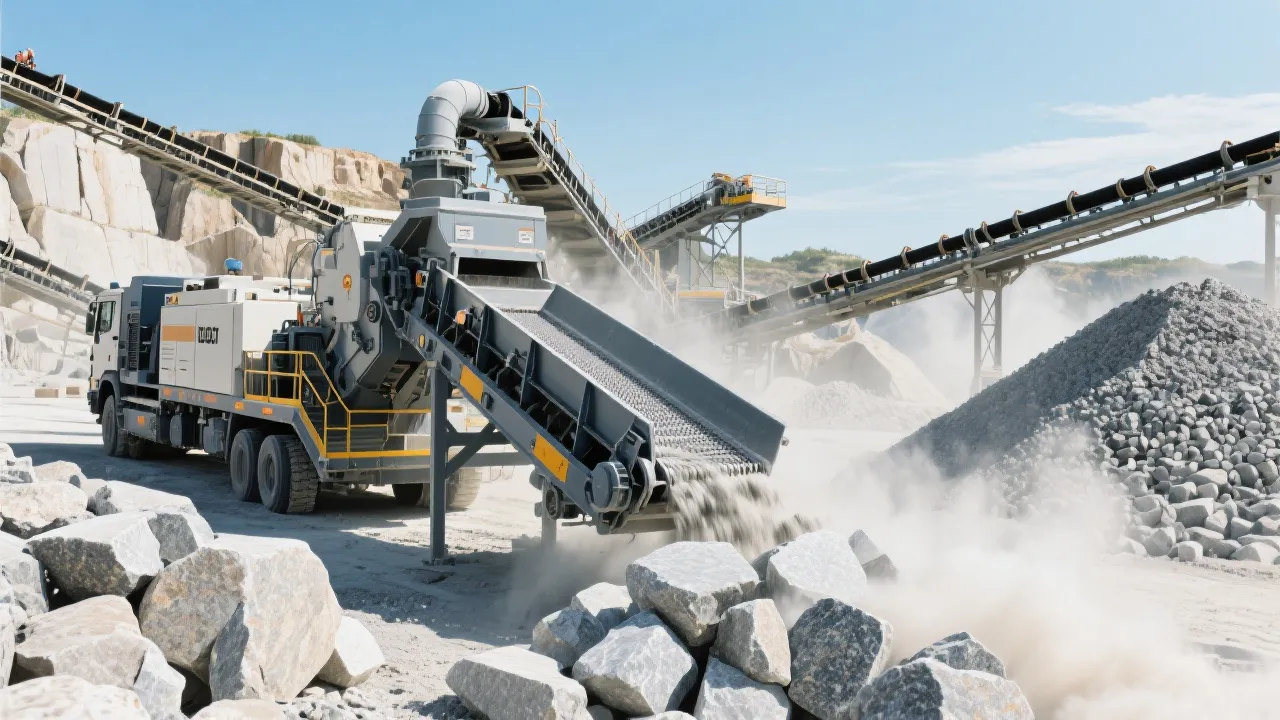
A scientifically composed crushing line usually integrates a jaw crusher for primary size reduction, followed by a cone crusher for secondary crushing, and concludes with an efficient screening system. Aligning equipment throughput to match a targeted capacity range—typically 50 to 1500 tons per hour—ensures smooth material flow and avoids bottlenecks.
The capacity matching coefficient is a critical design parameter to optimize crushing stages. Mismatched capacities can cause oversize recirculation, escalating wear and energy wastage drastically. Correct balancing leads to lower unit production cost by up to 20%, based on project case studies.
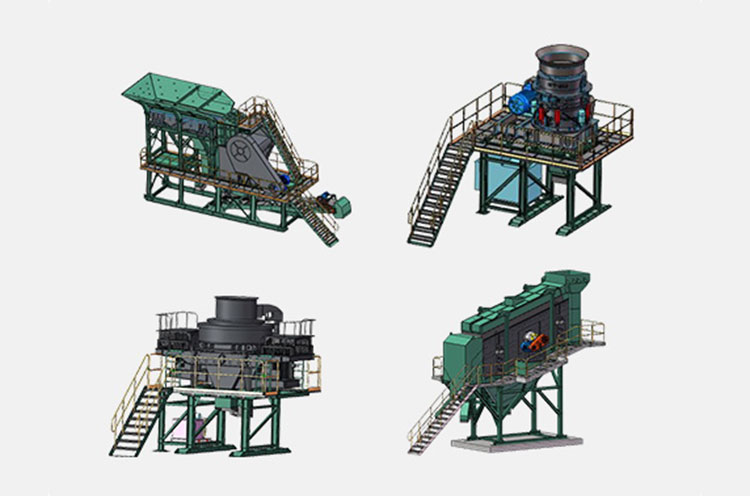
Choosing between a two-stage and three-stage configuration significantly impacts capital expenditure and operational efficiency.
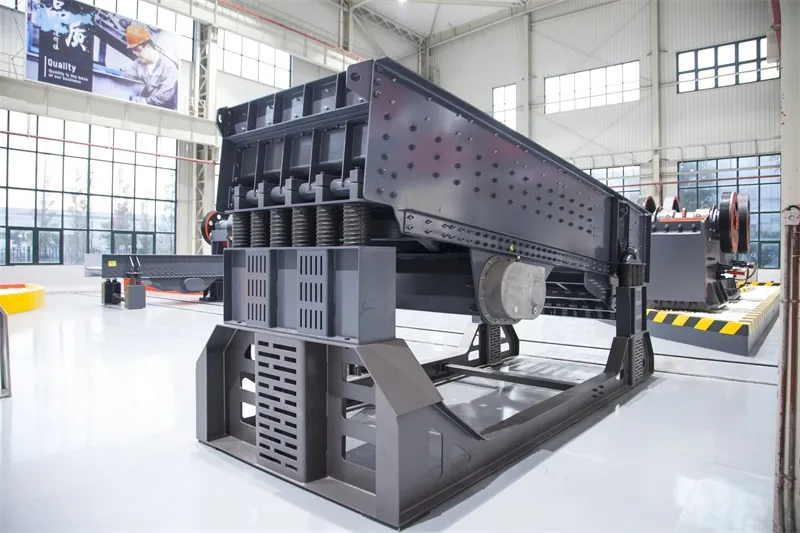
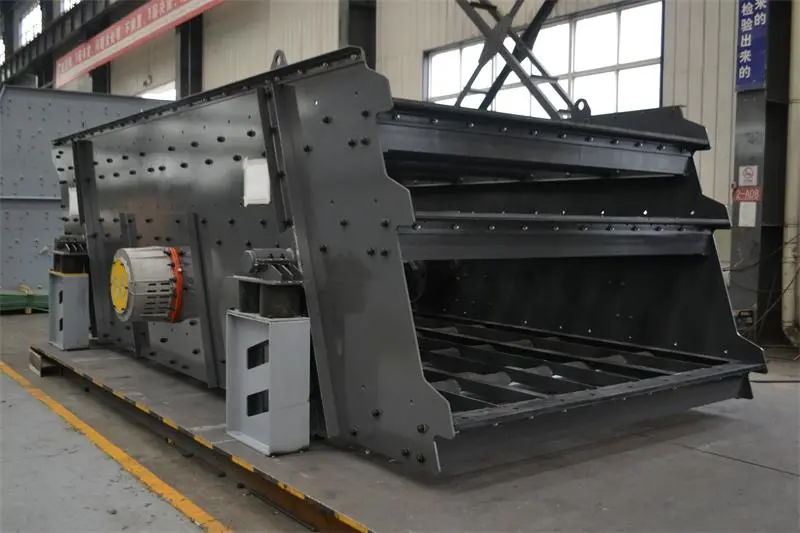
Vibrating screens are indispensable auxiliaries that boost separation efficiency, cutting down on repeated crushing and saving energy costs. Optimized screen mesh size and dual-deck configurations achieve refined material classification, which reduces recirculation rates by up to 30% and extends crusher wear part lifespans.
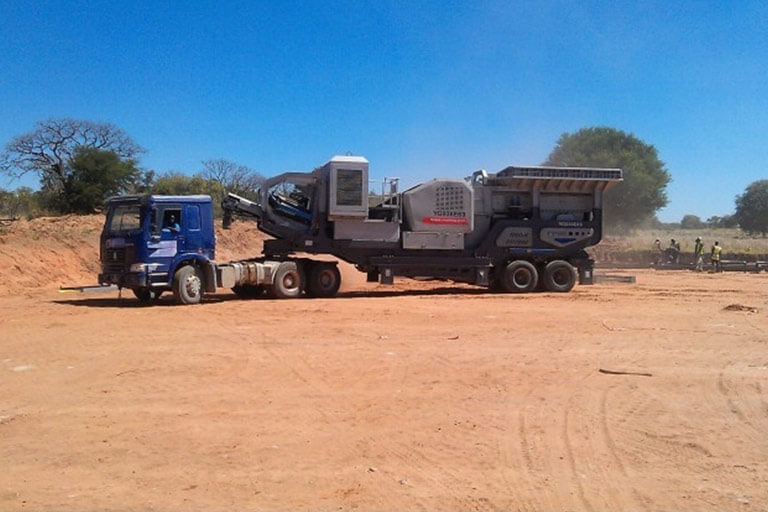
Integrating intelligent control systems into crushing plants is no longer optional. Automated PLC and SCADA platforms enable real-time monitoring, adaptive control of crusher settings, and predictive maintenance.
Projects equipped with such systems reported a decrease in unplanned downtime by 25-35%, while energy consumption dropped by 15–20%. Automated alerts allow proactive interventions, safeguarding equipment health and production consistency.
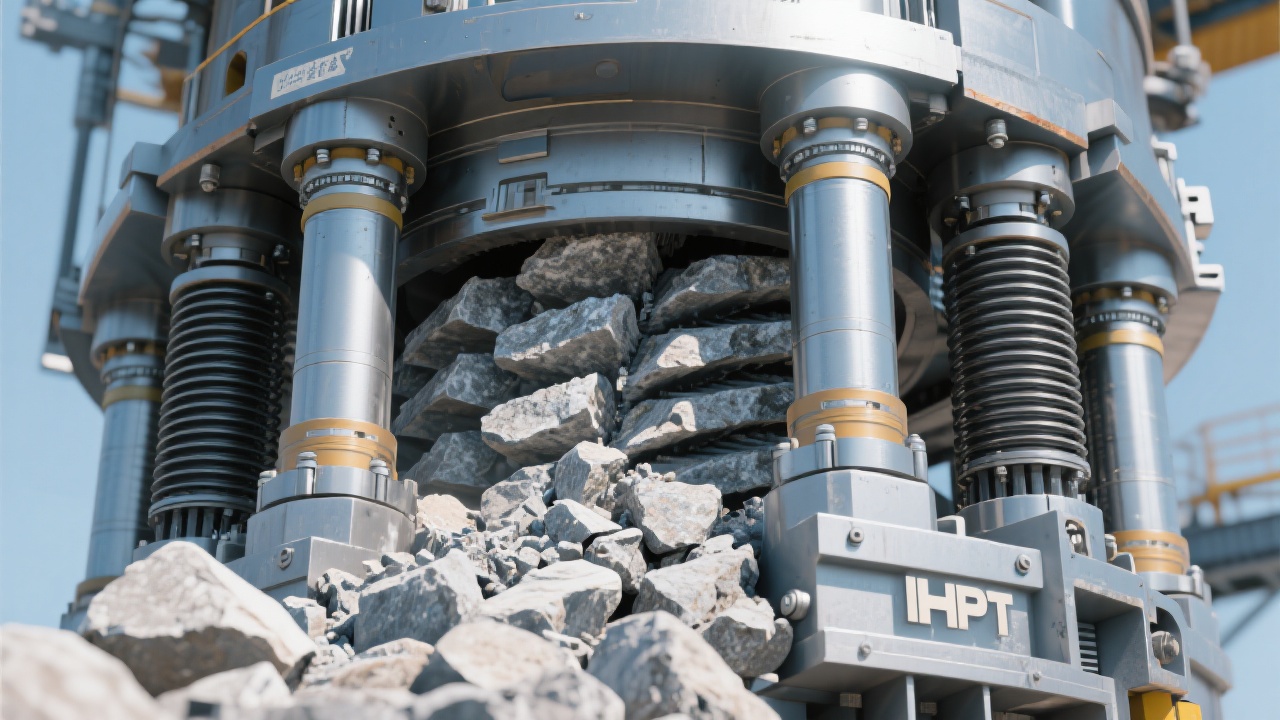
For instance, one infrastructure project involving Zhengzhou Kuanglian Machinery achieved a unit production cost reduction of 18% and an operational downtime decrease by 30% within six months post-implementation. The client feedback highlighted not only cost savings but also substantial schedule adherence improvement—“not just saving money, but stabilizing project progression.”
Key principles to replicate success include:
This methodical approach transforms the crushing line from a mere machinery setup into a strategic asset, delivering measurable cost efficiencies and time savings.
Have you faced cost overruns or inefficiencies in your crushing projects? Join the conversation and share your experiences below!
 41
|
41
|
 impact crusher commissioning
ore crushing equipment selection
ore physical properties
crusher fault diagnosis
high-efficiency impact crusher
64
|
C6X Jaw Crusher
Aggregate Plant Crusher
Modular Crusher
Crusher Maintenance Tips
Efficient Crusher Installation
491
|
single-cylinder hydraulic cone crusher
cone crusher crushing chamber design
ore hardness selection guide
eccentric throw and CSS optimization
hard rock cone crusher cavity
229
|
Impact crusher maintenance
Construction waste crusher
High mud content crusher maintenance
Crusher fault prevention
Zhengzhou Kuanglian PF - 1315
208
|
impact crusher lubrication system
centralized grease lubrication
chemical processing equipment
low maintenance crusher
equipment maintenance best practices
impact crusher commissioning
ore crushing equipment selection
ore physical properties
crusher fault diagnosis
high-efficiency impact crusher
64
|
C6X Jaw Crusher
Aggregate Plant Crusher
Modular Crusher
Crusher Maintenance Tips
Efficient Crusher Installation
491
|
single-cylinder hydraulic cone crusher
cone crusher crushing chamber design
ore hardness selection guide
eccentric throw and CSS optimization
hard rock cone crusher cavity
229
|
Impact crusher maintenance
Construction waste crusher
High mud content crusher maintenance
Crusher fault prevention
Zhengzhou Kuanglian PF - 1315
208
|
impact crusher lubrication system
centralized grease lubrication
chemical processing equipment
low maintenance crusher
equipment maintenance best practices




.jpg?x-oss-process=image/resize,m_fill,h_800,w_800/format,webp)


.jpg?x-oss-process=image/resize,h_800,m_lfit/format,webp)


.jpg?x-oss-process=image/resize,h_800,m_lfit/format,webp)


 Facebook