
In the realm of limestone and coal gangue processing, traditional crushers have long been plagued by inefficiencies and inaccuracies. The conventional method of adjusting the discharge opening of crushers is not only time - consuming but also prone to significant errors. This has a direct impact on the consistency of the particle size of chemical raw materials. According to industry statistics, traditional crushers can have an error rate of up to 15% in particle size control, leading to frequent rework and decreased productivity.
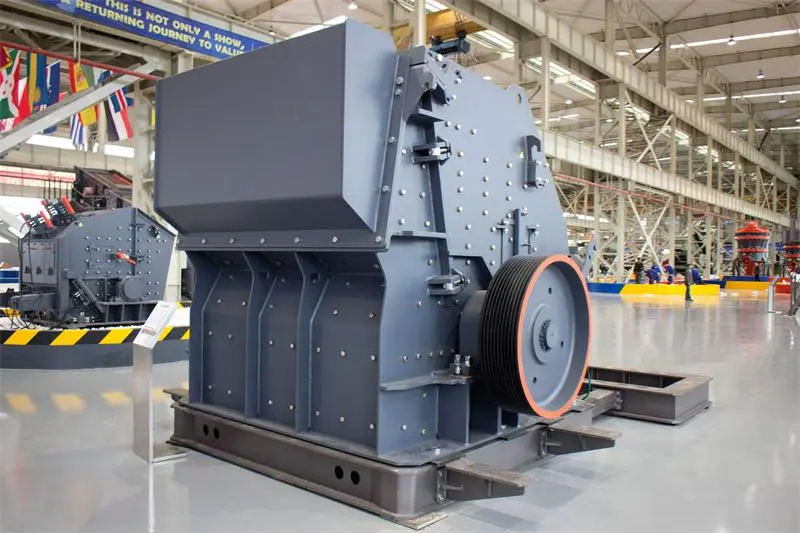
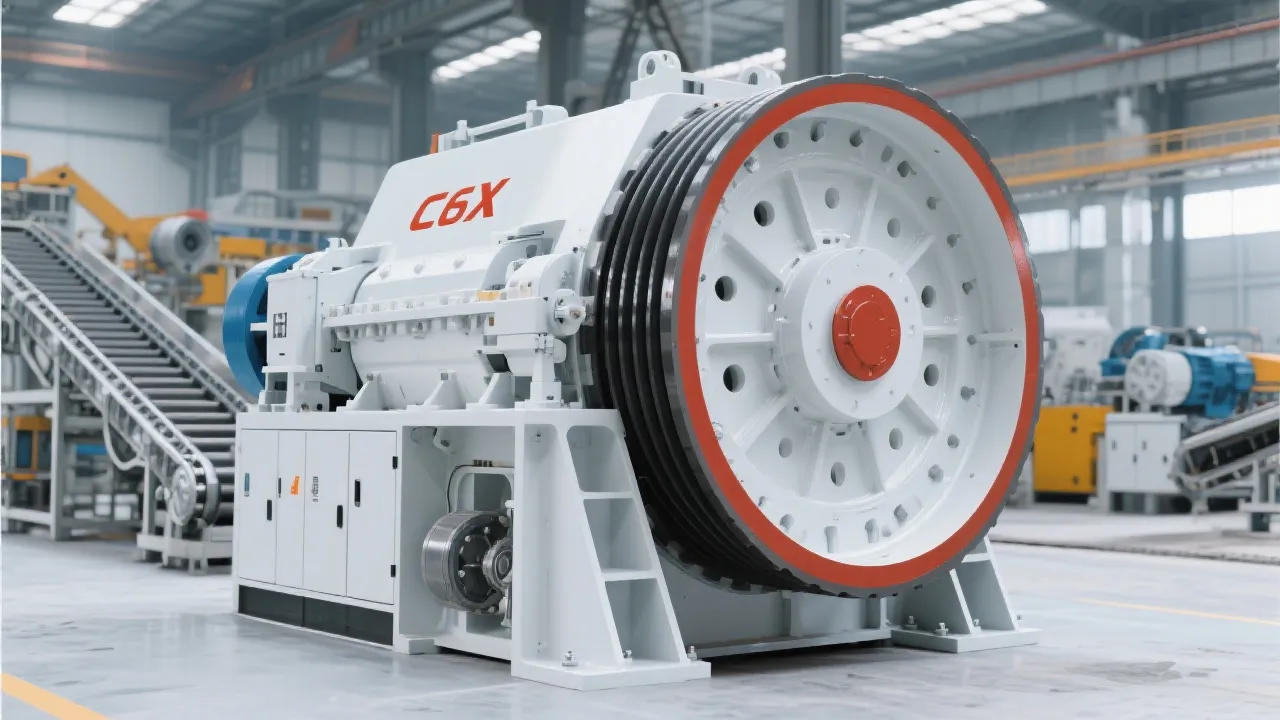
The PFW impact crusher stands out with its double - wedge discharge opening adjustment mechanism. This structure utilizes a combination of hydraulic and mechanical linkage. Hydraulic power provides the force for quick and smooth movement, while the mechanical part ensures precise positioning. Through this hydraulic/mechanical linkage, the crusher can achieve flexible and precise adjustment of the discharge opening. For example, it can make adjustments within a range of 10 - 50mm in just a few minutes, allowing for rapid adaptation to different production requirements.
When processing limestone, the recommended initial setting for the discharge opening is around 20 - 30mm. If the limestone has a higher hardness, a smaller discharge opening may be required to ensure better particle size control. It is important to monitor the power consumption and the particle size of the output during operation. If the power consumption suddenly increases, it may indicate that the discharge opening is too small, and an adjustment should be made accordingly.
In the case of coal gangue, the discharge opening can be initially set at 30 - 40mm. Since coal gangue has a relatively lower density and hardness compared to limestone, a larger opening can be used to improve processing efficiency. However, attention should be paid to the particle size distribution to ensure that it meets the requirements of subsequent processes.
In a typical chemical raw material processing plant, the PFW impact crusher has shown remarkable performance. A detailed debugging flow chart has been developed, which includes steps such as initial parameter setting, trial operation, and fine - tuning. In one case, a chemical plant was able to reduce the rework rate of limestone processing from 12% to less than 3% after adopting the PFW impact crusher. This not only improved the overall production efficiency but also saved a significant amount of production costs.
A: It depends on the production requirements and the characteristics of the raw materials. Generally, for continuous production, a daily inspection and adjustment may be necessary. For intermittent production, it can be adjusted before each production run.
A: Yes, the PFW impact crusher can be adjusted to process a variety of chemical raw materials, such as gypsum and barite. However, the parameter settings need to be adjusted according to the specific properties of the materials.
The PFW impact crusher with its double - wedge structure offers a revolutionary solution for limestone and coal gangue processing. It addresses the long - standing industry pain points and provides a more efficient and precise way of particle size control. If you are looking to enhance the flexibility and stability of your production line, don't miss out on the opportunity to learn more about the PFW impact crusher.
Immediately learn how the PFW impact crusher can inject flexibility and stability into your production line 288
|
288
|
 Impact crusher selection
Ore hardness analysis
Limestone crushing equipment
Granite crusher configuration
Ore crushing technology
47
|
impact crusher adjustment
particle size control techniques
dual wedge structure advantages
crusher discharge port regulation
chemical raw material processing optimization
62
|
Metal ore jaw crusher selection
Crusher feed size matching
Ore particle size and crushing efficiency
Jaw crusher application cases
High - efficiency crushing of mining equipment
357
|
chemical crushing equipment
impact crusher lubrication system
centralized lubrication solution
high-temperature material crusher maintenance
crusher downtime reduction
269
|
impact crusher for construction waste
high-rebar demolition debris processing
PF-1315 crusher optimization
crushed stone screening configuration
building material recycling technology
Impact crusher selection
Ore hardness analysis
Limestone crushing equipment
Granite crusher configuration
Ore crushing technology
47
|
impact crusher adjustment
particle size control techniques
dual wedge structure advantages
crusher discharge port regulation
chemical raw material processing optimization
62
|
Metal ore jaw crusher selection
Crusher feed size matching
Ore particle size and crushing efficiency
Jaw crusher application cases
High - efficiency crushing of mining equipment
357
|
chemical crushing equipment
impact crusher lubrication system
centralized lubrication solution
high-temperature material crusher maintenance
crusher downtime reduction
269
|
impact crusher for construction waste
high-rebar demolition debris processing
PF-1315 crusher optimization
crushed stone screening configuration
building material recycling technology









 Facebook