
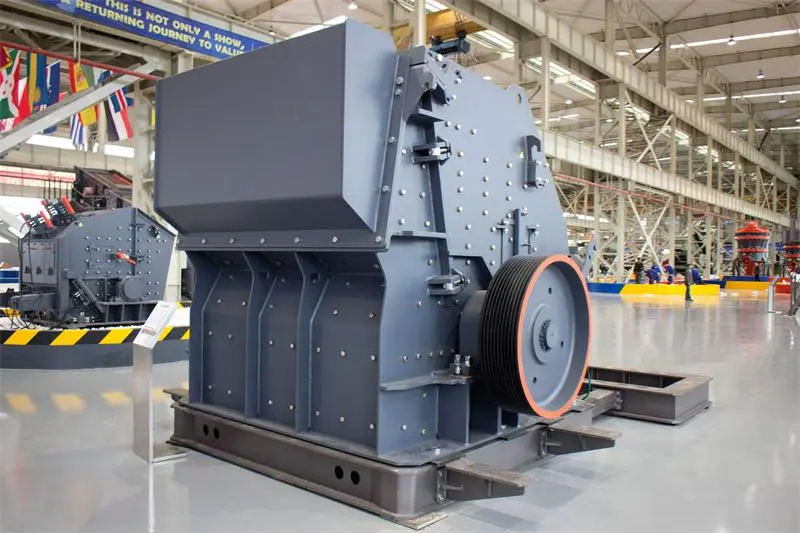
In the face of the challenges in selecting crushing equipment for construction waste recycling projects, this article delves deep into the applicability of impact crushers (such as the PF - 1315) in scenarios like demolition waste, construction site surplus materials, and recycled aggregate production lines. By comparing with the traditional combination of jaw crushers and hammer crushers, we comprehensively demonstrate its advantages in terms of particle shape control, energy consumption ratio, and maintenance cost, with a particular focus on the stability of high - wear - resistant materials in complex working conditions, especially suitable for the treatment of construction waste with high moisture content and numerous impurities.
When it comes to selecting construction waste crushing equipment, many decision - makers fall into common selection traps. These mistakes often lead to a significant increase in operational costs. For example, choosing the wrong equipment can result in excessive energy consumption, frequent maintenance, and poor product quality. Have you ever considered how these selection mistakes might be affecting your project's bottom line?
Different raw materials in construction waste, with varying moisture content and impurity levels, have a profound impact on the performance of crushing equipment. High - moisture materials can cause clogging in the crusher, reducing its efficiency. Meanwhile, materials with a high impurity content can accelerate the wear of key components. For instance, when the moisture content exceeds 15%, the processing capacity of some crushers may decrease by up to 30%.
Let's take a look at the comparison between impact crushers and the traditional jaw crusher + hammer crusher combination. In terms of particle shape control, impact crushers can produce more cubical particles, which are highly desirable in the production of high - quality recycled aggregates. Tests have shown that the proportion of cubical particles produced by impact crushers can reach up to 80%, compared to only 60% for the traditional combination. In terms of energy consumption, impact crushers are more energy - efficient. The measured energy consumption of impact crushers is 23% lower than that of the traditional combination. When it comes to maintenance, the use of high - wear - resistant materials in impact crushers significantly reduces the frequency of component replacement, saving both time and money.
Based on your production capacity requirements, we can recommend core parameters such as rotor diameter and motor power. For a production capacity of 50 - 100 tons per hour, a rotor diameter of 1200 - 1300 mm and a motor power of 132 - 160 kW are usually suitable. However, these parameters need to be adjusted according to the specific characteristics of the raw materials and the production process.
In a real - world construction site, the failure to consider the high impurity content in the waste led to accelerated wear of the hammer heads. This case emphasizes the importance of system - integrated design, including screening, dust removal, and conveying equipment. A well - designed system can improve the overall efficiency of the crushing process and reduce the wear and tear on the crusher.
Are you ready to make a more informed decision in selecting the right construction waste crushing equipment? Get your exclusive equipment selection advice now or book a one - on - one consultation with our engineers.
Click the link below to download our selection self - check list.
 199
|
199
|
 Metal ore crushing
Jaw crusher maintenance
PEW Jaw Crusher
Crusher blockage solutions
Efficient operation of mining equipment
331
|
impact crusher materials
sealing system design
predictive maintenance technology
high manganese steel hammer
condition monitoring systems
499
|
impact crusher screen gap adjustment
high moisture ore crushing
crushing equipment configuration
mineral physical properties analysis
efficient crusher application
472
|
impact crusher
construction waste processing
crusher maintenance tips
PF-1315 impact crusher
construction waste recycling
384
|
impact crusher for construction waste
recycled aggregate particle shape control
building demolition waste processing
PF-1315 crusher performance
energy efficient crushing equipment
Metal ore crushing
Jaw crusher maintenance
PEW Jaw Crusher
Crusher blockage solutions
Efficient operation of mining equipment
331
|
impact crusher materials
sealing system design
predictive maintenance technology
high manganese steel hammer
condition monitoring systems
499
|
impact crusher screen gap adjustment
high moisture ore crushing
crushing equipment configuration
mineral physical properties analysis
efficient crusher application
472
|
impact crusher
construction waste processing
crusher maintenance tips
PF-1315 impact crusher
construction waste recycling
384
|
impact crusher for construction waste
recycled aggregate particle shape control
building demolition waste processing
PF-1315 crusher performance
energy efficient crushing equipment


.jpg?x-oss-process=image/resize,h_800,m_lfit/format,webp)










 Facebook