

In many aggregate and mining sites around Zhengzhou, operators often face a “double challenge” that looks small on paper but becomes expensive on the belt: high humidity plus high mud/clay content. When moisture binds fines and clay coats the material, the feed behaves less like free-flowing rock and more like a sticky composite. Conventional vibrating screens may keep moving, yet their effective open area drops rapidly as apertures blind over.
The practical consequences are easy to recognize on site: unstable throughput, rising recirculating load, uneven grading, and frequent manual cleaning. For production managers, the biggest issue is not just a lower passing rate—it is the loss of continuous operation. Even short shutdowns cascade into higher fuel consumption, more wear on downstream crushers, and overtime labor for cleanup.
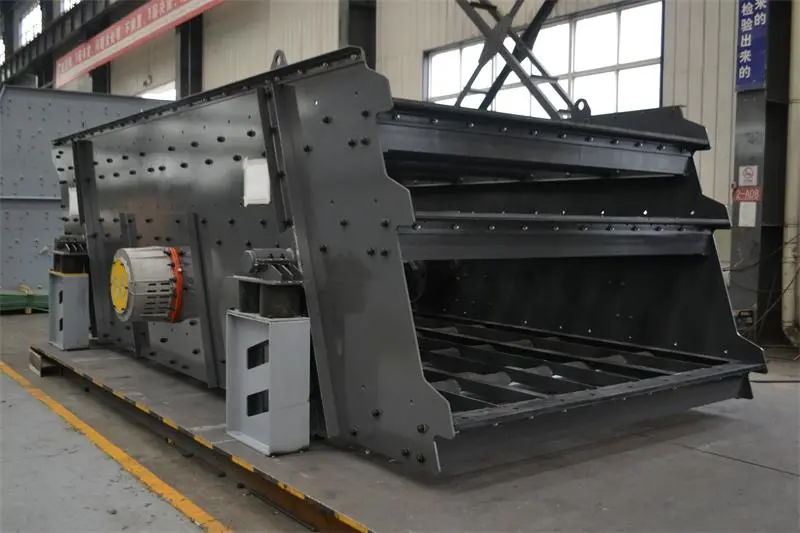
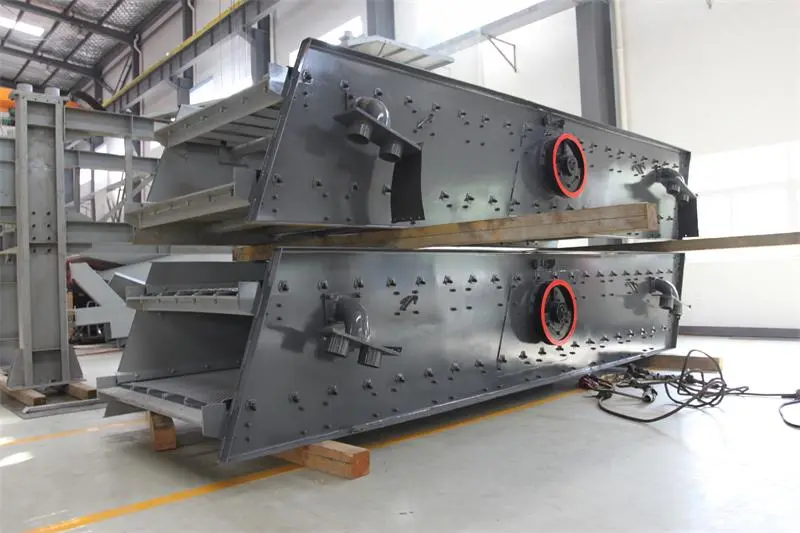
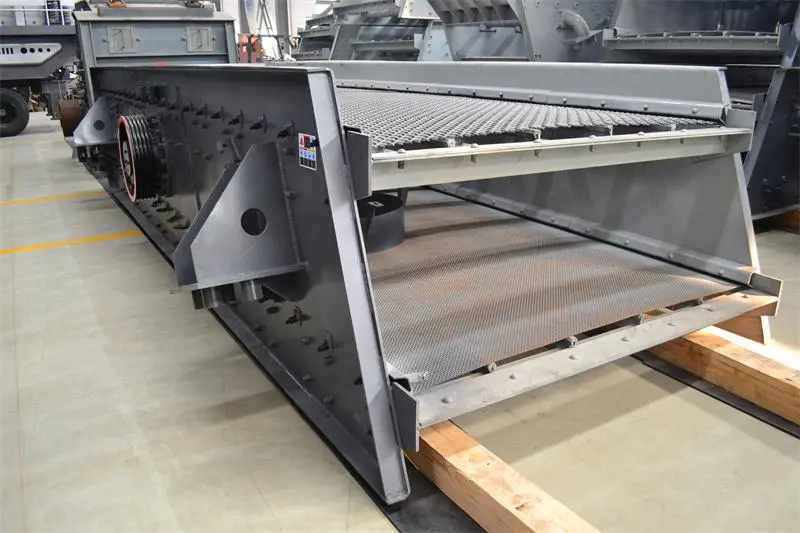
This is exactly where strong excitation force becomes more than a feature—it becomes a practical anti-blinding tool. Minelion (矿联) positions its Y-type Strong Excitation Vibrating Screen for these conditions, aiming to keep apertures “alive” even when the feed wants to seal them.
Screening is not only about shaking; it is about creating enough dynamic energy for particles to stratify, find the opening, and pass before the next layer covers it. In wet, clay-rich conditions, the screen needs to overcome both adhesion (material sticks to wire or polyurethane) and cohesion (fines stick to fines).

Higher frequency + stronger excitation increases the deck’s acceleration and micro “self-cleaning” effect. The mesh experiences more rapid cycles of deformation and rebound, which helps break clay bridges, loosen adhered fines, and keep openings clear longer. In practice, that means the screen spends more time screening—and less time acting like a conveyor.
Most mines do not need theoretical perfection; they need stable passing and predictable output. Strong excitation is valuable because it changes the probability that particles will detach, reorient, and pass—especially when the aperture is close to the cut size and the feed is sticky.
A common misunderstanding is that “more vibration is always better.” In reality, mines run different material mixes across seasons, and the same deck settings can either underperform (blinding) or over-stress the structure (unnecessary load). Minelion’s Y-type concept highlights excitation-force adjustability so operators can align the screen’s working state with the day’s production plan.
On many mine sites, a practical strategy is to keep two or three validated “setting windows” (e.g., rainy-season, transition-season, dry-season) and train operators to switch based on moisture and clay proportion. This helps reduce random tuning and makes the screen’s performance more repeatable shift to shift.
The numbers below are field-reference ranges commonly observed in wet, clay-rich aggregate screening (feed moisture roughly 6–10%, clay/slime content around 8–15%, cut size in the 5–20 mm range). Actual results depend on media type, deck inclination, feed distribution, and upstream crushing stability—but the trend is consistent: strong excitation reduces the time the deck stays blinded.

| Metric (Wet & Muddy Feed) | Conventional Screen (Reference) | Strong Excitation Y-Type (Reference) | Operational Meaning |
|---|---|---|---|
| Effective passing rate (near-cut fines) | 58–68% | 72–85% | Less “false oversize” due to reduced blinding |
| Blinding/cleaning interventions | 2–4 times/shift | 0–1 time/shift | Higher continuity, fewer unplanned pauses |
| Throughput stability (hour-to-hour variance) | ±12–18% | ±5–9% | Easier to keep plant balanced and predictable |
| Screen media service life (wet clay impact) | Baseline | +10–25% | Less clogging-related abrasion and tearing |
These improvements matter most when a mine is trying to meet contract gradation requirements while keeping the plant running through rainy weeks. A screen that keeps its apertures open is effectively “creating capacity” without adding a new line.
In high-humidity operations, a “fault” is not always a mechanical failure. Many issues are process-symptom problems that look like equipment trouble. A good troubleshooting flow separates screening physics from hardware defects and reduces unnecessary part replacement.
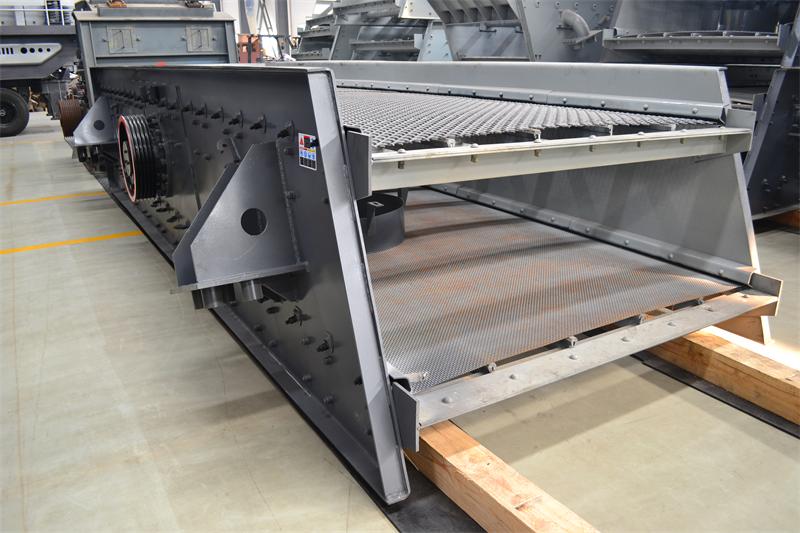
The best wet-screening teams treat troubleshooting as a repeatable method, not a heroic repair. A documented checklist, shift-by-shift observations, and consistent lubrication/fastener inspection can significantly reduce “mystery downtime.”
When procurement teams evaluate vibrating screens for wet, muddy mines, the most meaningful comparison is not brochure frequency alone—it is whether the screen maintains effective open area over time. Traditional designs can perform acceptably in dry aggregates, yet struggle when clay fines begin to coat the media.
| Decision Point | Traditional Vibrating Screen | Minelion Strong Excitation Y-Type | Why It Matters in Wet Clay |
|---|---|---|---|
| Anti-blinding ability | Often limited; relies on manual cleaning | High-frequency strong excitation helps keep apertures active | Direct impact on passing rate and uptime |
| Adaptability to seasonal feed changes | Narrow operating comfort zone | Adjustable excitation supports different moisture/clay levels | Reduces retuning time and “trial-and-error” |
| Throughput continuity | More stoppages in wet periods | Fewer interventions; steadier hour-to-hour output | Plant stability improves downstream efficiency |
| Maintenance pattern | Reactive: frequent cleaning + wear issues | More preventive: settings + inspections manage performance | Better planning, fewer surprise shutdowns |
For mines focused on retention-stage outcomes—stable supply, fewer complaints, predictable maintenance—the strongest value is consistency. The more stable the screen, the easier it becomes to standardize shifts, train operators, and protect product quality during harsh weather.
 275
|
275
|
 impact crusher adjustment
particle size control
dual wedge mechanism
PFW crusher automation
hydraulic discharge regulation
150
|
single-cylinder hydraulic cone crusher
crushing chamber design
ore hardness selection
crusher optimization
mining production line
191
|
hard rock crushing
wear causes
cone crusher
short-head crusher
equipment maintenance
445
|
mine gyratory crusher fault warning
intelligent crushing equipment remote monitoring
gyratory crusher maintenance tutorial
Middle East mining equipment operation
crusher predictive maintenance
48
|
stone crushing production line
crushing plant operation guide
raw material preprocessing
intelligent control system
equipment maintenance
impact crusher adjustment
particle size control
dual wedge mechanism
PFW crusher automation
hydraulic discharge regulation
150
|
single-cylinder hydraulic cone crusher
crushing chamber design
ore hardness selection
crusher optimization
mining production line
191
|
hard rock crushing
wear causes
cone crusher
short-head crusher
equipment maintenance
445
|
mine gyratory crusher fault warning
intelligent crushing equipment remote monitoring
gyratory crusher maintenance tutorial
Middle East mining equipment operation
crusher predictive maintenance
48
|
stone crushing production line
crushing plant operation guide
raw material preprocessing
intelligent control system
equipment maintenance



.jpg?x-oss-process=image/resize,m_fill,h_800,w_800/format,webp)

.jpg?x-oss-process=image/resize,h_800,m_lfit/format,webp)




 Facebook