


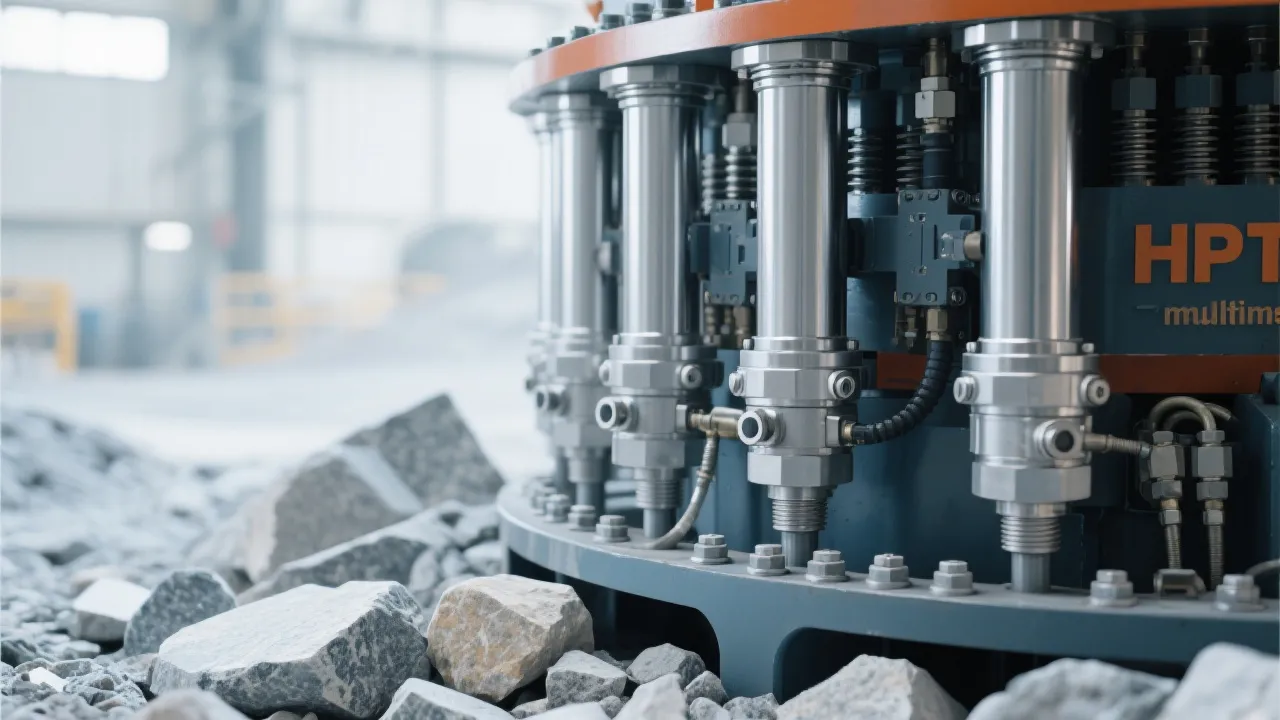
How an Intelligent Hydraulic Lubrication System Cuts Failure Rates in Multi-Cylinder Hydraulic Cone Crushers
In modern hard-rock crushing, reliability is no longer “nice to have”—it is a controllable KPI. For the KUANLIAN HPT Multi-Cylinder Hydraulic Cone Crusher, the intelligent hydraulic lubrication system and PLC electrical monitoring are designed to reduce unplanned downtime, stabilize product gradation, and keep operators safer with fewer manual interventions.
Why lubrication intelligence matters more than “stronger steel”
In cone crushing, many “mechanical” problems start as fluid problems: oil temperature drift, viscosity drop, contamination, pressure instability, or delayed grease delivery. When the lubrication loop cannot keep pace with heat and load changes, bearing wear accelerates and metal-to-metal contact becomes more likely—often detected only after vibration rises or the liner life collapses.
A practical benchmark used in multiple mining maintenance reports is that 30–45% of crusher downtime events are lubrication- or hydraulic-related (sensor alarms, oil contamination, overheating, pump/valve instability, filter blockage, or human error during manual lubrication). This is why intelligent lubrication—paired with PLC monitoring—delivers outsized ROI: it prevents small deviations from turning into stoppages.
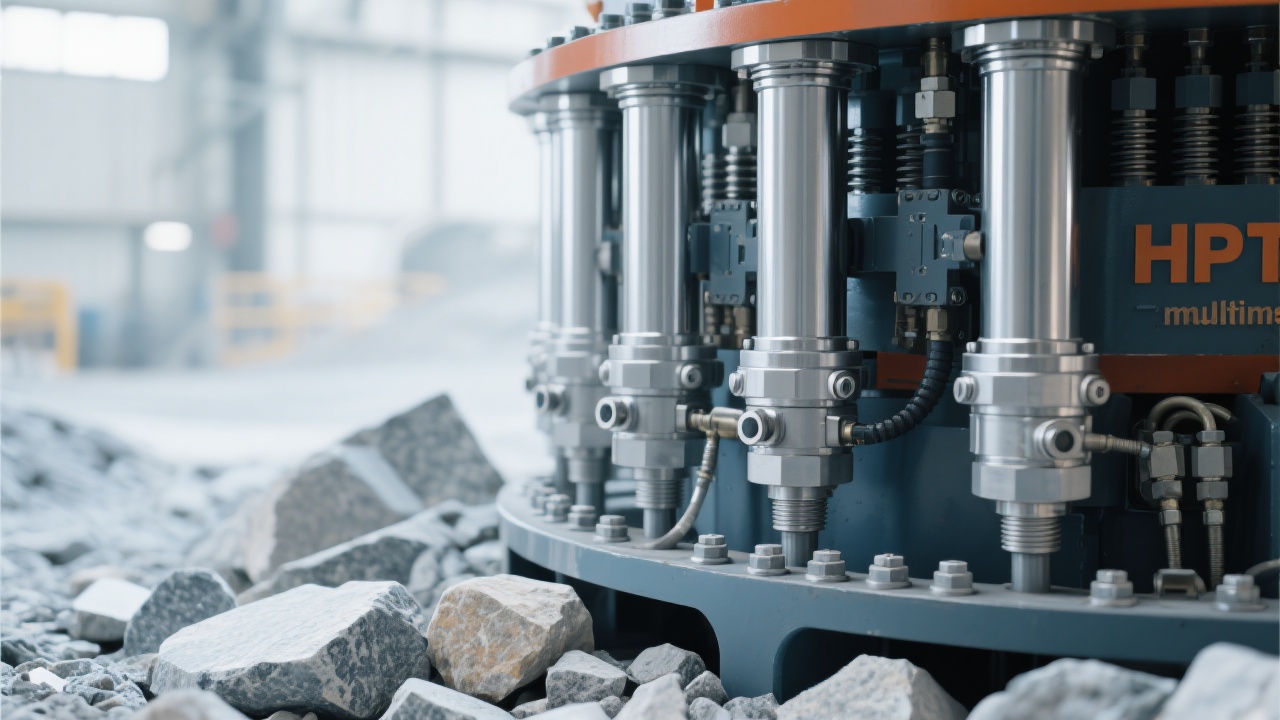
Inside the intelligent hydraulic lubrication system (what it automates, and why it reduces failures)
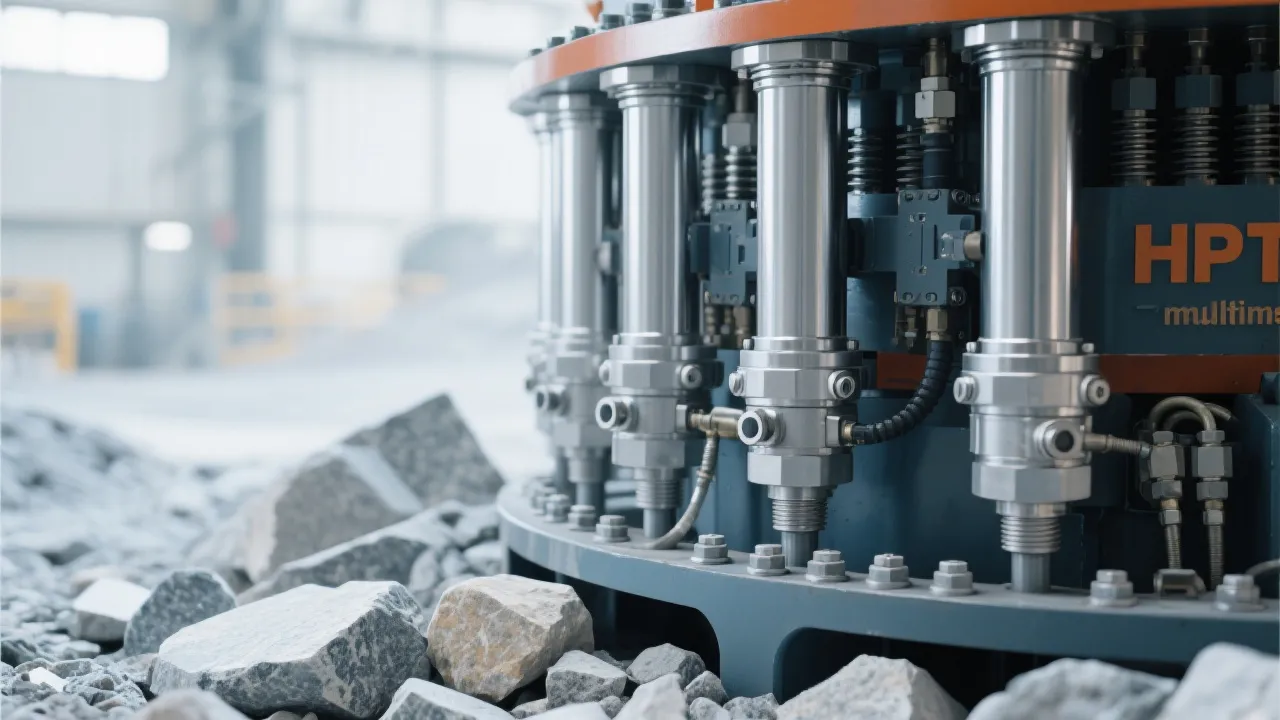
The HPT multi-cylinder hydraulic cone crusher integrates a hydraulic station and lubrication loop that can be managed through a PLC with interlocks and alarms. Instead of “lubricate by habit,” the system focuses on repeatability, traceability, and real-time correction.
1) Automatic lubrication cycles & metered delivery
Automated cycles deliver oil/grease at defined intervals and volumes. This prevents both under-lubrication (heat, wear) and over-lubrication (churning, seal stress, leakage). In field practice, consistent lubrication is one of the fastest paths to improving MTBF and stabilizing liner wear patterns.
2) Temperature, pressure & flow “guard rails”
A modern lubrication station typically monitors oil temperature, pump pressure, return flow, and filter differential pressure. When the system detects deviation beyond thresholds, it can alarm, de-rate, or stop the crusher before damage occurs—turning catastrophic failures into controlled maintenance tasks.
3) Interlocks that remove human error
Interlocks prevent “unsafe starts” when oil temperature is too high, pressure is unstable, or filters are blocked. In many sites, human error during shift changes is a leading contributor to shutdowns; PLC-driven interlocks make correct operation the default.
PLC electrical monitoring: from “alarm response” to proactive reliability
PLC monitoring becomes truly valuable when it is used not only to display alarms, but to shape maintenance decisions. A well-designed PLC logic typically follows a layered approach: early warning → controlled intervention → safe shutdown. This reduces secondary damage (bearings, eccentric assembly, main shaft, bushings) and shortens recovery time.
A practical signal set most mines track
| Signal / Parameter | Why it matters | Typical early symptom it prevents |
|---|---|---|
| Oil temperature | Viscosity, film strength, cooling capacity | Bearing scuffing, accelerated wear |
| Lubrication pressure | Pump health, valve stability, leakage detection | Dry running, seal damage |
| Return flow / level | Closed-loop integrity, cavitation risk | Pump cavitation, overheating |
| Filter ΔP | Contamination, clogging, oil starvation risk | Sudden pressure drop, dirty oil circulation |
| Crusher motor load | Feed changes, overload, chamber issues | Frequent trips, liner stress, low throughput |
| Hydraulic cylinder pressure | Tramp release, clamping stability | Unstable CSS, mechanical shocks |
Field note: many operations that add structured PLC monitoring report 10–25% reduction in unplanned stoppages within the first 3–6 months, mainly by catching oil temperature drift, clogged filters, and unstable pressure before damage occurs.

Failure-rate reduction strategies that maintenance teams can apply immediately
Intelligent systems work best when maintenance routines “match” the data they produce. The following actions are practical across most mining environments and align with common reliability engineering practices.
Set alarm thresholds based on oil condition, not generic defaults
In hot climates or high-duty cycles, “normal” oil temperature may run higher. A practical approach is to tune warning/stop thresholds after 1–2 weeks of stable production, then validate with oil analysis. Many mines use monthly oil testing and target cleanliness around ISO 4406 18/16/13 (or better) for critical lubrication loops, depending on system design.
Treat filter ΔP as a predictive KPI
Instead of waiting for filter bypass or alarms, trend filter differential pressure. If ΔP rises faster than usual, it may indicate an upstream contamination event (poor sealing, breather failure, dirty refill practice). Planned filter changes often cost minutes; unplanned starvation costs days.
Standardize shift handover with “3 checks”
A reliable handover routine reduces the most common operational mistakes: (1) confirm lubrication pressure and stable temperature, (2) confirm return flow/level and no abnormal leakage, (3) confirm no rising trend in motor load or hydraulic pressure spikes. This simple habit often reduces nuisance trips and protects components during startup.
Use PLC logs to schedule micro-maintenance
When a site reviews PLC trend data weekly (even 30 minutes), small anomalies become visible: temperature drift after liner change, pressure fluctuation after hose replacement, or oil level changes after a seal event. Many teams find that disciplined log reviews can cut emergency callouts by 15–30% over two quarters.
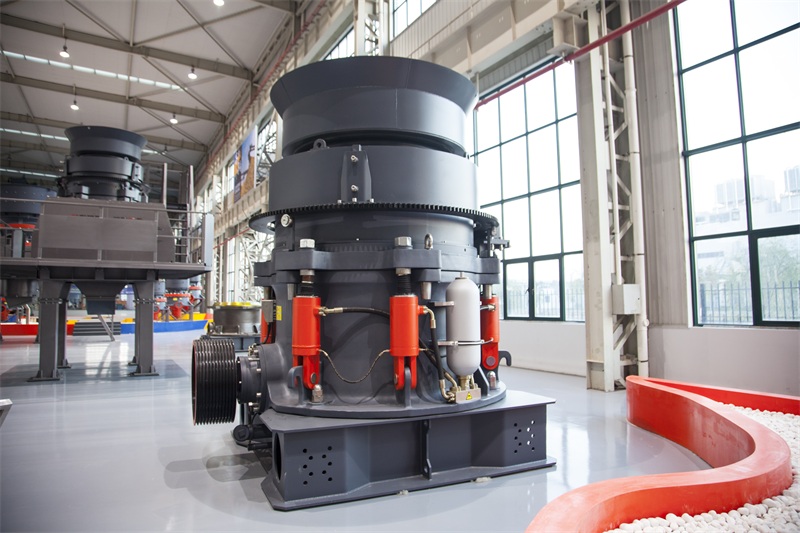
Operations impact: safety, throughput, and labor efficiency
In mining crushing lines, intelligent monitoring delivers more than maintenance convenience. It changes how risk and productivity are managed day to day:
Safety improvements that are easy to miss
Automatic lubrication reduces the need for operators to approach moving equipment or hot zones. PLC interlocks also reduce “manual override” behaviors that can expose teams to hazards during jam clearing or abnormal feed conditions.
Throughput stabilization
Stable lubrication supports stable friction conditions, which helps maintain consistent crushing performance. Many operators report that once lubrication alarms and heat-related stops are reduced, daily output becomes more predictable and re-crush circulation is easier to control.
Labor cost savings in real terms
A typical cone crusher lubrication routine can take 15–30 minutes per shift when done manually and properly documented. Intelligent systems reduce repetitive tasks and improve consistency—freeing technicians to focus on root-cause work such as contamination control and planned inspections.
Q&A: what maintenance engineers and plant managers usually ask
Q1: Does “automatic lubrication” eliminate oil analysis?
No. Automation improves consistency, but contamination still comes from breathers, refilling practices, worn seals, and environmental dust. Many mines keep monthly oil sampling for trending and adjust to bi-weekly during commissioning, major rebuilds, or unusually dusty seasons.
Q2: Which alarms should trigger a controlled stop rather than a warning?
Typically: sudden loss of lubrication pressure, extreme oil temperature, confirmed loss of return flow, or filter bypass conditions. Many sites use a two-stage logic: warnings for gradual drift, hard stops for rapid-change signals that indicate imminent oil starvation.
Q3: How soon can a site see measurable reliability gains?
If the plant already has chronic overheating, pressure instability, or frequent trips, measurable improvements can appear within 4–12 weeks after commissioning and threshold tuning. For stable plants, the benefit often shows up as fewer “surprise” events and better component life over one to two liner cycles.







.jpg?x-oss-process=image/resize,h_800,m_lfit/format,webp)





 Facebook