
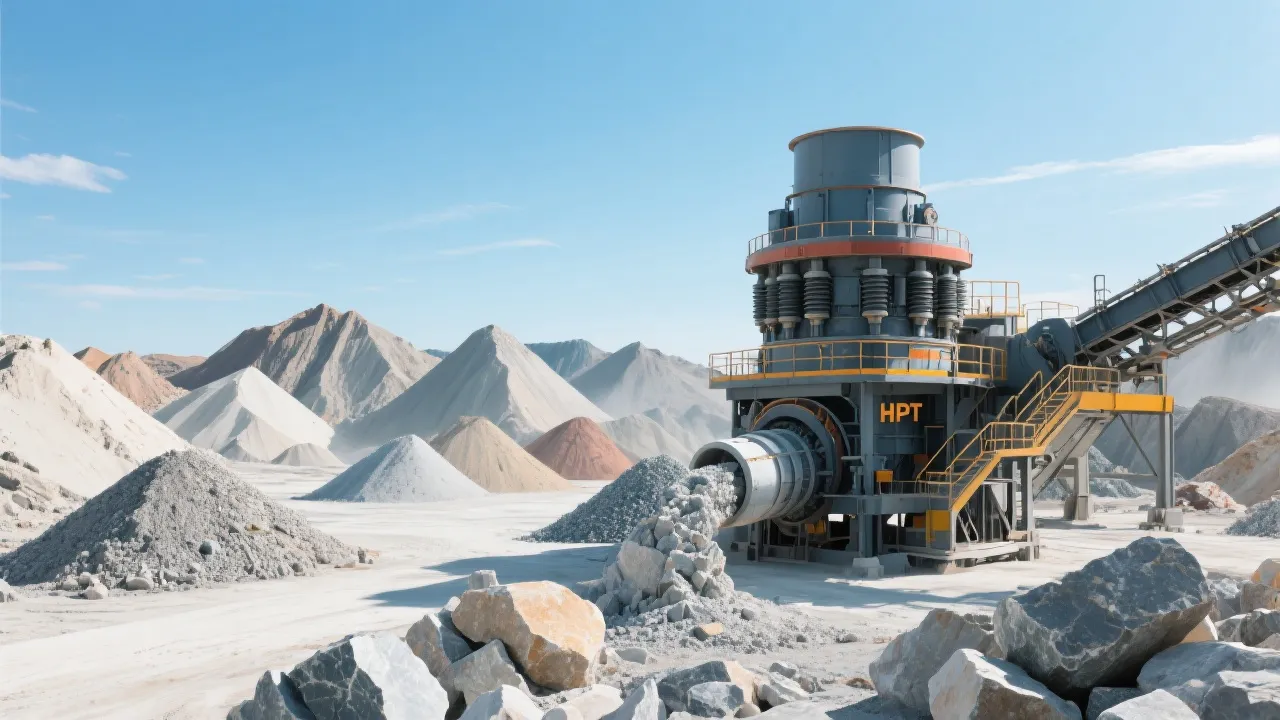
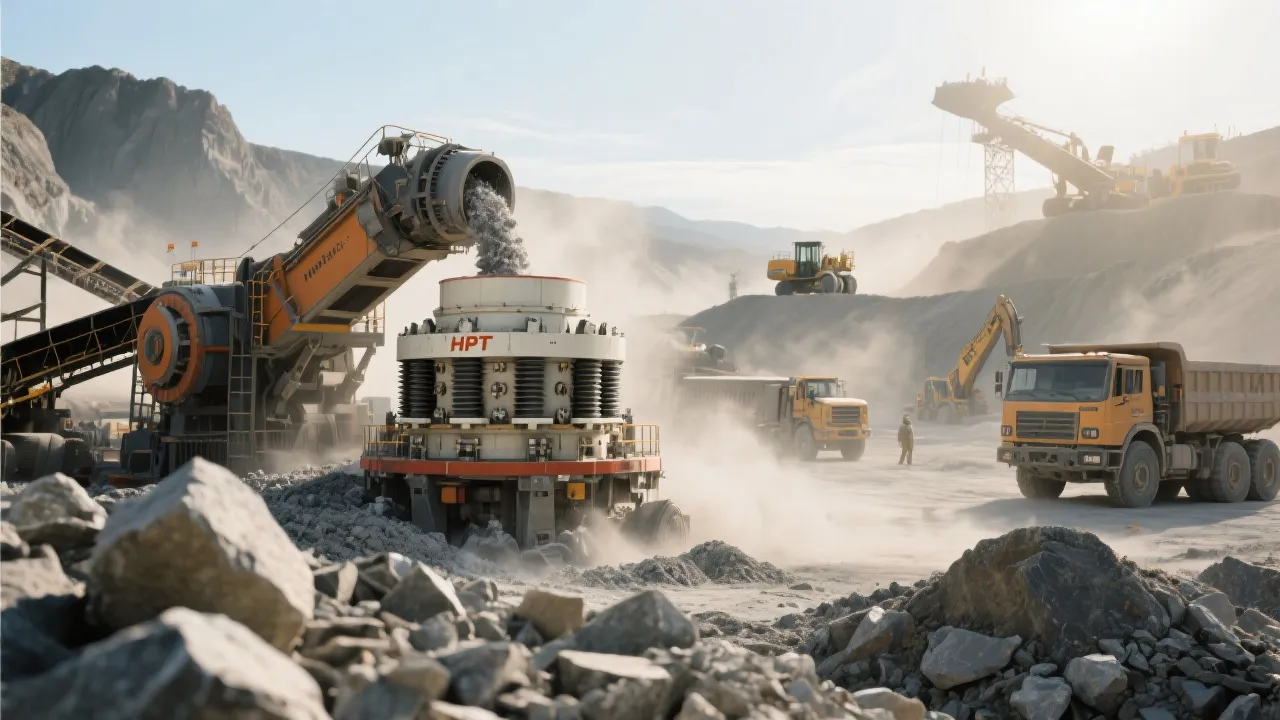
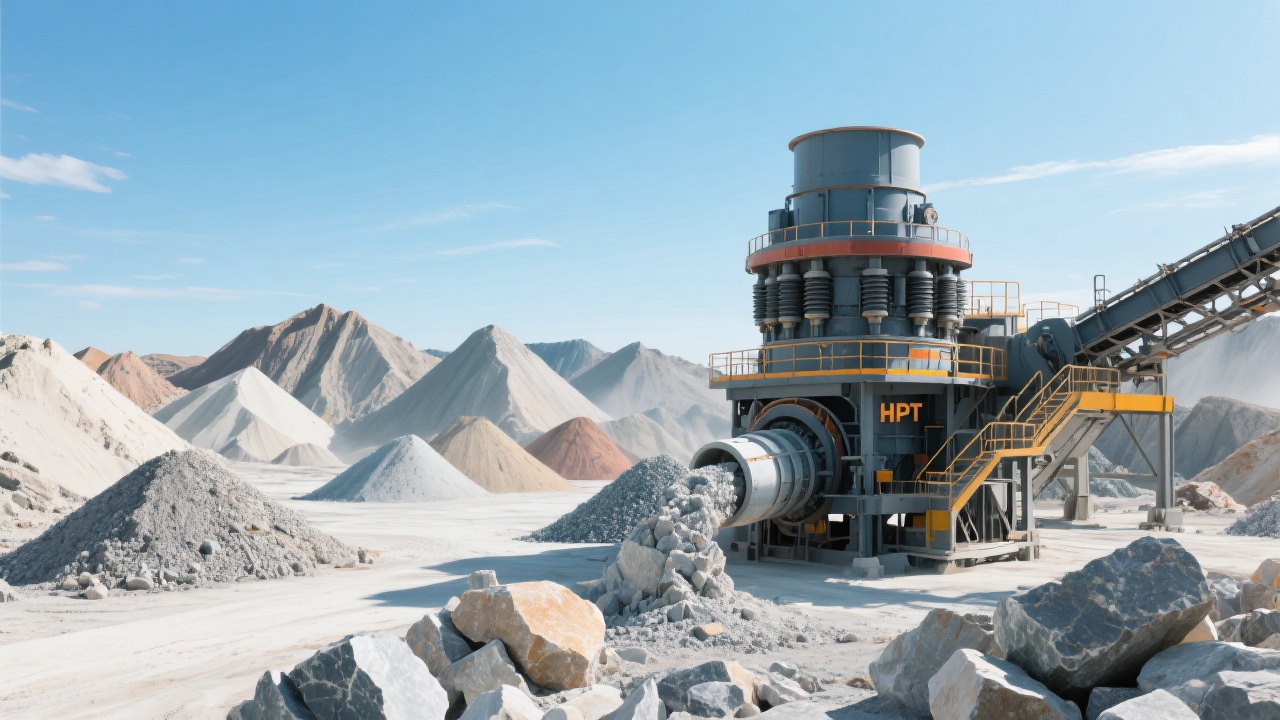
In real aggregate plants, pebble (river stone) crushing is rarely a simple “feed and crush” task. Its rounded geometry, high abrasiveness, and inconsistent hardness often create a familiar set of issues: unstable gradation, too much flaky product, frequent liner changes, and production swings during peak hours. This is where the HPT Multi-Cylinder Hydraulic Cone Crusher from 矿联 stands out—by combining a high-efficiency crushing chamber with intelligent hydraulic & lubrication control, and a PLC-based electrical system that keeps the process stable under real-world disturbances.
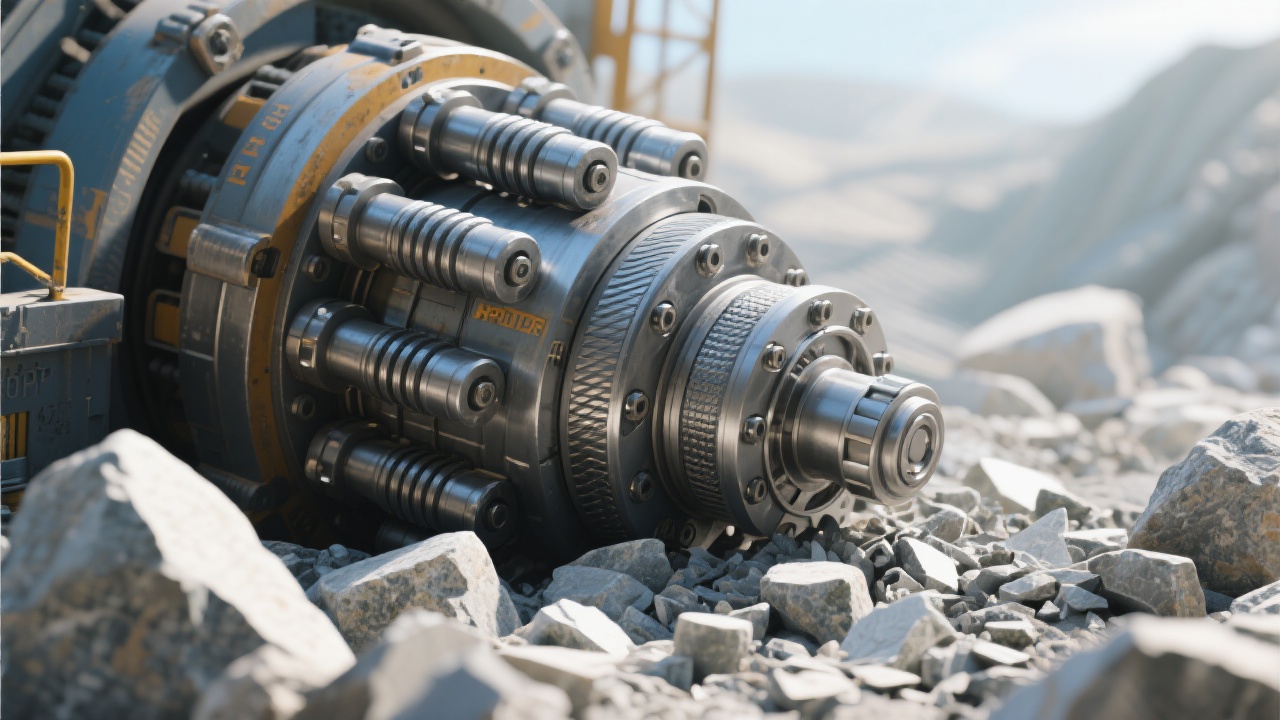
A multi-cylinder hydraulic cone crusher is not only about “more cylinders.” Its advantage comes from how mechanical structure, hydraulic clamping, and intelligent lubrication work together to keep the crushing force, crushing frequency, and chamber stability consistent—especially important for pebbles that tend to slip and reorient in the cavity.
For pebble processing, consistent closed-side setting (CSS) is the difference between steady sand-making downstream and constant re-circulation. The HPT structure supports a stable chamber profile and controlled crushing pressure, which helps maintain target gradation even when feed moisture, feed size distribution, or hardness fluctuates.
In properly matched multi-cylinder cone applications, part of the crushing occurs through inter-particle compression. For rounded pebbles, this is valuable: it tends to reduce flat/elongated pieces and improves cubicity. Plants targeting 0–5 mm and 5–10 mm fractions often see more stable shape indexes when the chamber and eccentric speed are tuned for this mechanism.
Pebble pits and river aggregates can carry unexpected steel or hard inclusions. Multi-cylinder hydraulic systems can respond rapidly to overload events, helping to prevent catastrophic damage and reducing stoppage time. For many aggregate operators, this translates into fewer “surprise shutdowns” and a more predictable daily output.
In continuous crushing, lubrication is not just maintenance—it is a production variable. A modern intelligent hydraulic & lubrication system supports temperature management, contamination control, and pressure stability. This is especially critical in pebble and granite operations where abrasion load is higher and oil condition can deteriorate faster.
| Parameter | Typical control target | Operational impact |
|---|---|---|
| Oil temperature | ~35–55°C | Prevents viscosity loss; reduces bearing wear under high load |
| Oil pressure / flow | Stable range per model spec | Maintains film strength; supports continuous high-duty crushing |
| Contamination level | Filtered, low particle count | Extends component life; reduces unplanned shutdowns |
| Hydraulic clamping stability | Stable under load variation | Keeps CSS stable; improves finished product consistency |
Engineering note: In high-abrasion applications (pebble/granite), plants often schedule liner inspections by tonnage. A stable lubrication regime can help keep wear more predictable and reduce premature “hot running” events that shorten bearing life.
Automation is no longer a “nice to have” in aggregate production. For procurement teams, PLC monitoring is a cost-control tool; for engineers, it is a risk-control layer. In HPT multi-cylinder cone operations, PLC logic typically supports real-time signals, alarms, and interlocks—helping the line run with fewer manual interventions.
Sites deploying PLC-based monitoring with disciplined shift checks often report measurable improvements in stability:
| KPI | Before (manual-heavy) | After (PLC-guided) |
|---|---|---|
| Unplanned stops per month | 6–10 | 3–6 |
| Operator interventions per shift | 10–20 | 5–12 |
| Finished product out-of-spec events | 3–7 / month | 1–4 / month |
Values above are typical reference ranges and depend on feed variability, screening efficiency, and maintenance discipline.
Multi-cylinder hydraulic cones are often selected because the same equipment family can be tuned for different rock types through chamber selection, CSS control, and feeding discipline. Below are realistic processing scenarios that technical teams frequently evaluate in design and retrofits.
Objective: stable 5–10 mm and 10–20 mm fractions with controlled flakiness. Recommended practice typically includes choke feeding, stable screening return ratio, and a chamber matched to abrasion level.
Reference throughput band (secondary/tertiary): 120–350 t/h per machine (model-dependent, feed PSD-dependent). A well-tuned HPT configuration commonly improves product consistency and reduces recirculation load.
Granite lines prioritize wear management and stable power draw. Multi-cylinder hydraulic cones support stronger clamping and stable CSS, helping control the “over-crush vs. under-crush” cycle that often increases liner cost. In many granite operations, improving liner utilization by 8–15% is a realistic target after optimizing chamber and feed arrangement.
Limestone is generally less abrasive, so the process often shifts toward maximizing throughput while maintaining a clean grading curve. The HPT platform can be configured to support higher capacity targets while keeping hydraulic and lubrication protection active—useful for quarries that run long daily hours and rely on stable automation.
Yes—within a reasonable range. The key is selecting the right chamber and maintaining a controlled feed PSD. For best results, plants typically adjust CSS targets and ensure stable choke feeding. If the feed becomes too wide or too wet, even a high-end cone will show grading swings.
Under-feeding the chamber (non-choke feeding). Pebbles can “roll” rather than crush if the chamber isn’t properly packed. This usually increases recirculation, worsens shape, and raises liner wear irregularly.
It reduces the frequency of manual checks and helps prevent small issues from becoming stoppages. Many sites reallocate one operator from “constant watching” to periodic inspection and upstream/downstream coordination, particularly on lines with stable screening and feeding.
In many projects, sharing feed PSD, target gradation, and capacity goal is enough for the supplier to propose the correct chamber and configuration without trial-and-error.
Send your feed size distribution, target output sizes, and hourly capacity. The engineering team at 矿联 can recommend the right chamber, CSS range, and protection strategy for your site using the HPT Multi-Cylinder Hydraulic Cone Crusher.
Tip for faster quotation: Include rock type (pebble/granite/limestone), max feed size, moisture, desired final sizes, required capacity (t/h), and whether you have a closed circuit with screen return.
 284
|
284
|
 PFW impact crusher for chemical industry
phosphate rock crushing equipment
fluorite processing crusher
gypsum crushing solution
dual wedge discharge adjustment
255
|
Common problems and solutions in metal ore crushing
Application guide for PEW jaw crushers
Methods for improving iron ore crushing efficiency
Daily maintenance skills for jaw crushers
Crusher fault prevention measures
241
|
construction waste crushing equipment
impact crusher vs jaw and hammer crushers
recycled aggregate particle shape control
PF-1315 impact crusher
energy consumption in waste recycling
381
|
Chemical crushing equipment
Impact crusher lubrication system
Centralized lubrication solution
Low - maintenance crusher
High - temperature material crushing equipment maintenance
175
|
VSI6X Sand Making Machine
efficient sand production
cost reduction
improved sand output efficiency
customer case studies
PFW impact crusher for chemical industry
phosphate rock crushing equipment
fluorite processing crusher
gypsum crushing solution
dual wedge discharge adjustment
255
|
Common problems and solutions in metal ore crushing
Application guide for PEW jaw crushers
Methods for improving iron ore crushing efficiency
Daily maintenance skills for jaw crushers
Crusher fault prevention measures
241
|
construction waste crushing equipment
impact crusher vs jaw and hammer crushers
recycled aggregate particle shape control
PF-1315 impact crusher
energy consumption in waste recycling
381
|
Chemical crushing equipment
Impact crusher lubrication system
Centralized lubrication solution
Low - maintenance crusher
High - temperature material crushing equipment maintenance
175
|
VSI6X Sand Making Machine
efficient sand production
cost reduction
improved sand output efficiency
customer case studies



.jpg?x-oss-process=image/resize,h_800,m_lfit/format,webp)




.jpg?x-oss-process=image/resize,m_fill,h_800,w_800/format,webp)




 Facebook