HST Single-Cylinder Hydraulic Cone Crusher Working Principle: How Eccentric Motion Boosts Ore Crushing Efficiency
2026-02-20
Technical knowledge
This article explains the working principle of the HST single-cylinder hydraulic cone crusher, focusing on how eccentric motion drives high-efficiency ore crushing. It breaks down the energy transfer path from the eccentric drive to the mantle–concave compression zone, and clarifies how eccentric throw, chamber profile, and operating parameters (such as speed and closed-side setting) jointly influence throughput, reduction ratio, and product gradation. It also outlines how the hydraulic system stabilizes operation, enables safe overload protection, and reduces unplanned downtime. With application-oriented guidance and practical tuning logic—supported by performance indicators such as measurable capacity gains and tighter size distribution—the article helps decision-makers understand why parameter matching matters and how to select an optimized crushing solution. For tailored recommendations, readers can consult an engineer team for a site-specific configuration.
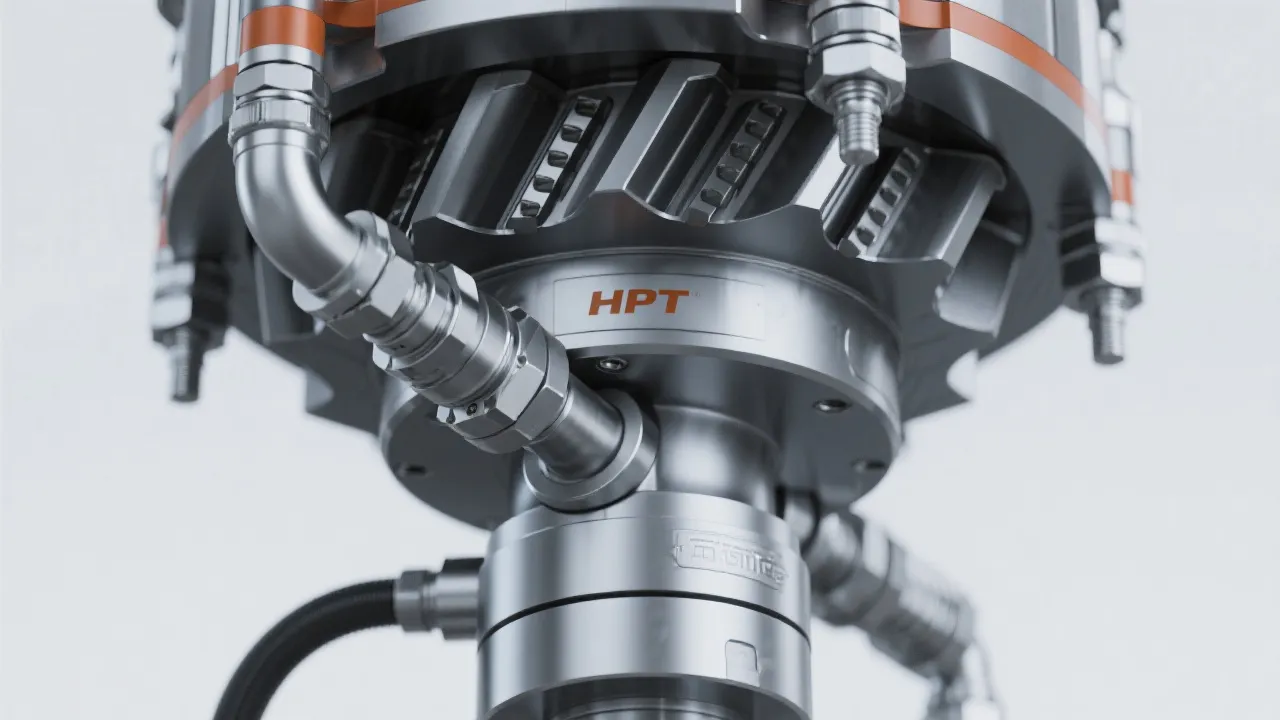
Hydraulic Cone Crusher Working Principle: How Eccentric Motion Drives Higher Crushing Efficiency
In modern hard-rock and metal-ore operations, “capacity” and “consistent gradation” often fight each other—unless the machine’s kinematics and chamber design are truly aligned. The HST single-cylinder hydraulic cone crusher is widely adopted because its eccentric motion converts motor power into a stable, repeatable crushing force that can be tuned for throughput, particle shape, and liner life.
Below is a practical, decision-stage explanation of the hydraulic cone crusher working principle, how eccentricity and chamber geometry interact, and which parameters typically unlock measurable gains in real mines.
1) What a Hydraulic Cone Crusher Is Built For (Structure + Operating Context)
A single-cylinder hydraulic cone crusher is designed for secondary/tertiary crushing where feed hardness, abrasiveness, and fluctuation are the norm. Its core components typically include: a main frame, eccentric assembly, main shaft, mantle (moving cone), concave (fixed liner), a hydraulic cylinder for setting/overload protection, and a lubrication system for heat control and wear reduction.
In high-duty environments—granite, basalt, copper ore, iron ore—performance is rarely limited by installed power alone. It is limited by whether the crusher can maintain a stable choke-fed condition, keep a predictable closed-side setting (CSS), and deliver enough effective compressive events per minute without spiking wear or causing ring bounce.
2) The Role of Eccentric Motion: Where Crushing Force Really Comes From
The heart of the cone crusher working principle is simple: rotational energy from the motor is transformed into a gyratory (eccentric) swing of the mantle. This creates a constantly changing gap between mantle and concave—so rock is repeatedly compressed, fractured, and re-compressed along the chamber.
Energy transfer path (from motor to breakage)
Motor → drive system → eccentric assembly → mantle oscillation → rock bed compression → particle fracture → discharge through the lower chamber. The practical takeaway is that more “useful compressions” per unit time (without over-crushing) typically means higher tons per hour and steadier gradation.
Why eccentricity boosts efficiency (mechanism)
Eccentricity (eccentric throw) influences stroke—how far the mantle travels toward/away from the concave per revolution. A well-matched throw: increases the probability of inter-particle breakage (better shape), improves nip/engagement (fewer “slips”), and raises the chamber’s effective utilization. In many hard-rock secondary crushing setups, optimizing eccentric throw and speed together can deliver 8–18% higher capacity while maintaining target product size, assuming feed is well graded and the crusher runs choke-fed.
3) How the Hydraulic System Stabilizes Operation and Reduces Failures
Compared with mechanical spring systems, the single-cylinder hydraulic unit supports stability in three high-impact ways: CSS control, overload protection, and fast recovery after tramp iron events. In practical mine operation, stability is efficiency—because unstable CSS quickly turns into uneven gradation, liner hotspots, and unplanned stops.
Typical reliability improvements seen on site
When hydraulic setting control and lubrication monitoring are properly implemented, many operators report 15–30% fewer nuisance stoppages tied to ring bounce, overload, or jam-clearing. The real win is not just “less downtime,” but a tighter process window that keeps the crusher closer to its best efficiency point.
4) Matching Chamber Profile, Eccentric Throw, and Speed: The Parameters That Decide Output
Buyers often compare cone crushers by power and max feed size, but real productivity is determined by how the chamber works with the motion. The highest-performing installations treat the crusher like a system: chamber profile + eccentric throw + mantle speed + CSS + feed grading.
| Parameter |
What it changes |
Typical impact (field reference) |
| Eccentric throw |
Stroke, engagement, breakage frequency |
+8–18% capacity if matched with chamber & feed; too high can increase wear and fines |
| Chamber profile (coarse/medium/fine) |
Retention time, choke stability, product curve |
5–12% swing in throughput; product shape improves with stable inter-particle crushing |
| Mantle speed (rpm) |
Compressions per minute, power draw behavior |
+3–10% capacity; too fast may cause slippage and uneven liner wear |
| CSS / discharge setting |
Top size control, fines ratio |
A few mm shift can noticeably change P80 and recirculating load |
| Feed condition (gradation + moisture) |
Choke feeding, packing risk, efficiency |
Poor grading can cost 10–25% capacity; wet sticky fines raise risk of liner glazing |
A practical matching rule (easy to apply)
If the operation needs higher throughput without widening top size, start with chamber selection and choke feeding, then tune throw + speed. If the operation needs tighter gradation (less oversize), prioritize CSS stability and a chamber that maintains retention without packing. In decision-stage comparisons, the “best” machine is the one that holds a stable power draw and CSS under feed fluctuations—because that stability is what keeps product consistent.
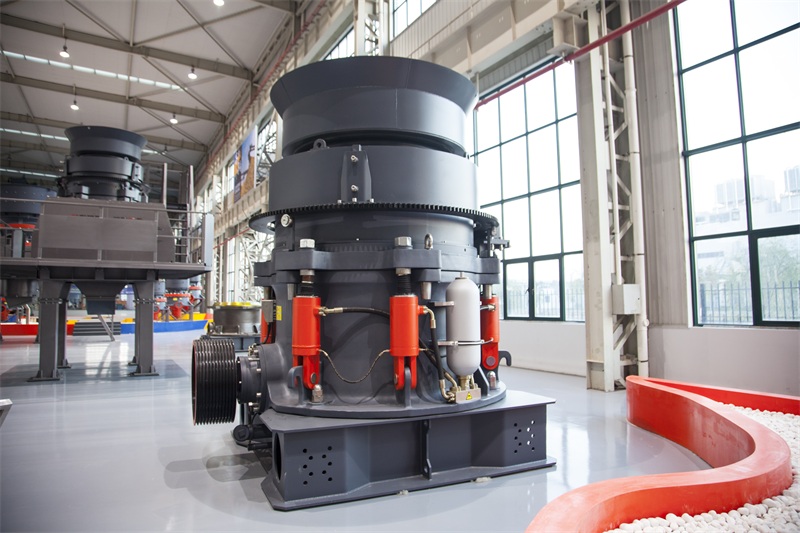
5) Typical Mine Scenario: What Efficiency Gains Look Like in Practice
Consider a hard-rock quarry running a secondary cone after a jaw crusher, targeting a consistent feed to a tertiary stage. The common bottleneck is not “lack of power,” but inconsistent chamber filling and a mismatch between throw, speed, and liner profile.
Field-style reference outcome (representative)
In a basalt application (feed: 0–150 mm, target: 0–40 mm), operators adjusted the chamber to maintain choke feed, stabilized CSS via hydraulic setting control, and optimized motion parameters within safe power draw limits.
- Throughput: increased from ~260 t/h to ~300 t/h (about +15%) under the same upstream feed rate envelope.
- Product consistency: oversize reduced by roughly 10–20% (dependent on screening efficiency and recirculating load).
- Unplanned stops: reduced by about 20% after overload events due to faster hydraulic clearing and steadier operating window.
The key logic is that eccentric motion does not “create capacity” by itself; it creates a controllable breakage pattern. When the chamber stays full and CSS stays stable, the motion finally converts into saleable tons.
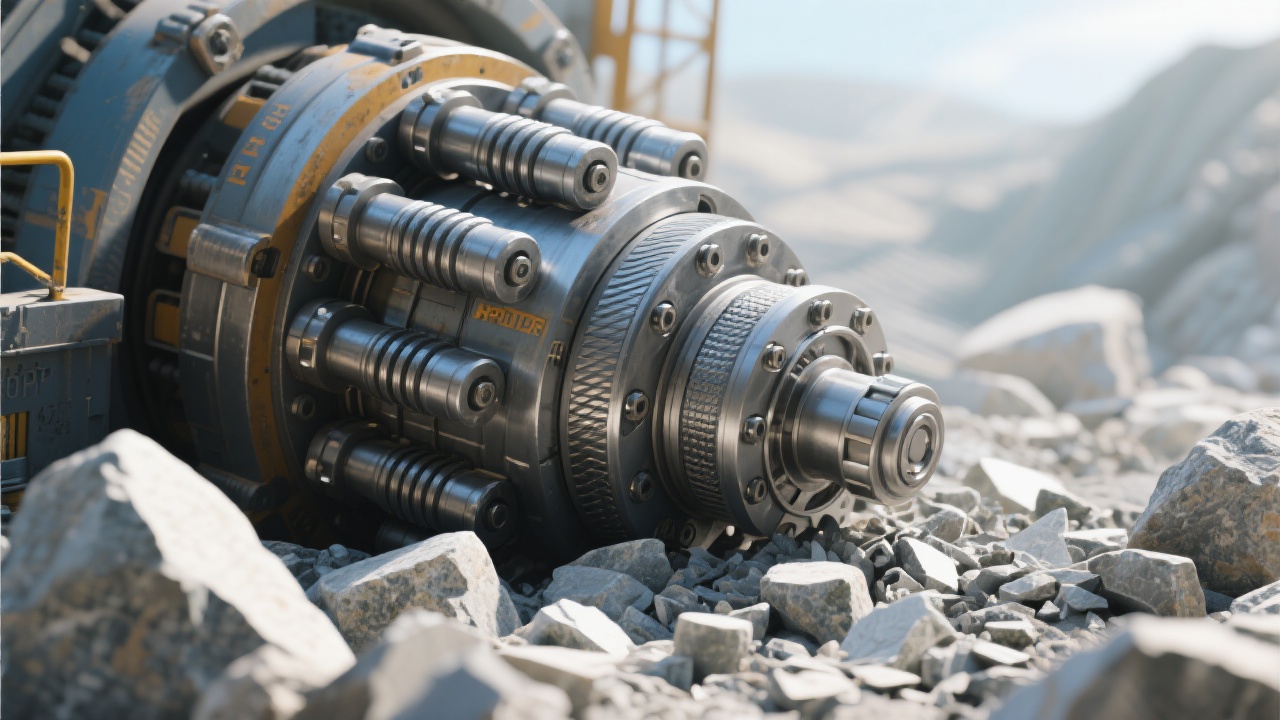
6) Maintenance Points That Protect Efficiency (Not Just Uptime)
In decision-stage evaluations, maintenance is often reduced to “easy liner change.” In reality, efficiency losses usually come first—then downtime. A few checks commonly protect performance:
- Lubrication health: keep oil cleanliness and temperature stable; rising temperature often signals load instability or bearing stress.
- CSS verification: periodically confirm hydraulic setting matches actual product requirements; CSS drift shows up as recirculating load spikes.
- Liner wear symmetry: uneven wear indicates poor feed distribution, wrong chamber selection, or speed/throw mismatch.
- Choke feed discipline: stable feed is a “free upgrade” that often delivers more than aggressive parameter changes.
Suggested Infographics (for Faster Internal Buy-In)
For teams comparing suppliers or justifying upgrades, visual aids shorten discussions. These are common, high-performing formats:
- Eccentric motion diagram: mantle path + compression zones across the chamber (shows why stroke matters).
- Parameter coupling chart: chamber vs. throw vs. speed vs. CSS mapped to product curve and power draw.
- Before/after KPI panel: t/h, % oversize, kWh/t, downtime events per month.
Want a Customized HST Single-Cylinder Hydraulic Cone Crusher Solution?
If the goal is to raise throughput without sacrificing gradation—or to reduce overload-related interruptions—parameter tuning needs to match the ore properties, liner profile, and downstream screening. A short engineering review can often identify quick wins (feed distribution, chamber selection, CSS strategy) before major changes are made.
Question for operators and plant managers
What crushing-efficiency bottleneck are you dealing with most often—unstable feed, excessive fines, frequent overload trips, or inconsistent product size?








.jpg?x-oss-process=image/resize,h_800,m_lfit/format,webp)






 Facebook