
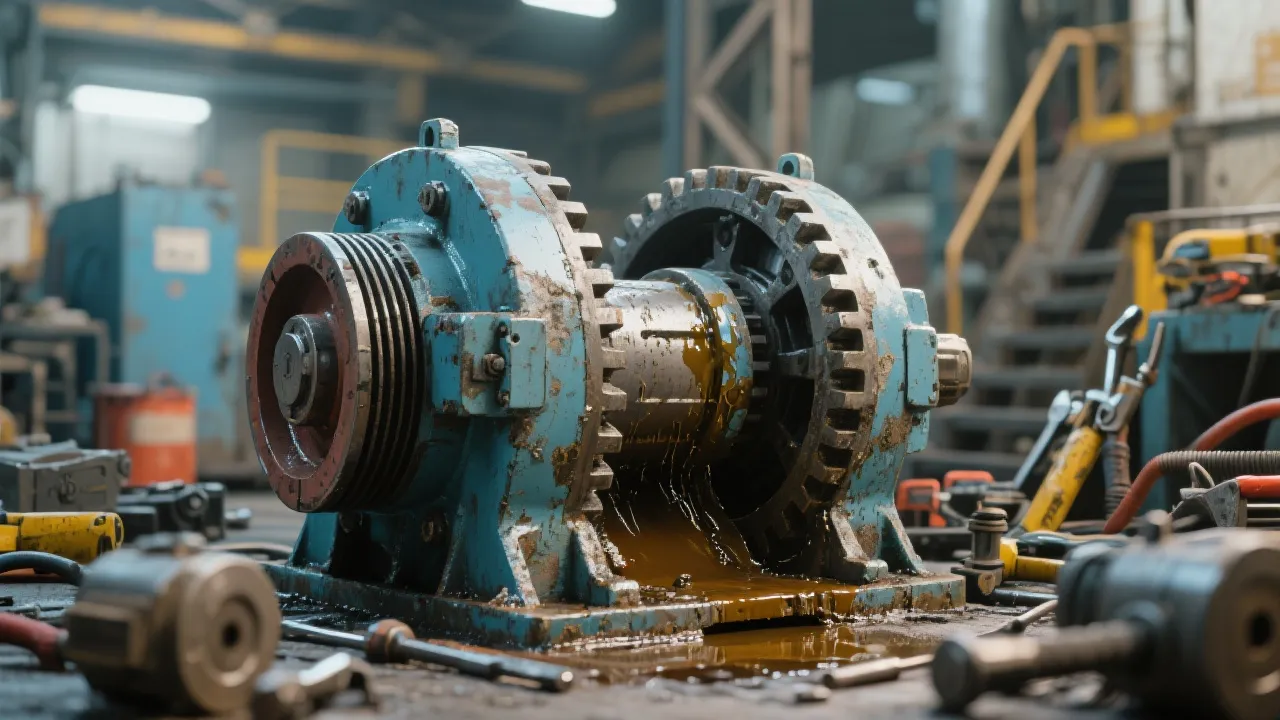
If you're running an impact crusher in a construction waste recycling plant, you’ve likely seen it happen: the bearing temperature rises unexpectedly—sometimes by over 80°C above ambient. That’s not just a warning sign—it’s a red flag that could lead to unplanned downtime, costly repairs, or even catastrophic failure.
In harsh environments like those processing mixed building debris, three main factors typically cause lubrication breakdown:
According to Zhengzhou Kuanglian Technical Manual, Section 4.2, "bearing temperatures exceeding 80°C during continuous operation indicate immediate need for inspection—not just monitoring."
Your PF-1315 model isn't built like a standard quarry machine. Its dual-bearing design and frequent start-stop cycles mean that every hour of operation puts unique strain on the grease system. Traditional greasing every 200 hours? That’s too long when dust levels exceed 50 mg/m³—a common scenario in urban demolition sites.
Here’s what we recommend based on real-world data from over 300+ installations across China:
| Maintenance Task | Recommended Frequency (Construction Waste) | Standard Industry Practice |
|---|---|---|
| Filter replacement | Every 72 hours | Every 200 hours |
| Grease check | Daily visual + thermal imaging | Weekly manual check |
| Seal integrity test | Bi-weekly using ultrasonic testing | Monthly only |
At a recycling facility in Shenzhen, a team skipped filter changes for 14 days due to “low workload.” Within 48 hours, one bearing reached 125°C—over 100°C above normal—and failed completely. The repair cost was $1,800 in parts alone, plus 3 days of lost production. This wasn’t an isolated incident—it’s exactly why we emphasize proactive maintenance over reactive fixes.
You don’t need a full-time engineer to implement this. Start with:
Prevention is cheaper than repair—and more reliable than hope.
Want the full guide? Download our free Impact Crusher Daily Maintenance Checklist & Lubrication Protocol—used by top-tier recyclers in Asia, Europe, and the Middle East.
Download Now – Get the Full Lubrication Management Guide 317
|
317
|
 metal ore crushing process
jaw crusher and impact crusher combination
crushing efficiency optimization
grading crushing technology
cone crusher in mining
129
|
PE jaw crusher application skills
common mistakes in metal ore crushing
jaw crusher discharge opening adjustment method
high-strength cast steel eccentric shaft
crusher technology popularization
111
|
VSI6X sand making machine
traditional sand equipment
efficient sand production
product comparison
sand making and shaping equipment
209
|
CI5X heavy - duty rotor crusher
high - efficiency impact crusher
rotor design optimization
mining crushing equipment
energy - saving crusher
270
|
Non-metallic mineral crushing equipment
Jaw crusher selection
PEW jaw crusher
Ore crushing process
Zhengzhou Kuanglian Machinery
metal ore crushing process
jaw crusher and impact crusher combination
crushing efficiency optimization
grading crushing technology
cone crusher in mining
129
|
PE jaw crusher application skills
common mistakes in metal ore crushing
jaw crusher discharge opening adjustment method
high-strength cast steel eccentric shaft
crusher technology popularization
111
|
VSI6X sand making machine
traditional sand equipment
efficient sand production
product comparison
sand making and shaping equipment
209
|
CI5X heavy - duty rotor crusher
high - efficiency impact crusher
rotor design optimization
mining crushing equipment
energy - saving crusher
270
|
Non-metallic mineral crushing equipment
Jaw crusher selection
PEW jaw crusher
Ore crushing process
Zhengzhou Kuanglian Machinery
.jpg?x-oss-process=image/resize,h_800,m_lfit/format,webp)


.jpg?x-oss-process=image/resize,h_800,m_lfit/format,webp)







 Facebook