
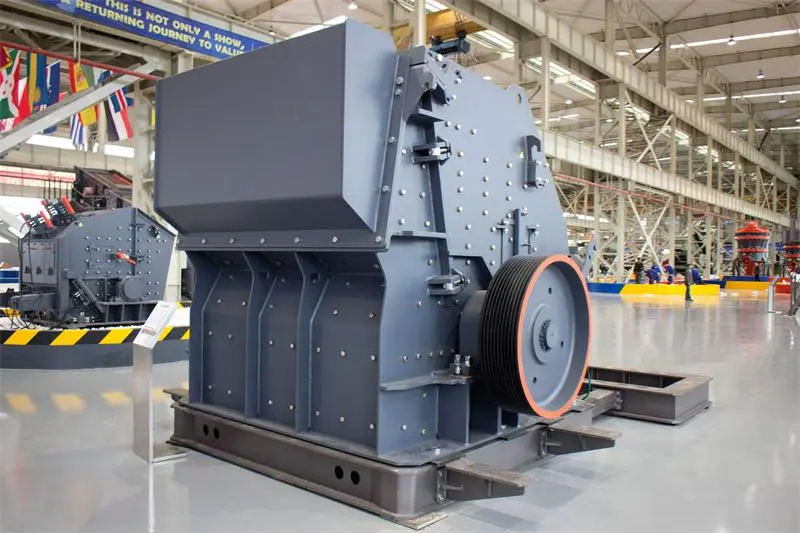
In the chemical industry, ensuring the stability and efficiency of crushing equipment is a constant challenge. The high - temperature and highly corrosive working environments often lead to frequent maintenance and reduced equipment availability. This article delves into the centralized grease lubrication system for impact crushers, offering insights into how it addresses these pain points.
The centralized grease lubrication system for impact crushers is based on three key technical logics: automatic oil supply mechanism, real - time pressure monitoring, and precise grease distribution.
The automatic oil supply mechanism eliminates the need for manual lubrication. In traditional systems, workers had to lubricate the equipment regularly, which was not only time - consuming but also prone to errors. With the automatic oil supply, the lubrication process is carried out at a pre - set interval, ensuring a continuous supply of grease to critical parts. For example, a chemical plant in the Midwest reduced its manual lubrication labor by 40% after implementing this automatic system.
Real - time pressure monitoring is crucial for the safety and efficiency of the lubrication system. By constantly monitoring the pressure within the lubrication circuit, any abnormal pressure fluctuations can be detected immediately. These fluctuations may indicate issues such as blockages or leaks. In one real - world scenario, a pressure drop was detected in a crusher's lubrication system, and timely maintenance was able to prevent a potential bearing failure, saving the company from costly downtime.
The precise grease distribution function ensures that each lubrication point receives the right amount of grease. In a complex crusher, different parts have different lubrication requirements. The centralized system ensures that the grease is distributed evenly and accurately, enhancing the overall performance of the equipment.
In high - temperature environments, the lubrication system needs to withstand extreme heat. The centralized grease lubrication system uses high - temperature - resistant grease and advanced insulation materials, ensuring stable operation even at temperatures up to 150°C. This helps to extend the bearing life by up to 60% compared to traditional lubrication methods.
In highly corrosive environments, the system is designed with corrosion - resistant components. The grease also has anti - corrosion properties, protecting the internal parts of the crusher from chemical damage. For example, in a chemical plant dealing with strong acids, the use of the centralized lubrication system reduced the corrosion - related maintenance frequency by 50%.
Case: A chemical plant experienced frequent bearing failures in their impact crushers. After investigation, it was found that the lubrication system was clogged due to the accumulation of dust and debris. The lack of real - time monitoring led to undetected blockages, which eventually caused the bearings to overheat and fail. The solution was to install a more advanced centralized lubrication system with better filtration and real - time monitoring capabilities.
To maintain the centralized lubrication system, regular inspections of the filtration system are necessary. The filters should be replaced every three to six months depending on the operating environment. The grease level in the reservoir should also be checked weekly, and refilling or replacement should be carried out promptly.
For prevention, it is important to adopt predictive maintenance techniques. By analyzing the data from the pressure monitoring system, potential issues can be identified before they cause major problems. For example, if the pressure gradually increases over time, it may indicate a partial blockage in the lubrication path.
Do you also encounter problems such as equipment downtime due to poor lubrication? If you are looking for ways to improve the availability of your crushing equipment, welcome to learn about our digital lubrication solutions. Click here to explore more.
 351
|
351
|
 ["high capacity crusher"
"aggregate plant equipment"
"C6X jaw crusher"
"crusher optimization"
"ore type applicability"]
244
|
C6X Jaw Crusher
Aggregate plant efficiency improvement
Crusher technological advantages
Modular design
Overseas equipment cases
164
|
jaw crusher optimization
primary-secondary crushing system
ore recovery rate improvement
metal ore processing efficiency
crushing circuit design
204
|
jaw crusher feed size matching
metal ore jaw crusher selection
hard ore crushing efficiency
large particle ore feeding risks
PE jaw crusher customization
95
|
construction waste processing equipment
impact crusher rotor selection
recycled aggregate production
PF-1315 impact crusher
moisture content in construction debris
["high capacity crusher"
"aggregate plant equipment"
"C6X jaw crusher"
"crusher optimization"
"ore type applicability"]
244
|
C6X Jaw Crusher
Aggregate plant efficiency improvement
Crusher technological advantages
Modular design
Overseas equipment cases
164
|
jaw crusher optimization
primary-secondary crushing system
ore recovery rate improvement
metal ore processing efficiency
crushing circuit design
204
|
jaw crusher feed size matching
metal ore jaw crusher selection
hard ore crushing efficiency
large particle ore feeding risks
PE jaw crusher customization
95
|
construction waste processing equipment
impact crusher rotor selection
recycled aggregate production
PF-1315 impact crusher
moisture content in construction debris


.jpg?x-oss-process=image/resize,h_800,m_lfit/format,webp)







.jpg?x-oss-process=image/resize,m_fill,h_800,w_800/format,webp)


 Facebook