
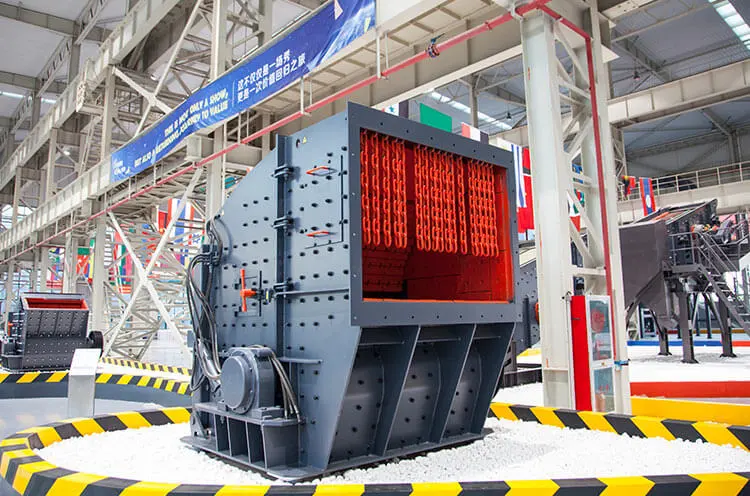
When selecting an impact crusher for your construction waste recycling project, the decision isn’t just about raw power—it’s about matching key parameters like rotor diameter and motor power to real-world conditions. Misalignment here can lead to inefficient throughput, premature wear, or hidden operational costs that erode margins over time.
In practice, a 1,300 mm rotor diameter (like on the PF-1315 model) typically delivers 30–40% higher capacity than a 1,000 mm unit when processing mixed demolition debris with up to 20% moisture content. Why? Because larger rotors maintain momentum through irregular feed sizes—critical in unsorted construction waste where stones, rebar fragments, and bricks coexist.
Expert Insight: “We saw a 27% drop in downtime after switching from a small-rotor machine to a 1,300 mm model at our site in Dubai,” says Ahmed Khalil, Lead Engineer at Al-Futtaim GreenTech. “The bigger rotor handled inconsistent feed better—and kept the hammer heads stable.”
A 110 kW motor doesn’t always mean more output—it depends on how it’s matched. For example, using a 110 kW motor with a 1,300 mm rotor in a high-moisture environment (≥15%) results in 18% lower energy consumption per ton compared to a 150 kW setup with a smaller rotor. This is because the right motor avoids "overkill" inefficiencies during partial load cycles common in waste sorting lines.
| Scenario | Energy Use (kWh/ton) | Maintenance Cost Estimate |
|---|---|---|
| Small rotor + oversized motor | 1.9 kWh/ton | $120/month |
| Optimized rotor + matched motor | 1.4 kWh/ton | $65/month |
These differences aren’t minor—they compound into thousands of dollars saved annually across multiple shifts and machines.
At a recycling facility in Riyadh, operators initially used standard manganese steel hammers in a system handling concrete with embedded metal. Within 4 weeks, hammer replacement frequency doubled due to accelerated wear. Switching to high-chromium alloy hammers reduced maintenance by 60%, proving that material compatibility matters as much as mechanical specs.
For projects aiming for clean, uniform aggregate—especially for asphalt or concrete production—the impact crusher’s ability to control particle shape (vs. jaw + cone setups) adds measurable value: crushed particles with fewer flaky edges improve compaction efficiency by up to 12%, according to a 2023 study by the European Waste Management Association.
Pro Tip: Always integrate your impact crusher selection with downstream systems—screening, conveying, and dust control. A well-balanced system reduces bottlenecks and boosts overall plant throughput by up to 25%.
If you’re evaluating equipment for your next construction waste project—or optimizing an existing line—don’t guess. Let data guide your choice.
Download Your Free Construction Waste Crusher Selection Checklist 94
|
94
|
 metal ore crushing issues
PEW jaw crusher technology
iron ore crushing efficiency
jaw crusher maintenance tips
mining equipment downtime prevention
209
|
CI5X heavy - duty rotor crusher
high - efficiency impact crusher
rotor design optimization
mining crushing equipment
energy - saving crusher
498
|
impact crusher screen gap adjustment
high moisture ore crushing
crushing equipment configuration
mineral physical properties analysis
efficient crusher application
61
|
Metal ore jaw crusher selection
Crusher feed size matching
Ore particle size and crushing efficiency
Jaw crusher application cases
High - efficiency crushing of mining equipment
287
|
Impact crusher inspection
Crusher abnormal signal identification
Mining equipment maintenance
Hammer life extension
Intelligent lubrication system
metal ore crushing issues
PEW jaw crusher technology
iron ore crushing efficiency
jaw crusher maintenance tips
mining equipment downtime prevention
209
|
CI5X heavy - duty rotor crusher
high - efficiency impact crusher
rotor design optimization
mining crushing equipment
energy - saving crusher
498
|
impact crusher screen gap adjustment
high moisture ore crushing
crushing equipment configuration
mineral physical properties analysis
efficient crusher application
61
|
Metal ore jaw crusher selection
Crusher feed size matching
Ore particle size and crushing efficiency
Jaw crusher application cases
High - efficiency crushing of mining equipment
287
|
Impact crusher inspection
Crusher abnormal signal identification
Mining equipment maintenance
Hammer life extension
Intelligent lubrication system







.jpg?x-oss-process=image/resize,h_800,m_lfit/format,webp)
.jpg?x-oss-process=image/resize,h_800,m_lfit/format,webp)



 Facebook