
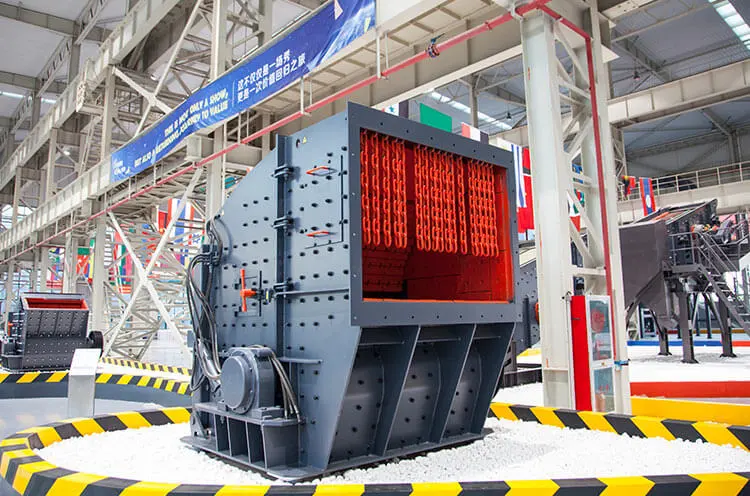
Facing challenges with adjusting the discharge port of your impact crusher? The PFW series impact crushers offer a breakthrough with their innovative dual-wedge structure enabling fast, stepless adjustment. This design empowers you to precisely control particle size variations and prevent equipment overload — critical for processing chemical raw materials like limestone and coal gangue. Dive into this expert guide to understand the hydraulic-mechanical linkage mechanism, get actionable parameter settings, and follow step-by-step tuning procedures that enhance your production line efficiency with less downtime and rework.
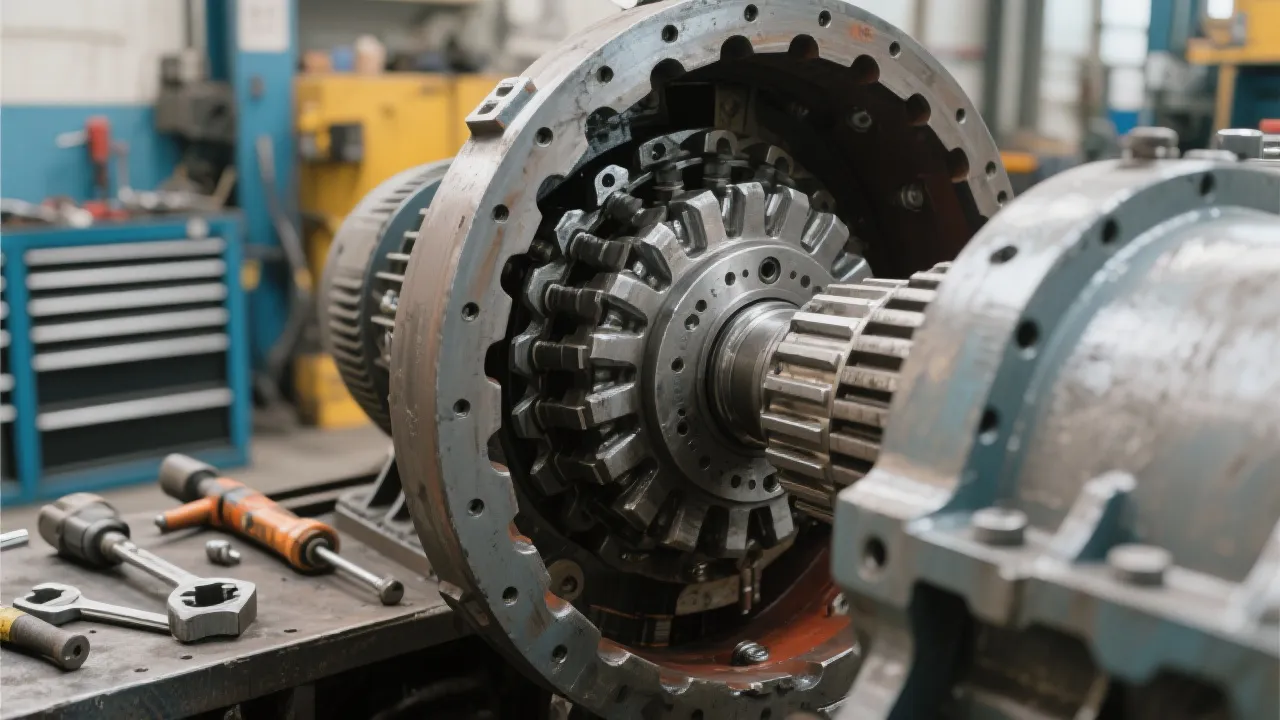
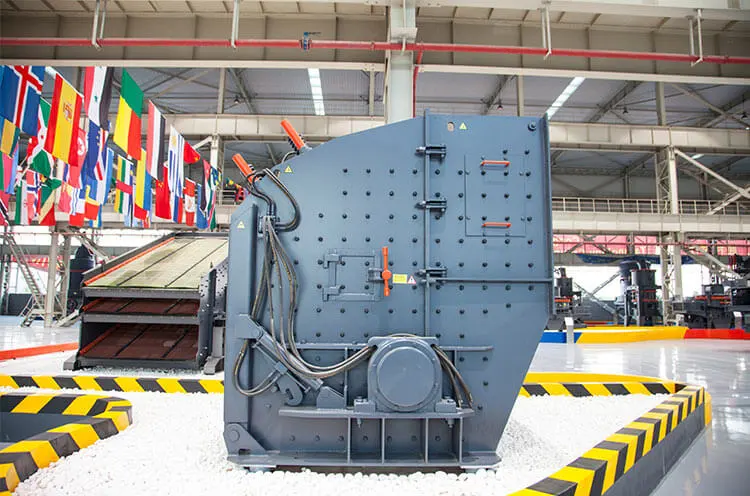
Unlike traditional impact crushers, the PFW series utilizes a dual-wedge structure to adjust the discharge port. This design couples hydraulic cylinders with mechanical linkage to provide rapid and robust opening or closing actions without interruption during operation.
When hydraulic pressure is applied, the wedges move symmetrically, adjusting the discharge gap size smoothly from 20mm up to 150mm, allowing you to adapt to varying feed materials and desired particle sizes on the fly.
Technical Insight: The linkage ensures uniform force distribution, reducing wear and prolonging the life cycle of key components by up to 30% compared to single-wedge structures.
For raw materials like limestone and coal gangue, controlling particle size distribution is crucial to meet downstream processing standards. Adjusting the discharge port effectively can help maintain consistent output quality.
Always adjust in small increments (5mm steps recommended) with monitoring sensors in place to avoid sudden shifts that can overload motors or degrade particle uniformity.
Follow these steps to ensure precise and safe adjustment:
Pro Tip: Use inline particle size analyzers for real-time feedback to minimize manual sampling delays.
Thanks to the dual-wedge hydraulic linkage, adjustments can be made within 30 seconds under load, ensuring minimal interruption.
Routine lubrication every 500 operating hours and hydraulic fluid inspection quarterly extend service life and maintain responsiveness.
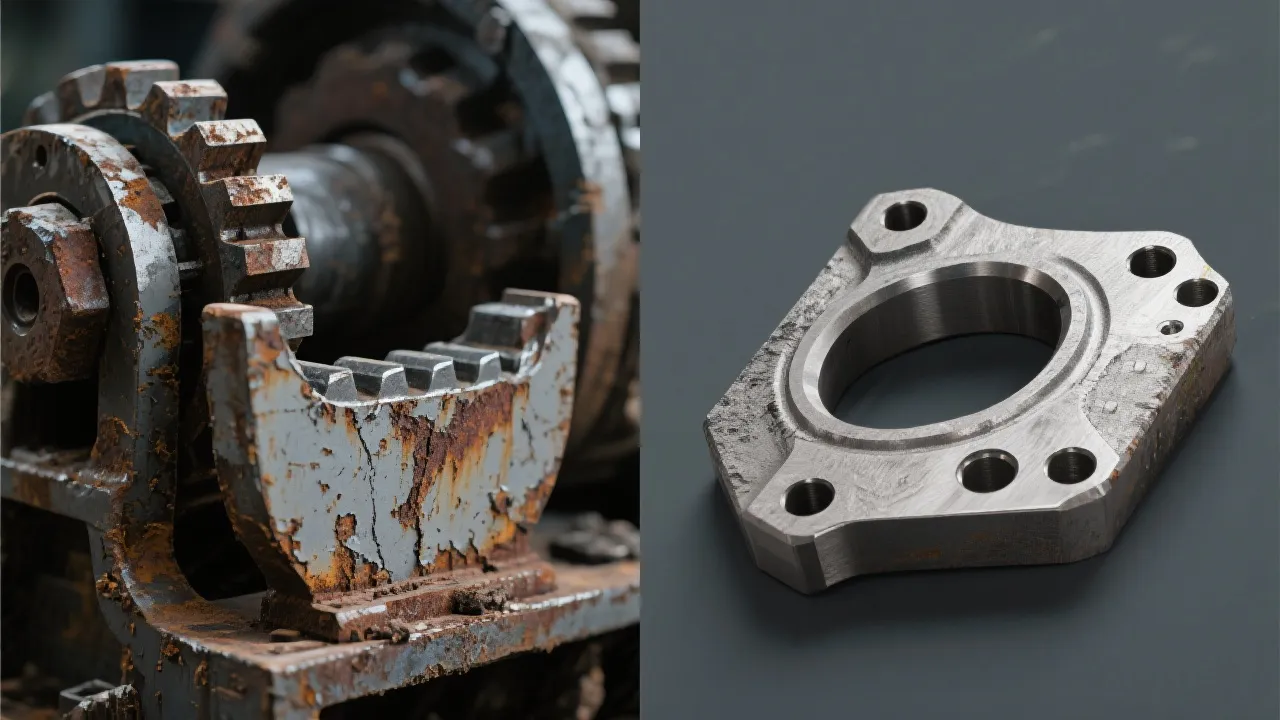
Yes, wear-resistant alloys are utilized in wedge surfaces, supporting abrasive feedstocks while minimizing downtime.
"By switching to the PFW impact crusher with the dual-wedge discharge port, our plant’s output consistency improved by 25%, and equipment overload incidents dropped by 40% in the first six months. This technology has transformed our limestone processing line with less maintenance and higher throughput." – Zhejiang Chemical Processing Group
 361
|
361
|
 limestone crushing equipment configuration
granite crushing challenges
basalt crushing solutions
impact crusher selection guide
crushing equipment parameter optimization
501
|
impact crusher screen gap adjustment
high moisture ore crushing
crushing equipment configuration
mineral physical properties analysis
efficient crusher application
228
|
VSI6X sand making machine
high-efficiency sand production equipment
patented technology
low-cost sand production
energy-efficient sand making machine
various materials crushing
dual motor drive
automatic thin oil lubrication system
spare parts and technical services
two feeding modes
257
|
["Jaw Crusher"
"Aggregate Production Efficiency"
"High-Efficiency Crusher Technology"
"C6X Jaw Crusher"
"Crusher Selection and Maintenance"]
183
|
VSI6X Sand Making Machine
efficient energy-saving sand maker
sand making machine technology secrets
long service life sand maker
sand making machine application cases
limestone crushing equipment configuration
granite crushing challenges
basalt crushing solutions
impact crusher selection guide
crushing equipment parameter optimization
501
|
impact crusher screen gap adjustment
high moisture ore crushing
crushing equipment configuration
mineral physical properties analysis
efficient crusher application
228
|
VSI6X sand making machine
high-efficiency sand production equipment
patented technology
low-cost sand production
energy-efficient sand making machine
various materials crushing
dual motor drive
automatic thin oil lubrication system
spare parts and technical services
two feeding modes
257
|
["Jaw Crusher"
"Aggregate Production Efficiency"
"High-Efficiency Crusher Technology"
"C6X Jaw Crusher"
"Crusher Selection and Maintenance"]
183
|
VSI6X Sand Making Machine
efficient energy-saving sand maker
sand making machine technology secrets
long service life sand maker
sand making machine application cases


.jpg?x-oss-process=image/resize,h_800,m_lfit/format,webp)
.jpg?x-oss-process=image/resize,h_800,m_lfit/format,webp)



.jpg?x-oss-process=image/resize,m_fill,h_800,w_800/format,webp)




 Facebook