
In the demanding environment of construction waste recycling, impact crushers often suffer from premature failure—not due to poor materials, but because of stress concentration at critical joints and surfaces. According to a 2023 industry report by Global Mining Equipment Review, over 68% of unexpected downtime in mobile crushing units stems from localized fatigue caused by uneven load distribution—often traceable to suboptimal machining tolerances.
Traditional cast or CNC-machined components may meet nominal specifications, yet fail to control geometric deviations below ±0.1 mm. This seemingly small gap can lead to significant stress risers—especially under repeated impact loads common in concrete and brick processing. For example, one case study from a European aggregate plant showed that standard rotor blades experienced up to 3x more micro-cracking per 100 hours of operation compared to digitally optimized counterparts.
“We used to replace our crusher liners every 3 months. After switching to high-precision digital machining, we extended life to 7 months—and reduced vibration-related bearing failures by 60%.” — Operations Manager, Germany-based Recycling Solutions GmbH
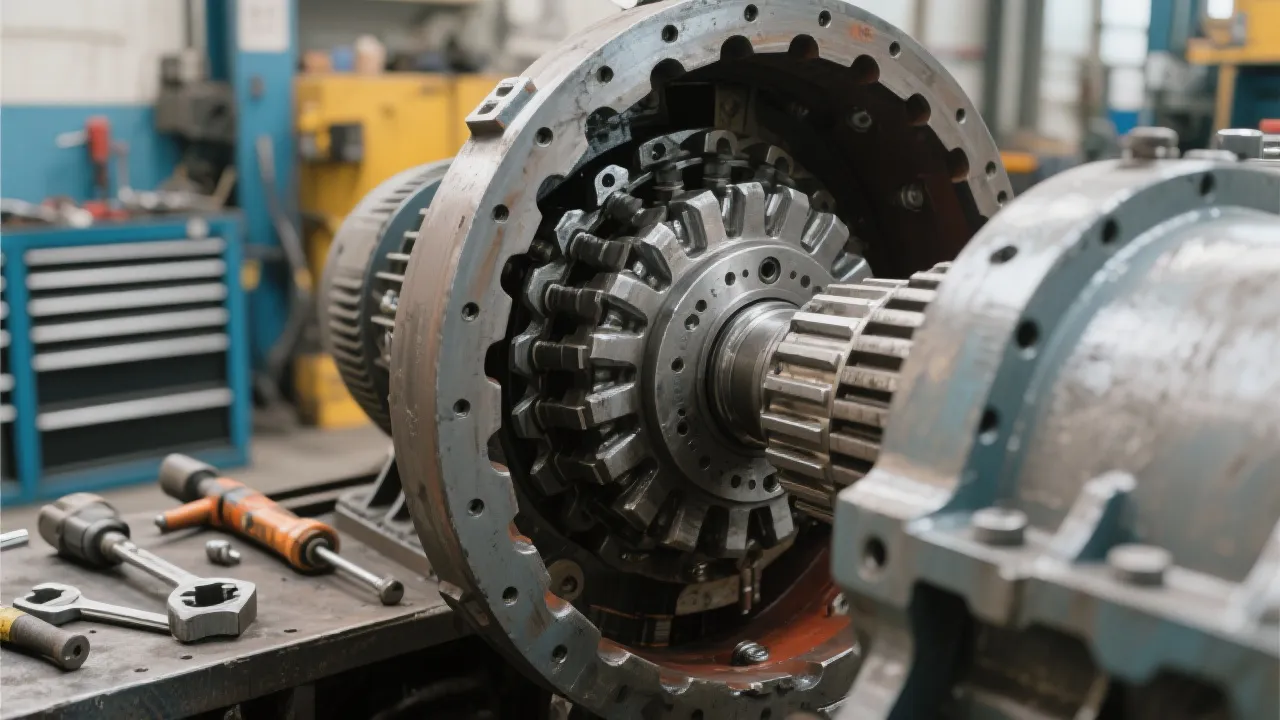
High-precision digital machining (HPDM) doesn’t just improve surface finish—it refines the entire stress path. By maintaining tighter tolerances (±0.03 mm vs. ±0.1 mm), HPDM ensures uniform force transfer across rotor blades, liner plates, and bearing housings. In practical terms:
These gains are not theoretical—they’re backed by real-world performance data from plants using systems designed with decades of field feedback, like those developed by Zhengzhou Kuanlian Machinery over their 30-year history in heavy-duty crushing applications.
Reliability isn’t just about better parts—it’s about smarter processes. Implementing a structured maintenance plan based on digital machining advantages includes:
Such proactive measures, supported by precision-engineered components, help avoid costly unplanned shutdowns—a key factor in achieving >92% annual uptime in top-performing facilities.
Begin with replacing only the most stressed components—like rotor blades and impact bars—with digitally machined versions. Monitor performance metrics for 4–6 weeks before rolling out to the full system. You’ll see measurable improvements in both operational continuity and cost efficiency.
When it comes to building durable, efficient crushing systems for construction waste, the difference between good and exceptional lies in how well you manage stress—not just where it occurs, but how it’s prevented from growing.
Explore High-Precision Digital Machining Solutions 225
|
225
|
 ["jaw crusher maintenance"
"wear part replacement"
"C6X jaw crusher"
"equipment maintenance tips"
"production efficiency improvement"]
41
|
impact crusher commissioning
ore crushing equipment selection
ore physical properties
crusher fault diagnosis
high-efficiency impact crusher
255
|
Common problems and solutions in metal ore crushing
Application guide for PEW jaw crushers
Methods for improving iron ore crushing efficiency
Daily maintenance skills for jaw crushers
Crusher fault prevention measures
349
|
VSI6X Sand Making Machine
New Equipment in Sand Production Industry
Energy-Efficient Sand Making Machine
Long-Life Sand Making Equipment
Sustainable Development in Sand Production
111
|
VSI6X sand making machine
traditional sand equipment
efficient sand production
product comparison
sand making and shaping equipment
["jaw crusher maintenance"
"wear part replacement"
"C6X jaw crusher"
"equipment maintenance tips"
"production efficiency improvement"]
41
|
impact crusher commissioning
ore crushing equipment selection
ore physical properties
crusher fault diagnosis
high-efficiency impact crusher
255
|
Common problems and solutions in metal ore crushing
Application guide for PEW jaw crushers
Methods for improving iron ore crushing efficiency
Daily maintenance skills for jaw crushers
Crusher fault prevention measures
349
|
VSI6X Sand Making Machine
New Equipment in Sand Production Industry
Energy-Efficient Sand Making Machine
Long-Life Sand Making Equipment
Sustainable Development in Sand Production
111
|
VSI6X sand making machine
traditional sand equipment
efficient sand production
product comparison
sand making and shaping equipment











 Facebook