
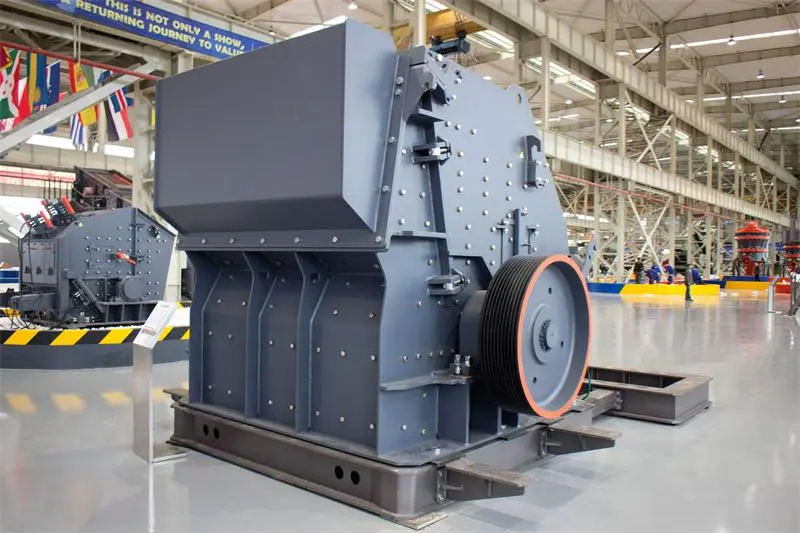
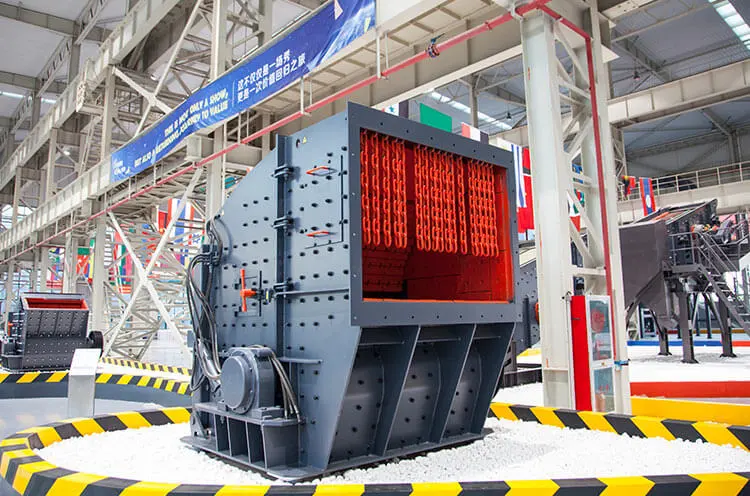
When processing construction waste into high-quality recycled aggregates, one of the most critical challenges is controlling particle shape—especially minimizing needle-like and flaky particles that reduce concrete strength and durability. A recent case study from a leading European recycling plant shows that switching from traditional jaw crushers to an impact crusher (PF-1315 model) reduced needle-and-flake content by up to 42% while increasing throughput by 28%.
Jaw crushers rely on compression force—a method effective for primary crushing but less precise for shaping. In contrast, impact crushers use high-speed rotor impact forces, which break material along natural fracture lines rather than crushing it uniformly. This results in smoother, more cubical particles ideal for concrete production.
Key Performance Comparison:
In a project handling mixed construction debris (concrete, brick, rebar), operators found success by tuning three key parameters:
Pro Tip: Avoid overloading the feed hopper—it’s a common mistake that leads to inconsistent particle size and premature liner wear. Always maintain steady feed rates for maximum performance.
A municipal recycling center in Berlin replaced their old PE-1200 jaw crusher with a PF-1315 impact crusher. After adjusting feed settings and installing upgraded wear liners, they reported:
“We saw immediate improvement in aggregate shape—now meeting EN 12620 standards without additional screening or sorting. The equipment also required only 15% more energy per ton than before, despite higher throughput.”
These results confirm that selecting the right crusher isn’t just about capacity—it’s about precision, consistency, and long-term operational cost savings.
Get our free PF-1315 Operation Manual — packed with real-world parameter settings, maintenance checklists, and troubleshooting tips used by top recyclers across Europe and North America.
Download Full Technical Guide Now 279
|
279
|
 High - output crusher
Aggregate plant equipment
C6X jaw crusher
Crusher performance evaluation
Ore crushing equipment
272
|
Metal ore crushing
Iron ore crushing efficiency improvement methods
PEW Jaw Crusher application guide
Jaw Crusher daily maintenance skills
Crusher output fluctuation control
450
|
VSI6X sand making machine
efficient sand production equipment
patented technology sand shaping
57
|
Common problems and solutions in metal ore crushing
Application guide for PEW jaw crushers
Methods to improve iron ore crushing efficiency
Daily maintenance tips for jaw crushers
Solutions for high-clay-content ore processing
86
|
Traditional jaw crusher maintenance problems
C6X jaw crusher advantages
Crusher maintenance techniques
High - yield crusher technology
Equipment maintenance efficiency improvement
High - output crusher
Aggregate plant equipment
C6X jaw crusher
Crusher performance evaluation
Ore crushing equipment
272
|
Metal ore crushing
Iron ore crushing efficiency improvement methods
PEW Jaw Crusher application guide
Jaw Crusher daily maintenance skills
Crusher output fluctuation control
450
|
VSI6X sand making machine
efficient sand production equipment
patented technology sand shaping
57
|
Common problems and solutions in metal ore crushing
Application guide for PEW jaw crushers
Methods to improve iron ore crushing efficiency
Daily maintenance tips for jaw crushers
Solutions for high-clay-content ore processing
86
|
Traditional jaw crusher maintenance problems
C6X jaw crusher advantages
Crusher maintenance techniques
High - yield crusher technology
Equipment maintenance efficiency improvement



.jpg?x-oss-process=image/resize,h_800,m_lfit/format,webp)



.jpg?x-oss-process=image/resize,m_fill,h_800,w_800/format,webp)




 Facebook