
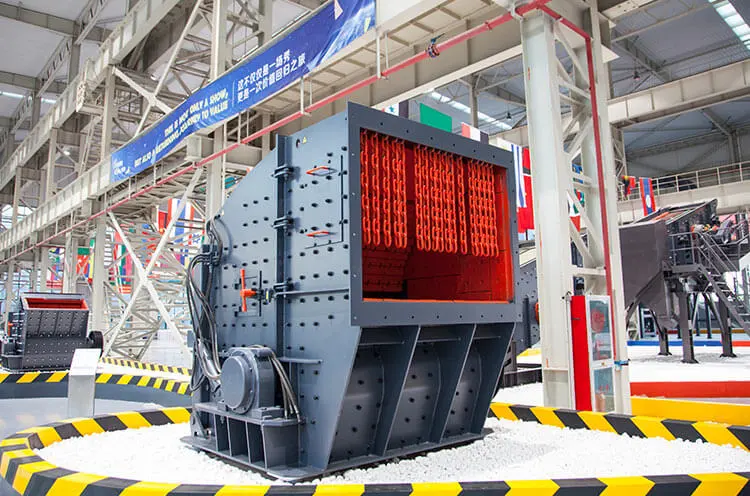
In recent years, the construction waste recycling industry has witnessed rapid development, driven by the increasing demand for sustainable development and environmental protection. Impact crushers have emerged as a crucial equipment choice in this field due to their unique advantages. This article delves into the key points of system integration design of impact crushers in construction waste recycling aggregate production lines, with a focus on the optimization and application of supporting solutions such as screening, dust removal, and conveying.
The applicability of impact crushers varies depending on different construction waste recycling scenarios. For example, when dealing with construction waste with a relatively high content of concrete and bricks, impact crushers can effectively break the materials into the desired particle size. The characteristics of the raw materials, such as hardness, particle size distribution, and moisture content, have a significant impact on equipment selection. Harder materials may require an impact crusher with a larger rotor diameter and higher motor power. In general, impact crushers are more suitable for materials with a Mohs hardness of less than 6.
The supporting design and optimization of screening, dust removal, and conveying systems are crucial for improving the overall operating efficiency of the system. In the screening system, the selection of appropriate screening equipment and screening parameters can ensure the accurate classification of recycled aggregates. A well - designed dust removal system can effectively reduce dust emissions, meeting environmental requirements. For example, a bag - type dust collector can achieve a dust removal efficiency of over 95%. In the conveying system, the layout and type of conveyors need to be carefully considered to ensure smooth material transportation. By optimizing the conveyor speed and inclination angle, the conveying capacity can be increased by up to 30%.
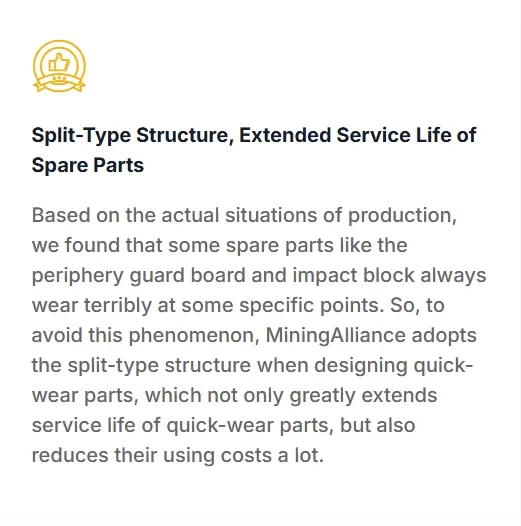
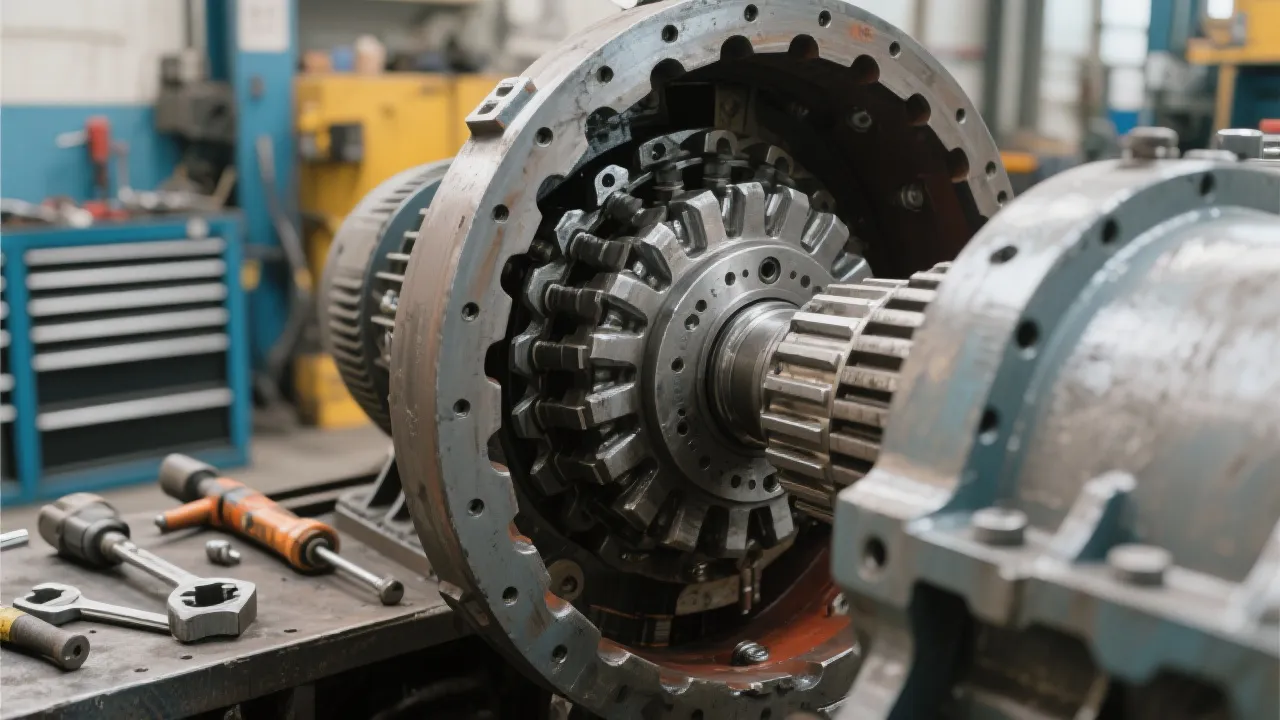
Compared with traditional jaw + hammer crushers, impact crushers have significant technical advantages. They can produce more cubical and well - shaped recycled aggregates, which is beneficial for the subsequent use of the aggregates. In terms of maintenance costs, the application of high - wear - resistant materials in impact crushers has reduced the frequency of part replacement. For example, the use of high - chromium alloy materials can extend the service life of the impact plate by 2 - 3 times, reducing the overall maintenance cost by about 25%.
In a real - world construction waste recycling project in [city name], the impact crusher initially faced problems such as low production efficiency and unstable product quality. Through in - depth analysis, it was found that the key parameters of the crusher, such as the rotor diameter and motor power, did not match the production requirements. After adjusting the rotor diameter and increasing the motor power, the production efficiency increased by 40%, and the product quality also improved significantly.
Key parameters such as rotor diameter, motor power, and production capacity requirements need to be carefully matched. Generally, a larger rotor diameter can increase the crushing force and production capacity. For a production line with a daily production capacity of 500 - 1000 tons, a rotor diameter of 1.2 - 1.5 meters and a motor power of 150 - 250 kW are usually required.
This article has comprehensively analyzed the system integration design points of impact crushers in construction waste recycling aggregate production lines. By understanding the applicability of impact crushers in different scenarios, optimizing the supporting systems, and matching key parameters, the production efficiency and environmental protection level of construction waste recycling projects can be effectively improved.
Are you struggling with the selection of construction waste crushing equipment? Download our free equipment selection self - check list and book a technical consultation now to make the most suitable choice for your project!
 77
|
77
|
 limestone sand production line
PEW jaw crusher
crushing ratio optimization
non-metallic mineral processing
jaw crusher parameter setting
221
|
PE jaw crusher application tips
metal ore primary crushing
jaw crusher discharge adjustment
mining crushing technology
avoiding crushing misconceptions
204
|
impact crusher
construction waste processing
PF-1315 crusher
crusher maintenance
resource recovery
395
|
VSI6X Sand Maker
sand making equipment for diverse needs
sand shaping equipment
choosing sand making equipment
advantages of VSI6X Sand Maker
229
|
C6X jaw crusher
modular design
aggregate plant production efficiency
crusher installation and maintenance
high - efficiency crushing equipment
limestone sand production line
PEW jaw crusher
crushing ratio optimization
non-metallic mineral processing
jaw crusher parameter setting
221
|
PE jaw crusher application tips
metal ore primary crushing
jaw crusher discharge adjustment
mining crushing technology
avoiding crushing misconceptions
204
|
impact crusher
construction waste processing
PF-1315 crusher
crusher maintenance
resource recovery
395
|
VSI6X Sand Maker
sand making equipment for diverse needs
sand shaping equipment
choosing sand making equipment
advantages of VSI6X Sand Maker
229
|
C6X jaw crusher
modular design
aggregate plant production efficiency
crusher installation and maintenance
high - efficiency crushing equipment
.jpg?x-oss-process=image/resize,h_800,m_lfit/format,webp)

.jpg?x-oss-process=image/resize,h_800,m_lfit/format,webp)






 Facebook