
.jpg?x-oss-process=image/resize,h_1000,m_lfit/format,webp)
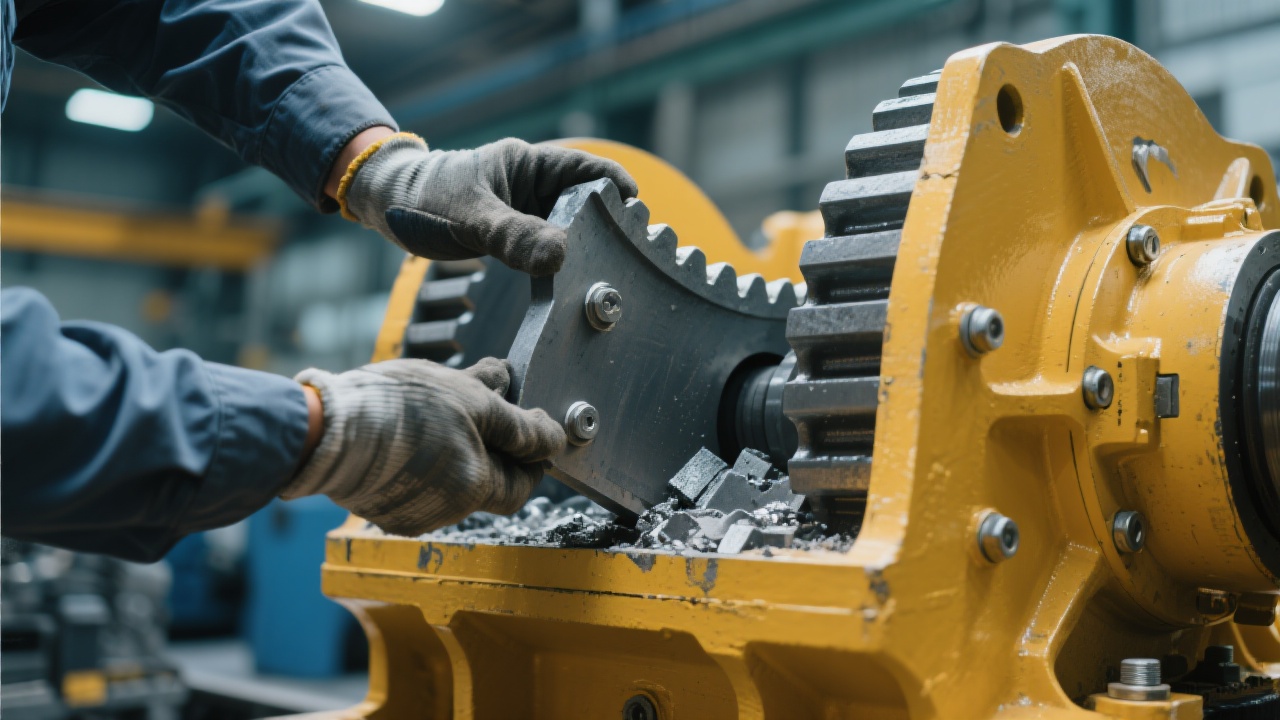
Efficient crushing of metal ores such as iron ore, copper ore, and bauxite hinges critically on the feed particle size presented to the jaw crusher. Optimal matching within the 0–1020mm feed size interval not only boosts crushing efficiency but also significantly reduces wear rates and improves final product shape. This detailed analysis investigates how variable feed granulometries impact performance indicators, illustrated through real-world examples from iron, copper, and bauxite mining operations using PE jaw crushers by Zhengzhou Kuanglian Machinery Co., Ltd.
The feed size distribution strongly governs the crushing dynamics. Oversized feed particles near the 1020mm upper limit increase mechanical stress, leading to accelerated wear on jaw plates and potential bottlenecks in throughput. Conversely, predominantly fines below 50mm reduce crusher utilization and energy efficiency. Studies reveal an optimal feed range of 100–500mm maximizes the crusher’s performance metrics.
| Feed Size Range (mm) | Crushing Efficiency (%) | Jaw Plate Wear Rate (kg/ton) | Output Particle Uniformity (CV, %) |
|---|---|---|---|
| 0 - 100 | 72 | 0.8 | 28 |
| 100 - 500 | 88 | 0.4 | 15 |
| 500 - 1020 | 65 | 1.2 | 38 |
Note: Crushing efficiency is measured as the ratio of reduced particle sizes meeting output specification. Wear rate indexing is based on kilograms of jaw plate lost per ton of ore crushed. Coefficient of variation (CV) in output particle size reflects uniformity — lower values indicate more consistent product.
The complexity of mineral compositions demands customized approaches to crusher feed management:
.jpg)
An effective crushing circuit blends correct machine selection with adaptive operational management. Key points for optimization include:
Practitioners are invited to contribute their selection dilemmas and operational insights in the comments below. Sharing firsthand experiences fosters community learning and uncovers innovative solutions tailored for specific ores and contexts. Questions such as, “What feed size adjustments led to improved crusher uptime on your site?” or “How do you balance throughput with jaw plate longevity?” help generate meaningful dialogue.

 496
|
496
|
 ["C6X jaw crusher maintenance"
"C6X crusher upkeep"
"jaw crusher fault diagnosis"
"efficient jaw crusher maintenance"
"high-output crusher maintenance"]
366
|
VSI6X Sand Maker
sand production efficiency
CNC machining technology
282
|
iron ore crushing efficiency
PEW jaw crusher maintenance
jaw crusher wear prevention
metal ore processing optimization
V-shaped crushing chamber
389
|
Stable operation of impact crushers
Extension of crusher vulnerable parts life
Mine equipment maintenance skills
Crushing solutions for high-humidity mining areas
Application of intelligent lubrication systems
229
|
C6X jaw crusher
modular design
aggregate plant production efficiency
crusher installation and maintenance
high - efficiency crushing equipment
["C6X jaw crusher maintenance"
"C6X crusher upkeep"
"jaw crusher fault diagnosis"
"efficient jaw crusher maintenance"
"high-output crusher maintenance"]
366
|
VSI6X Sand Maker
sand production efficiency
CNC machining technology
282
|
iron ore crushing efficiency
PEW jaw crusher maintenance
jaw crusher wear prevention
metal ore processing optimization
V-shaped crushing chamber
389
|
Stable operation of impact crushers
Extension of crusher vulnerable parts life
Mine equipment maintenance skills
Crushing solutions for high-humidity mining areas
Application of intelligent lubrication systems
229
|
C6X jaw crusher
modular design
aggregate plant production efficiency
crusher installation and maintenance
high - efficiency crushing equipment

.jpg?x-oss-process=image/resize,h_800,m_lfit/format,webp)







.jpg?x-oss-process=image/resize,m_fill,h_800,w_800/format,webp)


 Facebook