Modular Crushing Equipment for Quarries: Faster Installation and Higher Throughput with SMP Modules
MiningAlliance
2026-03-18
Technical knowledge
This article examines the key efficiency bottlenecks of conventional quarry crushing plants—complex on-site installation, long commissioning cycles, and limited flexibility when production targets or feed materials change. It introduces Kuanglian’s SMP modular crushing equipment, designed around standardized MP modules and pre-assembled structures that streamline deployment and reduce on-site workload. By enabling rapid configuration, quicker commissioning, and easier capacity expansion, the modular approach can deliver an estimated 30%–40% improvement in overall operational efficiency in suitable applications. The article also outlines performance considerations across common materials such as river pebbles, granite, and construction & demolition waste, and provides practical selection logic and maintenance recommendations to help quarry owners, plant managers, and procurement teams make informed decisions and improve equipment utilization and daily output.
Why Modular Crushing Is Becoming the Fastest Path to Higher Quarry Output
Quarry production rarely fails because of crusher horsepower alone. In many operations, the real constraint is time-to-production: foundations, steel structures, wiring, commissioning, and the back-and-forth adjustments that keep a plant under-utilized for weeks. Traditional crushing lines—especially those built as one-off projects—tend to lock site teams into long installation windows and high commissioning uncertainty.
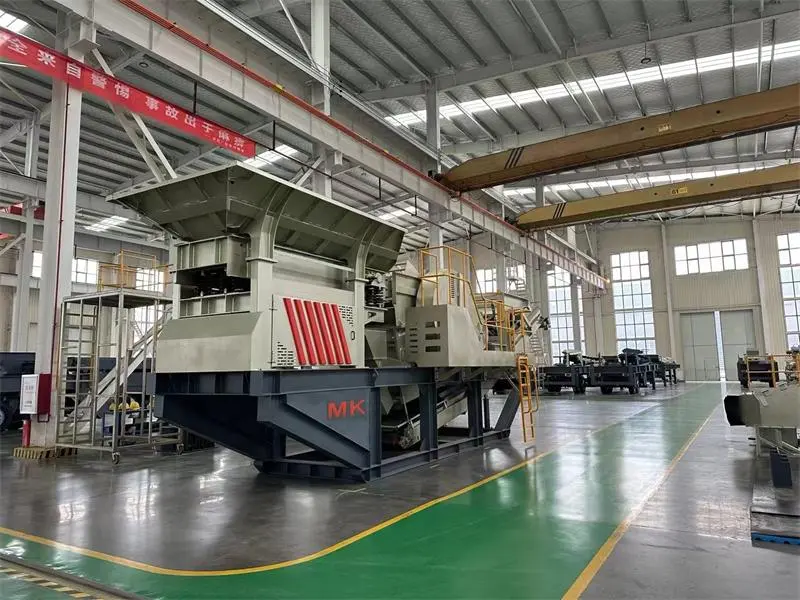
A modular approach changes that equation. Kuanglian (Zhengzhou Kuanglian Machinery Co., Ltd.) developed the SMP modular crushing equipment concept around standardized modules and pre-assembled structures, aiming to shorten field work while improving line stability. In practical quarry scenarios, modularization commonly translates into a 30%–40% improvement in overall production efficiency—not by “speeding up” a single machine, but by reducing downtime, rework, and ramp-up losses across the entire line.
For quarry managers & procurement decision-makers · Awareness stage
Where Traditional Crushing Plants Lose Efficiency (and Budget Time)
In stone and aggregate production, efficiency bottlenecks often hide in “non-crushing” steps. Engineering teams may specify the right jaw or cone crusher, yet still struggle with throughput because the plant ecosystem is slow to install, slow to tune, and sensitive to process variation.
Common bottlenecks observed on conventional builds
Complex on-site assembly: individual frames, chutes, platforms, and guards assembled in the field increase alignment errors and rework.
Long commissioning cycles: electrical integration, interlocks, feeder tuning, and crusher setting optimization can take multiple iterations.
Unpredictable interfaces: non-standard connections between crushers, screens, and conveyors amplify delays when parts arrive out of sequence.
Maintenance access compromises: tight layouts lead to longer stoppages for liner replacement, belt repairs, and bearing inspections.
For many quarries, the hidden KPI is not “rated capacity,” but utilized capacity. A plant designed for 250–350 tph that runs inconsistently due to start-stop events or unstable gradation may effectively deliver far less, especially during the first months after installation.
How SMP Modular Crushing Equipment Works: Standardized Modules + Pre-Assembly
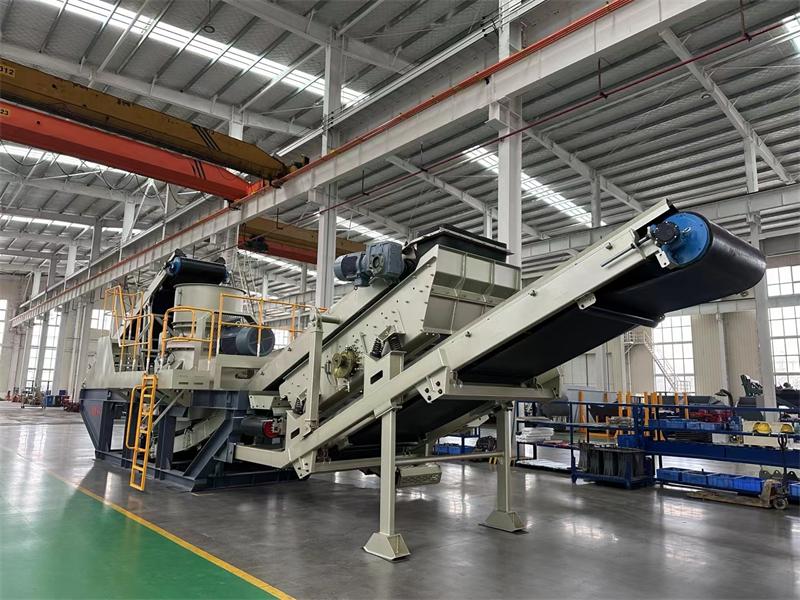
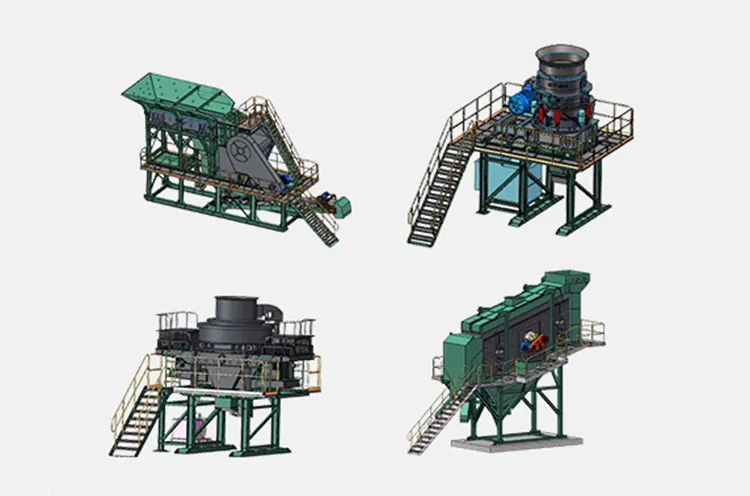
The SMP concept focuses on converting a traditional “construction project” into a repeatable industrial installation. Instead of fabricating and fitting everything on the quarry floor, critical elements are standardized, pre-aligned, and prepared for predictable interfaces.
1) MP modules: building blocks for capacity and material
By combining standardized MP modules—covering crushing, screening, feeding, transfer, and auxiliary functions—engineers can scale the plant for different outputs and aggregate specifications. This modular logic improves engineering speed and reduces interface uncertainty during installation.
Engineering note: In many quarry projects, a meaningful portion of lost throughput comes from “ramp-up inefficiency”—the weeks spent tuning feeder speed, screen angles, recirculation ratio, and crusher settings. Modular plants reduce variability at the interfaces, which often shortens the tuning loop.
What a 30%–40% Efficiency Gain Typically Means in Real Operations
“Efficiency” in quarry crushing is multi-dimensional: installation time, commissioning speed, uptime, and process stability all influence the final number. When modularization delivers a 30%–40% improvement, it is usually a combined result of faster start-up and higher availability rather than a single dramatic performance jump.
Reference metrics (typical quarry project range)
Values below are operational reference ranges used by many engineering teams; actual results depend on civil work readiness, operator experience, and material characteristics.
Area
Conventional build (reference)
Modular approach (reference)
On-site mechanical installation
18–35 days
10–22 days
Commissioning & process tuning
10–20 days
6–14 days
Early-stage availability (first 90 days)
75%–85%
85%–92%
Overall efficiency improvement (combined)
Baseline
+30% to +40%
For procurement teams, these improvements are often most visible in a single practical outcome: more saleable tons per day with fewer “unplanned pauses” caused by transfer blockages, inconsistent feed, or prolonged setting adjustments.
Material Fit: Pebbles, Granite, and Construction Waste Are Not the Same Problem
Crushing equipment selection is often mislabeled as “stone crushing.” In reality, material hardness, abrasiveness, moisture, and shape drive different process behaviors. Modular plants add value by allowing engineers to re-balance the line—module by module—rather than redesigning the entire station.
Pebbles (river stone): why “easy” materials still cause losses
Pebbles can be deceptively challenging due to smooth surfaces and high roundness, which may reduce inter-particle grip and influence breakage patterns. A modular layout makes it easier to adjust the reduction ratio distribution and screening configuration to improve pebble crushing efficiency, especially when targeting consistent 0–5 mm and 5–10 mm products.
Granite: focus on wear management and stable gradation
Granite’s higher hardness and abrasiveness typically shift the optimization target to wear life and stable product grading. Modular stations can be configured to support better access and predictable maintenance windows—helping reduce the operational impact of liner replacement and keeping throughput steadier over time.
Construction waste (C&D): design for contamination and variability
Recycled aggregates introduce rebar risks, variable feed sizes, and impurities. A modular recycling crushing solution often prioritizes staged screening, controlled feed, and easy-clean transfer areas to reduce stoppages. When the layout supports fast inspection and clearing, plant utilization improves materially—especially in mixed demolition streams.
In practice, many sites start with one dominant material and later expand into another. Modularization supports that transition with fewer structural changes—valuable for quarries that need to react to local project demand without re-building the full plant.
Evidence Buyers Look For: What “Proven Modular” Usually Includes
In global quarry procurement, “proven” rarely means a single impressive photo. Technical buyers typically evaluate repeatability: standardized interfaces, predictable delivery, and a commissioning process that does not rely on luck or heroic on-site improvisation.
What a credible modular case file often contains
Capacity and product gradation targets (e.g., 0–5 mm / 5–10 mm / 10–20 mm) with measured output stability.
Installation timeline records (mechanical + electrical) and commissioning duration.
Availability and stoppage reasons categorized (feed issues, transfer blockages, wear part change, electrical).
Maintenance accessibility notes (liner change time, belt replacement time, inspection intervals).
Kuanglian positions SMP modular crushing equipment for quarry and recycling scenarios where shortening on-site installation time and achieving a faster stable run are primary decision drivers.
Selection Logic: How to Specify the Right Modular Configuration (Without Over-Engineering)
A modular line is not automatically “better” unless the module choices match the site’s feed and product requirements. A practical selection process starts with the quarry’s real constraints and then maps them to a stable flowsheet.
A field-ready specification checklist
Define feed envelope: top size, moisture, clay content, and daily variability. (A single rainy season can change the plant behavior.)
Set a realistic capacity target: average tph and peak tph; specify whether the priority is steady output or surge handling.
Plan maintenance access: define desired liner change frequency and the maximum acceptable stoppage window.
Decide mobility vs. stability: some sites benefit from semi-mobile module placement; others prioritize permanent foundations.
Confirm site utilities: power supply stability, dust suppression water availability, and space for stockpiles and loader routes.
When these items are clear, engineers can select MP modules that fit the flowsheet and site constraints—reducing the risk of buying “capacity on paper” that cannot be realized in daily production.
Operations & Maintenance Tips That Protect Modular Plant Advantages
Modular design can shorten installation and improve stability, but day-to-day performance still depends on disciplined operations. The best results come from controlling upstream variability and keeping inspection routines consistent.
Stabilize the feed to stabilize the plant
Use consistent loader practice and avoid sudden surges that overload screens or create crusher “choke and starve” cycles. Many quarries recover noticeable throughput simply by maintaining a stable feed layer and monitoring recirculation ratio.
Make wear predictable, not surprising
Track liner and screen media life by tonnage and material type, not just calendar days. A simple log linking wear life to feed hardness/abrasiveness helps keep downtime scheduled rather than reactive.
Shorten troubleshooting loops with clear checkpoints
When gradation drifts, check in order: feeder setting → crusher CSS → screen condition/angle → recirculation load → transfer chute build-up. This sequence prevents “random adjustments” that extend instability.
Need the Right MP Module Combination for Your Quarry?
Share your feed size, target capacity (tph), and required final gradation. Kuanglian’s team can recommend a practical SMP modular crushing equipment configuration and an installation-ready plan—focused on reducing commissioning time and improving daily utilization.
Typical inputs: material type (pebble/granite/C&D), moisture range, max feed size, desired products, site layout constraints, and power supply conditions.
2026-02-27|78|crushing plant process designinfrastructure aggregate production linecrusher and screening optimizationautomated crushing control systemvibrating screen configuration
2026-02-28|48|stone crushing production line crushing plant operation guide raw material preprocessing intelligent control system equipment maintenance















 Facebook