Ore-Based Crushing Equipment Selection Guide: Optimizing Single-Cylinder Hydraulic Cone Crushers for Higher Throughput
2026-02-24
Technical knowledge
Selecting the right crushing equipment based on ore properties is a decisive factor for improving mine throughput, product quality, and overall line profitability. This article presents a practical selection framework that links key ore characteristics—such as hardness, abrasiveness, compressive strength, moisture, clay content, and feed size distribution—to crusher performance requirements across primary, secondary, and tertiary stages. It then focuses on the single-cylinder hydraulic cone crusher as a high-efficiency solution for modern mining circuits, explaining how the integration of mechanical design, hydraulic protection, electrical systems, and intelligent controls enables strong processing capacity, stable operation, and enhanced safety. Core optimization levers are examined in detail, including crushing chamber geometry, eccentric throw adjustment, and motion parameter tuning to maximize reduction efficiency, improve particle shape, and minimize over-crushing. The article also outlines reliability and maintenance-cost control methods such as wear-part management, liner selection, hydraulic system health monitoring, and automation-assisted condition diagnostics. Finally, it references proven global application scenarios to illustrate configuration strategies under different ore types and operating conditions, providing actionable guidance for equipment procurement and line upgrades. Readers looking to improve performance can request a tailored crushing solution consultation and explore how the equipment performs in similar operating conditions.

How to Choose the Right Crusher Based on Ore Properties (and Why Single-Cylinder Hydraulic Cone Crushers Often Win)
Crusher selection is rarely “one size fits all.” In modern mines, a mismatch between ore characteristics and crushing technology can quietly drain throughput, inflate wear cost, and destabilize downstream grinding. In contrast, a well-matched selection typically improves utilization, tightens product gradation, and makes the whole plant easier to run—especially when the circuit is designed around a high-efficiency single-cylinder hydraulic cone crusher.
Industry benchmarking from multiple operations shows that optimized crushing circuits can cut energy per ton by ~10–25% and improve final product consistency (fewer oversize excursions) enough to unlock 2–8% higher plant-wide throughput—without changing the orebody.
1) Start With the Ore: The Properties That Actually Change Crusher Performance
Experienced quarry and mining teams know the pain: the same crusher model can run smoothly in one pit and struggle in another. The difference is usually not the machine—it’s the ore’s breakage behavior. Before choosing a crusher type (jaw, gyratory, cone, impact), define these parameters as clearly as possible.
Key Ore Parameters to Document (Minimum Dataset)
- Hardness & strength: UCS / compressive strength, abrasiveness index (where available)
- Abrasiveness: silica content, quartz percentage, wear index trends from current liners
- Moisture & clay: sticky fines, plasticity, risk of packing/blockage
- Feed size distribution: F80 / top size, plus the % of fines already present
- Fracture style: laminated, brittle, or tough; presence of veins and weak planes
- Variability: ore blending strategy, seasonal changes, and “worst-week” conditions
As a rule of thumb, when the ore is hard and abrasive, mines prioritize compression crushing (cone/gyratory) to maintain wear life and stable gradation. When the ore is less abrasive but highly fractured, other technologies may compete—yet modern cone designs often still deliver the best balance of reduction ratio, shape, and controllability.
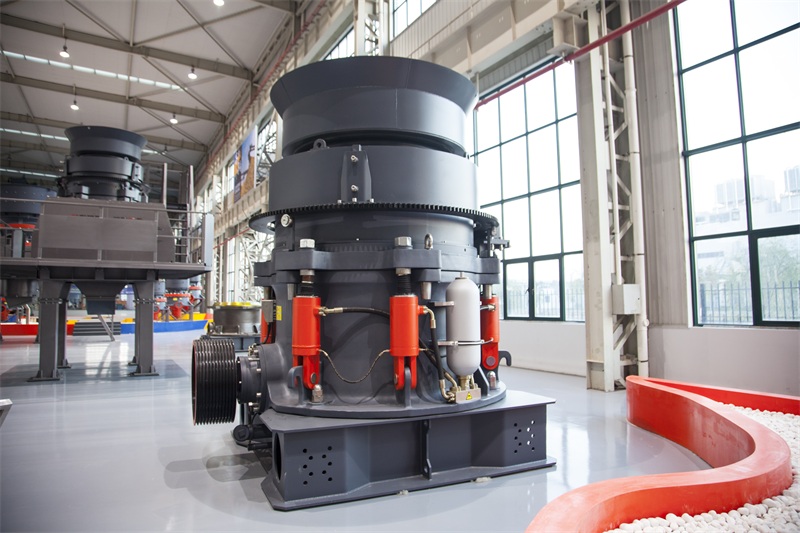
2) Why Single-Cylinder Hydraulic Cone Crushers Are a High-ROI Choice for Many Mines
A single-cylinder hydraulic cone crusher integrates mechanical crushing force with hydraulic adjustment and protection, plus electrical and intelligent control. This combination is especially valuable when operators need to hold a tight product spec while responding to ore variability.
Integrated Safety and Fast Recovery
Hydraulic tramp release and overload protection reduce unplanned stoppages. In many operations, this directly improves availability—where even a 1–2% uptime gain can translate to meaningful annual tonnage.
Consistent Product Gradation
Hydraulic setting adjustment helps maintain stable CSS/closed-side setting. Stable gradation reduces recirculating load and prevents downstream bottlenecks—often improving screening efficiency and protecting mills.
Lower Total Cost Through Smarter Wear Management
Modern chamber profiles and optimized motion reduce localized liner stress. Many sites report 10–30% longer liner life after tuning chamber selection and operating parameters to ore type.
For SEO-driven buyer research, it helps to state the reality: mines do not buy “a cone crusher,” they buy throughput stability, product quality, and predictable maintenance under difficult ore conditions. Single-cylinder hydraulic designs are popular because they address all three with a controllable system.
3) The Three Levers That Change Results: Chamber Shape, Eccentric Throw, and Motion Parameters
Two mines can run the same crusher and get different results because the crusher’s “personality” is defined by configuration. The most impactful levers are the crushing chamber, the eccentric throw, and the operating motion parameters (speed, feed distribution, and choke conditions).
Practical Selection Matrix (Ore → Configuration)
| Ore / Condition |
Recommended Focus |
Expected Benefit |
| Hard + abrasive (high quartz) |
Robust chamber, stable choke feed, conservative CSS |
Longer liner life, fewer overload events |
| Hard but less abrasive |
Higher reduction chamber, tuned speed |
Better shape and gradation consistency |
| Clay/moist feed, risk of packing |
Avoid excessive fines, manage feed prep & screening |
Reduced blockages and downtime |
| Highly variable ore |
Hydraulic setting control + monitoring alarms |
Stable throughput with fewer operator interventions |
A Process View: How Configuration Impacts the Whole Plant
Ore properties
   ↓
Chamber + throw + speed selection
   ↓
Stable choke feed & controlled CSS
   ↓
Consistent product size distribution
   ↓
Lower recirculating load on screens
   ↓
More stable mill feed (higher utilization)
When engineers talk about “efficiency,” they often mean more than kW. A stable crushing stage reduces the roller-coaster effect downstream. Many concentrators see measurable benefits when the crusher output PSD tightens—such as 2–5% lower circulating load and fewer screen blinding events, depending on material and screen setup.

4) Reliability and Maintenance Cost: Where Mines Win (or Lose) Over the Year
Maintenance cost isn’t only the liner invoice. It’s also lost production during shutdowns, risk exposure during manual interventions, and the gradual efficiency loss from running worn profiles too long. A single-cylinder hydraulic cone crusher helps here, but only if the operation treats maintenance as a controlled system.
Make Wear Predictable (Not Surprising)
Track liner life in hours and tons, and correlate it with ore type and CSS. Many mature sites set a target window (for example, ±7–10% variance) and investigate when reality drifts. Predictable wear enables planned shutdowns and better spare planning.
Use Automation to Avoid “Operator Guessing”
Basic monitoring—hydraulic pressure trend, power draw stability, and alarm thresholds—often catches issues early. Sites that implement condition-based checks commonly report 15–40% fewer emergency stops over a season, depending on baseline maturity.
Tune the Circuit, Not Only the Crusher
Poor feed distribution and inconsistent screening can make a good crusher look bad. A simple change—like improving feed box design or rebalancing screen media—often reduces top-size spikes and protects the crushing chamber from damaging events.
5) Real-World Configuration Scenarios: What “Good Selection” Looks Like in Practice
Scenario A: Hard Iron Ore, High Abrasion, Tight Spec Demand
A hard-rock operation with abrasive ore prioritized compression crushing and stable choke feed. By selecting a suitable chamber profile and keeping CSS stable via hydraulic adjustment, the plant reduced oversize events and improved screening stability. Over a quarter, the site observed a ~5% throughput uplift and ~18% improvement in liner utilization versus the prior configuration, driven by fewer interruptions and better PSD control.
Scenario B: Copper Ore With Variable Feed and Frequent Tramp Events
In a circuit where tramp metal and feed variability caused repeated shutdowns, hydraulic protection and fast recovery minimized the “stop-start” penalty. With alarm thresholds tied to power and pressure trends, the operation reduced sudden overload trips and kept the crusher closer to its best operating zone. The operational benefit was not only tonnage; it was safer, calmer control room decision-making during bad ore weeks.
Scenario C: Limestone With Moisture Spikes (Seasonal), Risk of Packing
The winning strategy was not “more power,” but better control of fines and moisture sensitivity. The site emphasized feed preparation and avoided settings that generated unnecessary ultra-fines under wet conditions. This reduced packing incidents and stabilized daily output—showing that crusher selection must include the full material handling context.
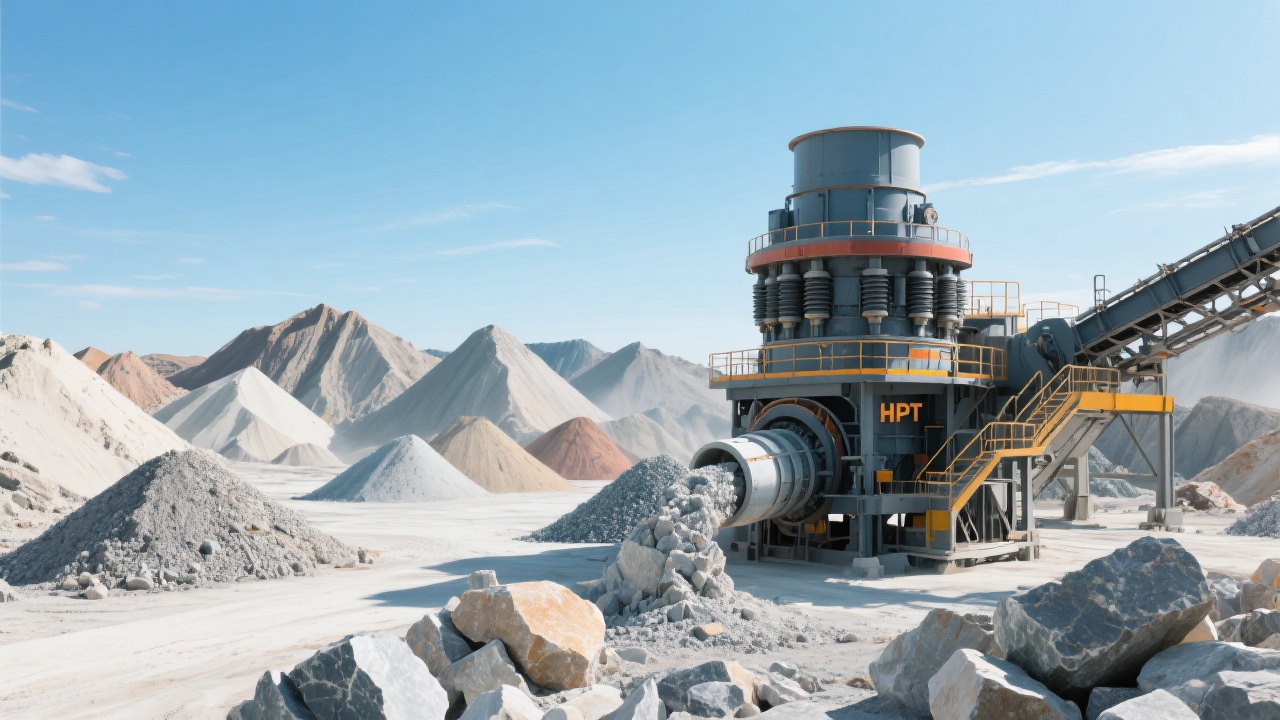
6) A Practical Purchasing & Upgrade Checklist (Built for Fast Decision-Making)
Before You Request a Quotation
- Ore test summary: hardness, abrasiveness, moisture/clay behavior, and variability notes
- Target product PSD and allowable oversize percentage
- Required capacity range (average and worst-week)
- Current pain points: liner life, tramp events, downtime causes, screen overload
- Site constraints: power, foundation, lifting capacity, maintenance access, spares lead time
- Desired controls: hydraulic setting automation, monitoring points, and alarm logic


.jpg?x-oss-process=image/resize,m_fill,h_800,w_800/format,webp)
.jpg?x-oss-process=image/resize,m_fill,h_800,w_800/format,webp)



.jpg?x-oss-process=image/resize,h_800,m_lfit/format,webp)





 Facebook