



Decision-stage technical guide for quarry owners, procurement managers, and plant engineers evaluating a high-efficiency pebble crusher—with a focus on multi-cylinder hydraulic cone crusher performance metrics.
The most expensive crusher is rarely the one with the highest CAPEX. In real plants, the cost comes from unstable gradation, excess recirculation, and unplanned downtime. This guide explains how to select a pebble crushing solution by using two buyer-critical parameters: crushing ratio and finished particle size control—and how intelligent hydraulics + PLC automation turn those parameters into consistent output.
1) What “Crushing Ratio” Really Means in Pebble Processing (and Why It Affects ROI)
In procurement discussions, “crushing ratio” is often treated as a simple spec. In pebble (river stone) processing, it is better viewed as a system lever that directly impacts circulating load, energy per ton, and wear cost per ton. Pebbles are typically hard and smooth, which can increase slip and make consistent breakage more challenging than fractured rock.
Buyer-friendly rule of thumb
For secondary/tertiary crushing with a multi-cylinder hydraulic cone crusher, practical crushing ratios commonly fall in the 3:1 to 6:1 range depending on feed size distribution, cavity selection, liner condition, and target gradation. Pushing ratios higher can be possible, but it often increases fines and accelerates wear—especially in hard pebble and granite.

2) Finished Particle Size Control: The Parameters That Actually Move the Needle
Buyers usually ask for “0–5 mm, 5–10 mm, 10–20 mm” and move on. But the plant’s profit is decided by whether those fractions are produced predictably, with minimal return load. In a multi-cylinder hydraulic cone crusher, finished size control is a combined result of:
CSS (Closed Side Setting)
The most direct knob for gradation. Small CSS changes can shift the proportion of fines and oversize. In decision-stage evaluation, confirm how precisely the crusher holds CSS under load and wear.
Cavity selection
Coarse/medium/fine cavities are not marketing labels—they define the crushing chamber geometry and affect throughput, reduction, and particle shape. Matching cavity to feed prep is a common “hidden” ROI driver.
Feed grading & choke feeding
A well-graded feed improves breakage efficiency. In many pebble lines, keeping a stable feed and avoiding “starving” the crusher can improve usable product yield and reduce liner bounce.
Mini chart: How CSS changes can influence output (example reference)
Below is a simplified view for a tertiary cone stage processing hard stone where target products include 5–10 mm and 10–20 mm. Actual results vary, but the direction is consistent across many operations.
.jpg)
3) Why Intelligent Hydraulics + PLC Control Matter More Than “Maximum Capacity”
Many plants can hit a peak tonnage number for a short period. The competitive advantage is sustaining performance over months, across changing feed conditions. This is where an intelligent hydraulic lubrication system and a PLC electrical control system move from “nice-to-have” to “risk control” in procurement.
For buyers comparing similar cone crushers, these controls directly influence availability. In many aggregates operations, improving availability from 85% to 92% can be the difference between meeting contract volumes and paying penalties—without adding a second machine.
4) Application Fit: Granite, Pebble, Limestone—Same Crusher, Different Setup Logic
A high-efficiency pebble crusher selection is not only about hardness. Buyers should match the crusher configuration to the business outcome: higher sand yield, tighter 10–20 mm control, reduced needle-like particles, or lower energy per ton.
5) A Scientific Evaluation Method Procurement Teams Can Use in 30 Minutes
When bids look similar, a fast but disciplined comparison framework helps avoid “spec-sheet purchasing.” The following method is often enough to filter options before a deeper site visit or material test.
Step A: Define the control target
Write down one “non-negotiable” metric: for example, P80 requirement or the allowable variance for the 5–10 mm fraction (e.g., ±5% by weight across shifts). This prevents overpaying for capacity you can’t use.
Step B: Stress-test the automation
Ask for logic details: oil pressure interlocks, temperature thresholds, filter alarms, and hydraulic clearing procedures. The goal is to confirm the system protects the machine during the exact events that cause downtime.
Step C: Compare lifecycle indicators
Request reference ranges for liner life (hours or tons), typical kWh/ton for your material class, and recommended maintenance intervals. Even approximate values reveal whether the supplier is transparent and field-tested.
6) Where the Kinlian HPT Multi-Cylinder Hydraulic Cone Crusher Fits (and Why Buyers Shortlist It)
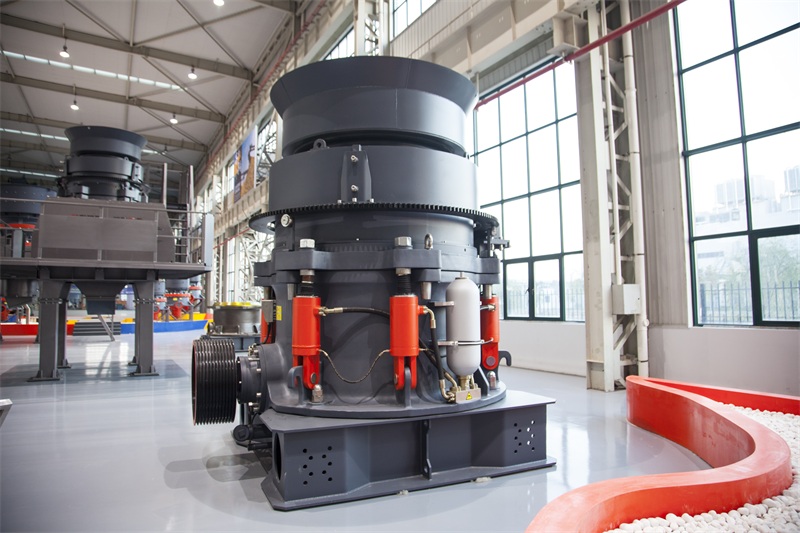
For decision-stage buyers looking for a high-efficiency pebble crusher, Kinlian highlights its HPT multi-cylinder hydraulic cone crusher as a solution engineered around two realities: output needs to be controlled, and reliability needs to be repeatable.
Shortlist advantages procurement teams typically value
- Multi-cylinder hydraulic adjustment to support precise CSS control and quicker response under load.
- Intelligent hydraulic lubrication system designed to maintain stable operation and reduce failure risks tied to heat and pressure fluctuations.
- PLC electrical control system for alarms, interlocks, and fault traceability—useful for plants that want consistent results across different operators.
- Broad material compatibility across pebble, granite, and limestone lines when correctly configured with matching screens and cavities.
Ready to optimize your pebble crushing line selection?
Send your feed size, target products (e.g., 0–5 / 5–10 / 10–20 mm), hourly capacity goal, and material type. Kinlian’s engineers can propose cavity choice, CSS range, and control configuration aligned with your crushing ratio and gradation targets.
Fast inquiry tip: include your desired crushing ratio, screen mesh sizes, and whether your plant runs in closed-circuit. The more precise the inputs, the more actionable the recommendation.
For technical inquiries and documentation requests (layout suggestions, automation list, or maintenance references), contact Kinlian via the form above and attach your current flow sheet if available.

.jpg?x-oss-process=image/resize,m_fill,h_800,w_800/format,webp)







.jpg?x-oss-process=image/resize,h_800,m_lfit/format,webp)





 Facebook