
.jpg?x-oss-process=image/resize,h_1000,m_lfit/format,webp)
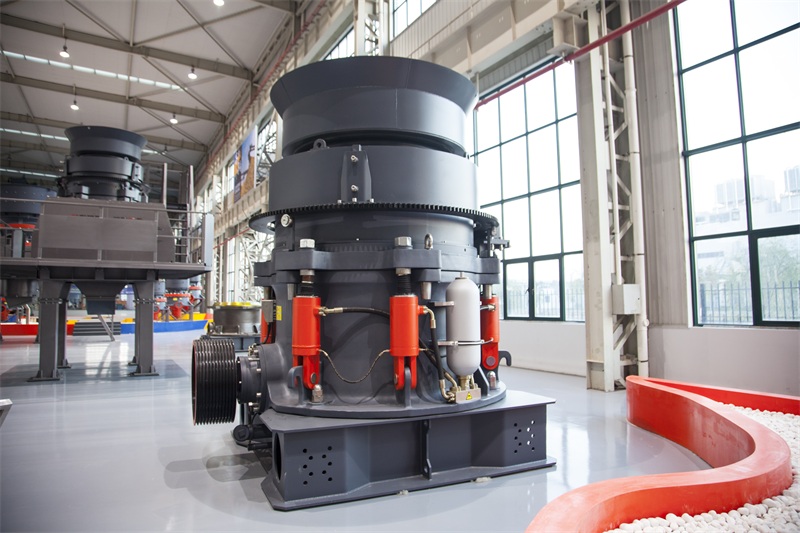
In the mining industry, maximizing crushing efficiency while maintaining product quality hinges significantly on the precise alignment of equipment design with ore characteristics. Among critical factors, ore hardness directly influences the performance of single-cylinder hydraulic cone crushers, especially regarding the design of their crushing chambers. This article delivers a detailed technical exploration of how ore hardness informs crushing chamber geometry, eccentricity adjustment, and motion parameters, enabling mining operations to optimize productivity and reduce operating costs.
Ore hardness, commonly measured by the Mohs scale or more quantitatively using the Bond Work Index, defines the resistance of material to deformation or fracture. For example, ores with a Bond Work Index above 15 kWh/ton are considered hard, necessitating robust crushing mechanisms. Selecting the right crushing chamber depends on such metrics as:
The crushing chamber geometry—consisting of the angle profile, cavity depth, and eccentric throw—is tailored to adapt to ore hardness for optimal crushing dynamics. The three primary chamber design types include:
Analytical data from industry benchmarks indicates that the correct chamber shape can increase crusher efficiency by up to 15% and reduce liner wear rates by approximately 12%-18%, translating to significant maintenance cost savings.
The single-cylinder hydraulic cone crusher benefits from adjustable eccentricity and stroke settings, which directly affect particle breakage mechanics and throughput. Key technical parameters include:
| Parameter | Typical Range | Impact on Crushing |
|---|---|---|
| Eccentric Throw (mm) | 18-38 | Controls stroke length affecting crushing intensity and capacity. |
| Rotor Speed (rpm) | 250-400 | Influences material velocity for efficient fragmentation. |
| Closed Side Setting (CSS) (mm) | 3-30 | Determines final product size and throughput rate. |
By adjusting these parameters in response to changing ore properties, operators can maintain steady production flow and minimize energy consumption. For instance, increasing eccentric throw enhances material compression but accelerates wear; thus, balancing these is critical.
Modern single-cylinder hydraulic cone crushers unify multiple technologies to enable adaptive and precise operation:
Such integration not only improves safety but also increases uptime and reduces unscheduled maintenance costs by up to 20%, validated by multiple case studies globally.
.jpg)
Consider a copper mine in South America processing ore with a hardness index of 14 kWh/ton. By selecting a short head crushing chamber design and employing hydraulic eccentricity adjustment, the operation achieved:
Another example is an iron ore operation in Australia integrating intelligent monitoring systems which enabled predictive maintenance, reducing unexpected downtime by 25% annually and saving up to 250,000 USD in operational costs.
To assist technical and procurement teams in configuring crushing chambers suited to their specific ore hardness profiles, consider this practical checklist:

 361
|
361
|
 impact crusher for construction waste
PF-1315 crusher maintenance
construction waste recycling equipment
crusher wear parts optimization
impact crusher operating parameters
299
|
C6X jaw crusher
Wear parts replacement process
Equipment maintenance essentials
Crusher maintenance skills
Production efficiency improvement
349
|
VSI6X Sand Making Machine
New Equipment in Sand Production Industry
Energy-Efficient Sand Making Machine
Long-Life Sand Making Equipment
Sustainable Development in Sand Production
452
|
Short-head cone crusher
Hard ore crushing
Laminar crushing principle
Granite crushing equipment
Cone crusher selection
165
|
impact crusher discharge adjustment
particle size control techniques
dual-wedge mechanism advantages
chemical raw material crushing optimization
PFW impact crusher tuning
impact crusher for construction waste
PF-1315 crusher maintenance
construction waste recycling equipment
crusher wear parts optimization
impact crusher operating parameters
299
|
C6X jaw crusher
Wear parts replacement process
Equipment maintenance essentials
Crusher maintenance skills
Production efficiency improvement
349
|
VSI6X Sand Making Machine
New Equipment in Sand Production Industry
Energy-Efficient Sand Making Machine
Long-Life Sand Making Equipment
Sustainable Development in Sand Production
452
|
Short-head cone crusher
Hard ore crushing
Laminar crushing principle
Granite crushing equipment
Cone crusher selection
165
|
impact crusher discharge adjustment
particle size control techniques
dual-wedge mechanism advantages
chemical raw material crushing optimization
PFW impact crusher tuning





.jpg?x-oss-process=image/resize,h_800,m_lfit/format,webp)
.jpg?x-oss-process=image/resize,h_800,m_lfit/format,webp)




 Facebook