

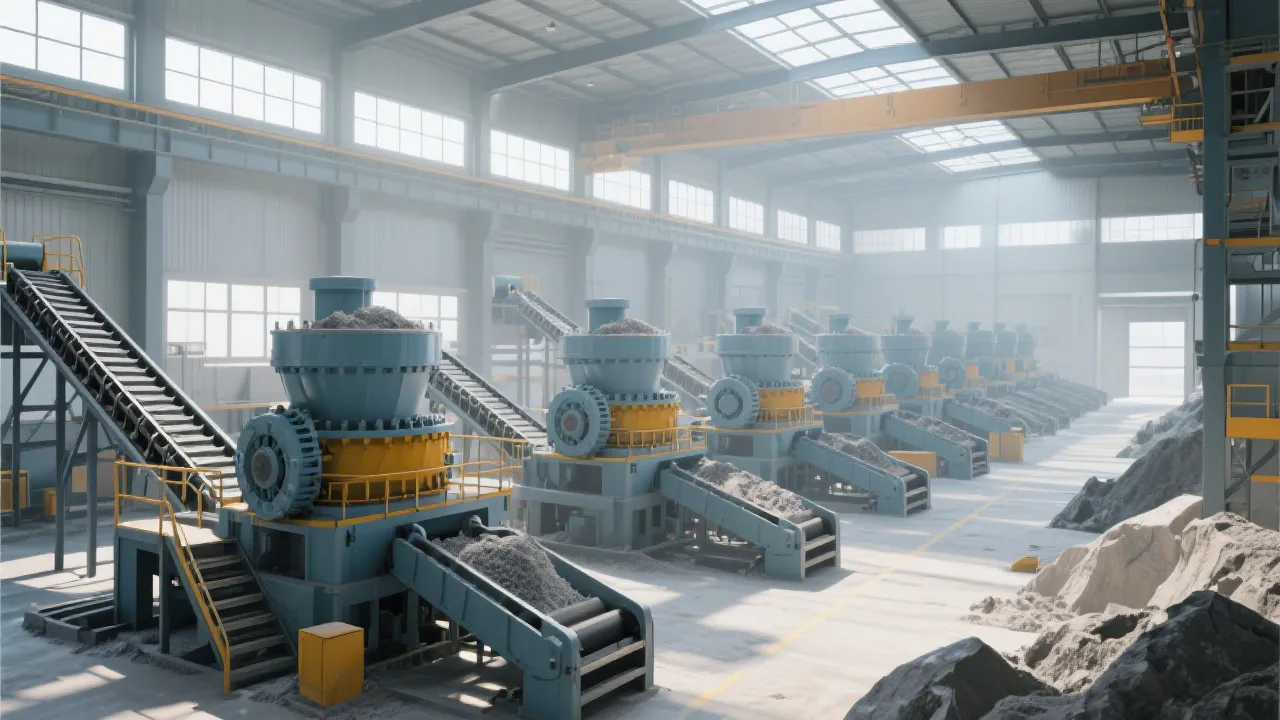
In many Middle East basalt operations, the bottleneck is rarely the quarry itself—it is the first stage of crushing. Basalt’s abrasion, high compressive strength, and feed variability push conventional primary crushers into a cycle of unplanned stops, rising wear costs, and inconsistent downstream performance. A smart gyratory crusher addresses these pain points with heavy-duty mechanical design and a modern control layer that turns crushing into a measurable, optimizable process—delivering higher throughput, lower operating cost, and a clear ROI.
Basalt deposits across GCC and Levant markets are often processed for road base, railway ballast, concrete aggregates, and asphalt mix. While the business demand is stable, production conditions are not. Operators typically face a cluster of challenges that directly reduce primary crushing efficiency:
Basalt commonly shows compressive strength in the 150–300 MPa range, which accelerates liner wear and raises power draw when the crushing chamber is not well controlled.
Wheel loaders, blasting variability, and uneven scalping can cause rapid changes in feed size distribution—triggering blockages, spillage, or protective stoppages.
Desert environments amplify lubricant stress, contaminate bearings and hydraulics, and make frequent manual inspections costly and risky—especially under tight production schedules.
Under these conditions, primary crushing is not just “breaking rock.” It is the decision point where plants either stabilize their entire production chain—or keep paying for inconsistency in energy, wear parts, and downtime.
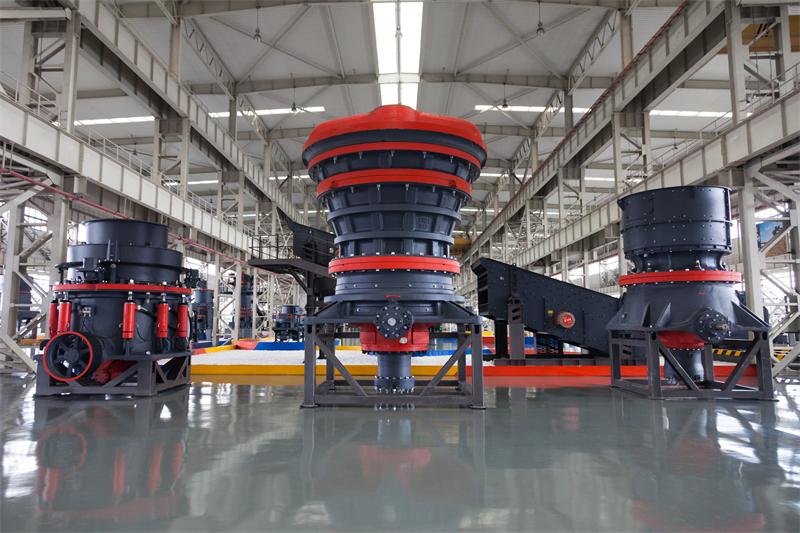
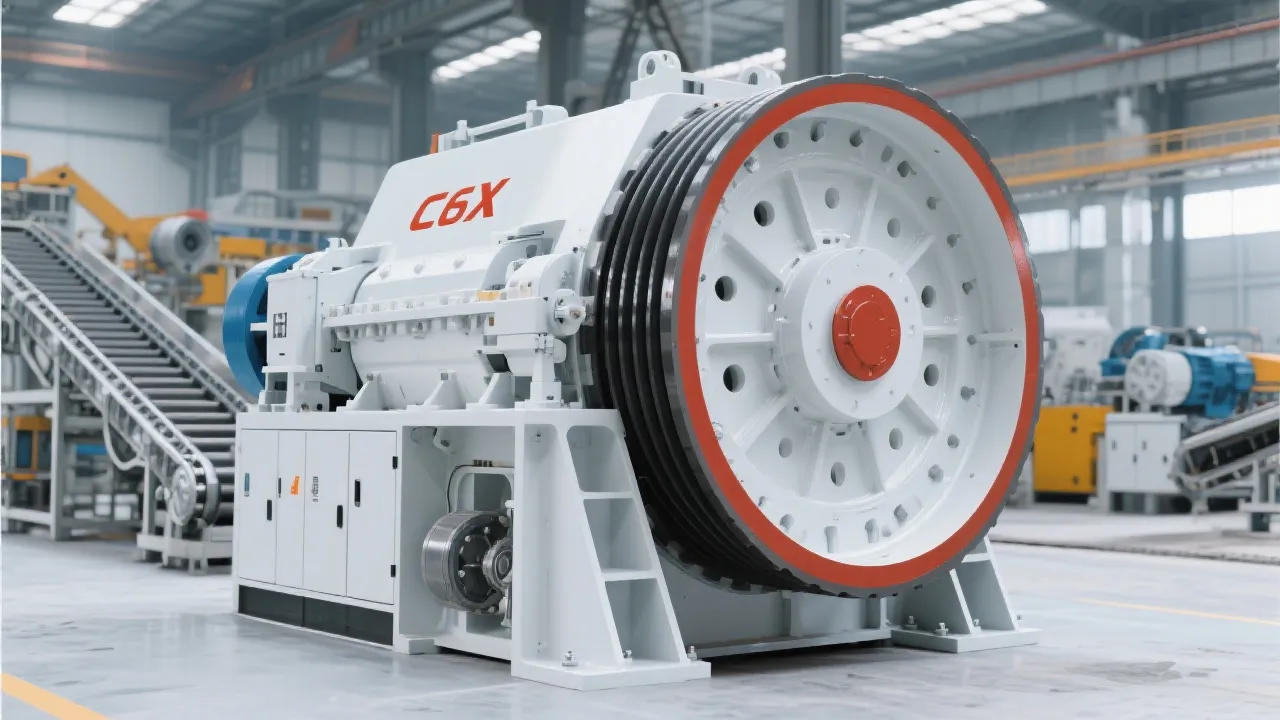
A gyratory crusher is already known as a strong choice for high-capacity primary crushing. The “smart” generation goes further by combining robust mechanical engineering with a control system that continuously monitors load and operating behavior. In basalt applications, three technology layers tend to create the biggest performance gains:
Smart load management helps keep the crusher closer to its optimal power band. Instead of reacting after a choke or overload, the system adjusts settings proactively—reducing the “stop-start” pattern that damages productivity in basalt.
Many quarries own enough installed capacity on paper, yet lose output in micro-stoppages, manual interventions, and slow troubleshooting. Smart gyratory crushers focus on availability—the metric that actually determines shipped tonnage.
By tracking operating parameters and trends, sites can plan liner changes and service windows with fewer surprises—an operational advantage when contracts penalize delivery delays.
Basalt is unforgiving to weak mechanical design. In field operations, durability is not a brochure phrase—it appears in fewer abnormal vibrations, steadier lubrication temperature, and longer intervals between corrective maintenance. Two structural choices are particularly decisive:
Larger bearings reduce contact stress and improve load distribution under high crushing forces. In hot and dusty climates, that margin matters—especially during feed surges and when the plant runs extended shifts.
A rigid frame helps maintain alignment and reduces fatigue cracking risks. That translates into fewer structural inspections, less rework, and more consistent performance over long operating cycles.
When these mechanical fundamentals are paired with smart monitoring, the crusher becomes easier to run at high utilization without “nursing” it through peak loads.
In the Middle East, many quarry teams manage multiple production lines with lean staffing. Smart control shifts the operator’s role from constant manual reaction to informed decision-making. Common functions include:
For basalt, the value is straightforward: fewer surprises, fewer manual interventions, and more stable performance during the exact moments conventional systems become unstable.
The following reference figures reflect typical outcomes reported by basalt quarry operations after upgrading to smart gyratory primary crushing (actual results vary by feed gradation, moisture, blasting quality, and downstream configuration). The key is not one single metric—it is the combined effect across throughput, energy, and uptime.
| Performance Indicator | Before (Conventional Primary Crushing) | After (Smart Gyratory Primary Crushing) | Typical Improvement |
|---|---|---|---|
| Average throughput (t/h) | 850–1,000 | 1,050–1,250 | +15% to +25% |
| Specific energy (kWh per ton) | 0.95–1.15 | 0.78–0.95 | -10% to -18% |
| Unplanned downtime (hours/month) | 18–28 | 8–14 | -35% to -55% |
| Liner consumption rate | Baseline | Reduced | -8% to -15% |
| Operator interventions per shift | 3–6 | 1–3 | -30% to -60% |
For many sites, the most “felt” benefit is not just tonnage—it is the smoother rhythm of production. When the primary crusher runs stable, secondary and tertiary stages stop chasing fluctuations, and the whole plant becomes easier to schedule.
.jpg)
In a representative Middle East basalt quarry feeding aggregate production for infrastructure projects, the site’s priority was clear: increase shipped tonnage without expanding the workforce or adding a second line. After deploying a smart gyratory crusher as the primary stage and integrating it with existing conveyors and screening, the operation reported measurable results within the first production quarter:
Average primary crushing output increased by roughly 18–22% while nuisance stoppages declined, improving daily plan reliability for downstream stages.
Specific power dropped by around 12–16%, and wear-part spend stabilized due to improved load control—reducing the month-to-month volatility that complicates budgeting.
With uptime improvement and higher shipped tonnage, the project’s internal payback estimate landed in the range of 10–18 months, depending on product mix and operating hours.
“The main change was predictability. Operators stopped fighting the crusher. With remote monitoring and early alerts, maintenance moved from urgent to planned.”
— Operations supervisor, basalt aggregate quarry (Middle East)
For buyers in the awareness stage, the fastest way to reduce risk is to ask questions that connect directly to basalt realities—not generic crusher specifications. A smart gyratory crusher is most effective when the plant aligns selection with production goals and site constraints:
When these inputs are defined early, suppliers can recommend chamber configuration, automation logic, and wear package choices that match basalt’s abrasive profile—avoiding the common trap of buying “enough capacity” but not enough stability.
Share your feed top size, target capacity, and current downtime pattern. A technical specialist can map the best-fit configuration and estimate achievable gains in throughput, energy per ton, and maintenance intervals—based on real basalt operating conditions in the Middle East.
Get a Smart Gyratory Crusher Basalt Crushing AssessmentTypical input needed: rock type (basalt), feed size range, moisture, desired product size, operating hours/day.
In your basalt operation, which factor is limiting primary crushing performance the most right now—feed variability, liner wear cost, unplanned downtime, or energy per ton—and what have you already tried to fix it?
 282
|
282
|
 iron ore crushing efficiency
PEW jaw crusher maintenance
jaw crusher wear prevention
metal ore processing optimization
V-shaped crushing chamber
343
|
metal ore crushing
iron ore crusher blockage prevention
PEW jaw crusher maintenance
jaw crusher operational issues
crusher efficiency improvement
204
|
impact crusher
construction waste processing
PF-1315 crusher
crusher maintenance
resource recovery
161
|
impact crusher selection
overcrushing troubleshooting
uneven discharge solutions
blockage problem handling
ore crushing equipment
439
|
PFW impact crusher application scenarios
Chemical raw material crushing equipment recommendation
Multi - industry general crusher
Double - wedge adjustment mechanism
Phosphate rock processing crushing equipment
iron ore crushing efficiency
PEW jaw crusher maintenance
jaw crusher wear prevention
metal ore processing optimization
V-shaped crushing chamber
343
|
metal ore crushing
iron ore crusher blockage prevention
PEW jaw crusher maintenance
jaw crusher operational issues
crusher efficiency improvement
204
|
impact crusher
construction waste processing
PF-1315 crusher
crusher maintenance
resource recovery
161
|
impact crusher selection
overcrushing troubleshooting
uneven discharge solutions
blockage problem handling
ore crushing equipment
439
|
PFW impact crusher application scenarios
Chemical raw material crushing equipment recommendation
Multi - industry general crusher
Double - wedge adjustment mechanism
Phosphate rock processing crushing equipment


.jpg?x-oss-process=image/resize,h_800,m_lfit/format,webp)




.jpg?x-oss-process=image/resize,m_fill,h_800,w_800/format,webp)




 Facebook