

This field-ready guide breaks down the full operating workflow—from feed preparation to primary crushing, secondary/tertiary reduction, and vibrating screening—highlighting parameter choices, common failure patterns, and the role of intelligent control systems. It is written for site managers and technical teams who want stable output, consistent gradation, and predictable maintenance planning.
A stone crushing line is not “a set of machines”; it is a sequence of energy conversion steps. The fastest way to lose capacity is to let one stage run outside its design window—most often due to inconsistent feed size, incorrect closed-side settings (CSS), or poorly managed recirculation loads.
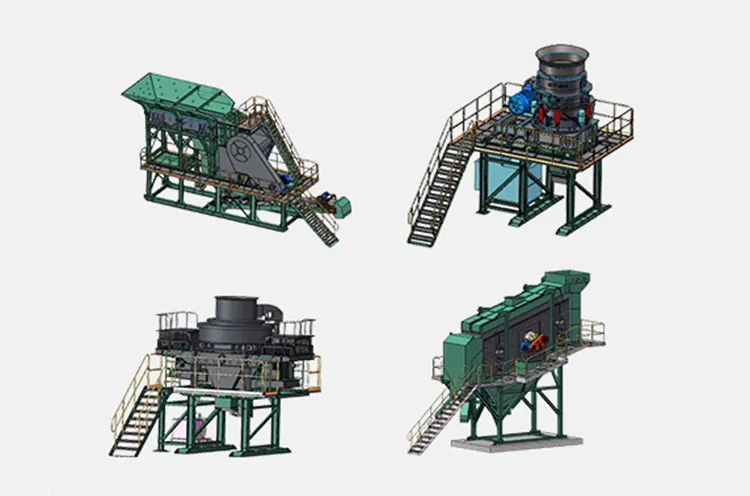
Raw material yard → grizzly/feeder → primary crusher → secondary crusher → tertiary crusher (if needed) → vibrating screen → qualified products + oversize return (closed circuit)
Typical high-performing lines keep screening efficiency above 85% and limit uncontrolled recirculation (often < 35–45% of screen feed, depending on rock type and target gradation).
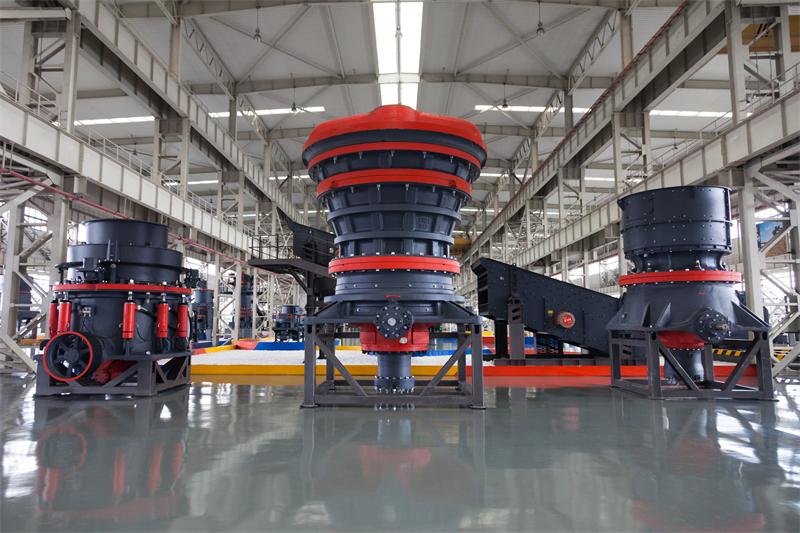
Pre-treatment is where many lines quietly lose money. Fine soil, sticky clay, and overlarge boulders do not simply “slow down” the line—they distort crusher chamber filling, increase liner wear, and reduce the screening cut accuracy. A disciplined pre-treatment routine typically delivers measurable gains without changing the main machines.
Field note: When fines content rises above 15% and moisture exceeds 6–8%, many sites observe a sharp increase in chute blockages and screen blinding—especially when operators keep increasing feeder speed to “fight” low tonnage.
Primary crushing is about preparing a stable, uniform “supply” for downstream stages. Whether the line uses a jaw crusher or a gyratory-type primary, the operating goal is consistent chamber filling and controlled discharge size—not chasing short bursts of high amperage.
| Parameter | Recommended operating window (reference) | If too low / too high |
|---|---|---|
| Chamber fill / feed continuity | Stable, no “starvation” cycles; current trend smooth | Low: poor shape & unstable discharge; High: risk of stall and excessive wear |
| Discharge setting (CSS) | Set to match downstream capacity and target top size | Too tight: overloads secondary; Too open: reduces downstream efficiency |
| Wear monitoring | Weekly liner check; trend discharge size drift | Delayed replacement causes rising fines, unstable gradation, higher kWh/t |
| Metal protection | Magnets + metal detector policy when scrap risk exists | Uncontrolled tramp metal triggers downtime and catastrophic component damage |
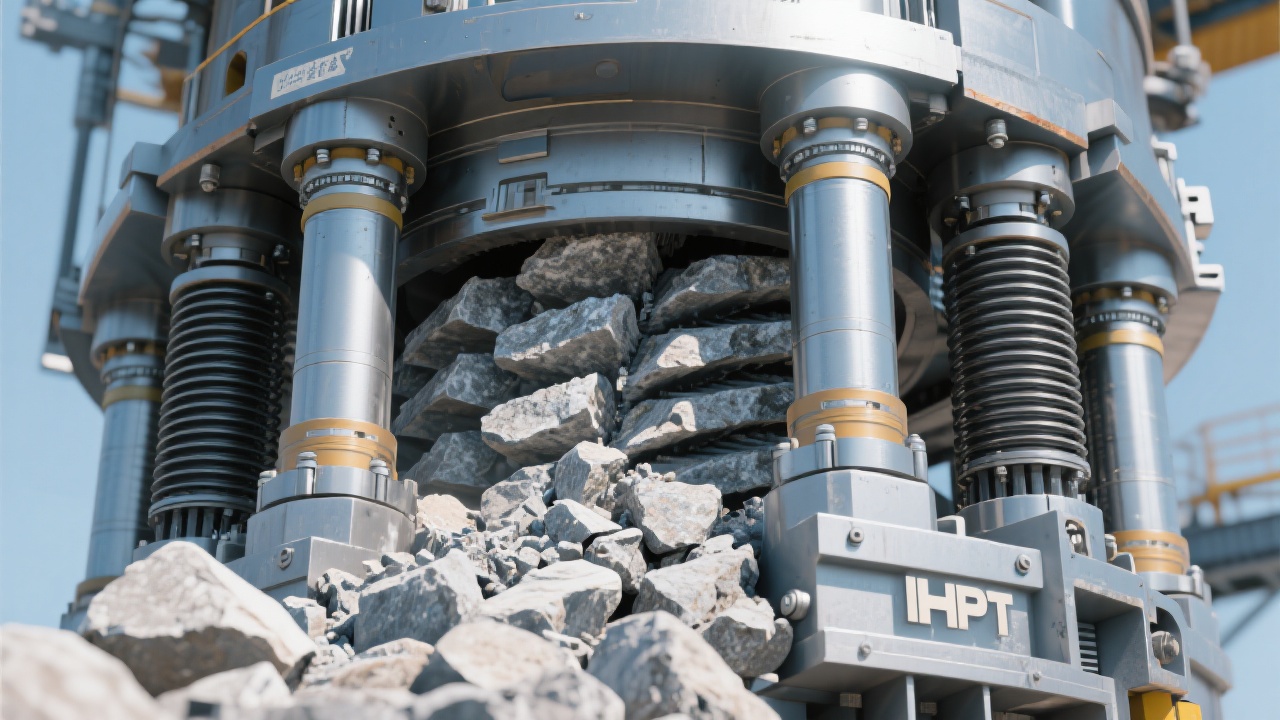
The middle and fine crushing stages determine final gradation, particle shape, and the amount of return material in a closed circuit. Sites often discover that “more crushing” does not mean “better product”: excessive reduction can inflate micro-fines, reduce yield in profitable size fractions, and push screens into blinding.
Intelligent control tip: tracking crusher power draw, hydraulic pressure, and belt scale tonnage in one dashboard makes bottlenecks visible. Many plants that introduce closed-loop control report 3–8% higher throughput and 5–12% less unplanned downtime after stabilization and operator training.
Screening is the quality gate. Even if crushing is stable, weak screening discipline will show up as off-spec gradation, excessive needle-like particles in certain sizes, and poor yield. Screening performance depends on a controlled feed bed depth, correct screen media, and vibration parameters aligned with the material’s abrasiveness and moisture.
Control feed distribution: Ensure even material spread across the full deck width; uneven loading causes premature wear and low separation efficiency on one side.
Select media by duty: polyurethane for abrasion and noise control, woven wire for high capacity, and modular panels for fast changeovers—choose based on downtime cost and spec sensitivity.
Prevent blinding: optimize moisture management, consider spray bars (with drainage planning), and keep deck tension within manufacturer limits.
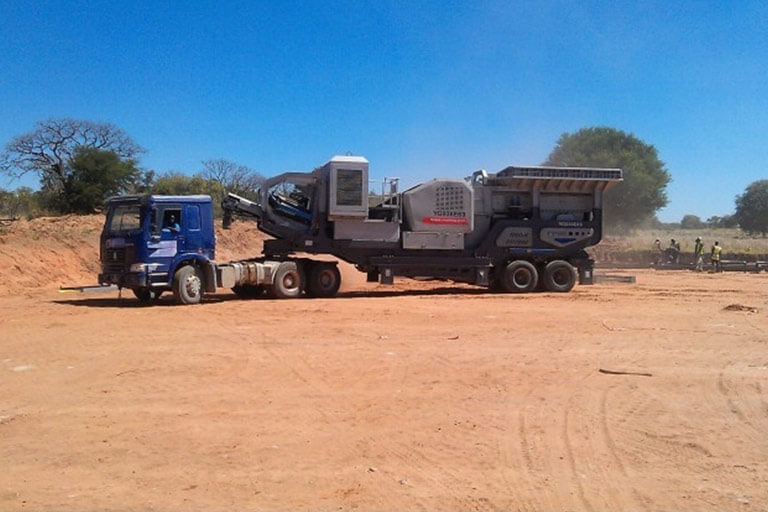
Modern stone crushing production lines increasingly rely on intelligent control to reduce operator guesswork. The strongest gains come not from “more sensors”, but from choosing a small set of indicators that reflect process health and linking them to actionable alarms.
| Subsystem | Signal | Actionable meaning |
|---|---|---|
| Feeding | Feeder current / belt scale tph | Detect starving vs overload; stabilize upstream variability |
| Crushers | Power draw, hydraulic pressure, temperature | Identify chamber packing, liner wear patterns, and lubrication risk early |
| Screens | Vibration amplitude trend, bearing temperature | Predict mechanical failure; prevent sudden quality drop from weak screening |
| Conveying | Belt deviation, speed, chute level | Reduce spillage, blockages, and stop-start cycles that damage bearings and motors |
In practice, a well-tuned control strategy uses trend thresholds and short delay logic to avoid nuisance alarms. For example, a “high crusher power” alarm that persists for 20–40 seconds can trigger a controlled feeder slowdown, rather than forcing a full emergency stop.
The most expensive downtime is the kind that arrives unannounced during peak delivery windows. A disciplined maintenance routine should be condition-driven: focusing on lubrication, fastener torque checks, wear part measurement, and the few critical bearings that determine reliability.
Daily (15–30 min): check abnormal noise, belt deviation, oil level, leakage, and temperature hotspots; clean around sensors and limit switches.
Weekly: measure crusher liners and verify CSS; inspect screen media tension and deck fasteners; sample lubrication condition when possible.
Monthly: review trend charts (power draw, bearing temps, tph variance) and convert them into a parts/maintenance plan for the next cycle.
A granite site experienced an output decline from 420 t/h to 345 t/h while motor current remained high. The operator increased feeder speed, which worsened chute blockage and raised return load.
The root causes were a worn secondary crusher liner (CSS drift widened), plus partially blinded screen media. After restoring CSS and replacing screen panels, the line returned to 410–430 t/h, and unplanned stoppages decreased noticeably over the next month.
For engineering teams, the difference between “equipment delivery” and “production results” is commissioning quality, matching of model selection to material properties, and long-term technical support. Zhengzhou Kuanglian Machinery focuses on complete stone crushing production line integration—from equipment selection and layout planning to intelligent control integration and on-site troubleshooting support—so plants can hit target gradation with fewer adjustment cycles.
Share your raw material (hardness, moisture), feed size, required capacity, and finished aggregate specification. A technical team can propose a matched configuration, key settings, and a commissioning checklist tailored to your site constraints.
Get a Customized Stone Crushing Production Line Solution & Technical SupportResponse typically includes: recommended process flow, equipment matching notes, control points for stable throughput, and maintenance risk checklist for your operating conditions.
 379
|
379
|
 Jaw crusher efficiency
Crushing chamber design optimization
Ore crushing technology
PEW jaw crusher
Construction waste recycling crusher
35
|
Jaw crusher maintenance
High-yield crusher
Crusher fault troubleshooting
Equipment maintenance skills
Stable operation of production lines
363
|
jaw crusher maintenance
C6X jaw crusher repair
crusher wear parts replacement
crusher maintenance tips
enhancing crusher uptime
318
|
PE jaw crusher discharge adjustment
metal ore crushing efficiency
jaw crusher optimization techniques
primary crushing equipment setup
crushing process improvement
211
|
crushing plant intelligent control
stone processing automation
high-load efficiency improvement
mining equipment remote monitoring
intelligent production optimization
Jaw crusher efficiency
Crushing chamber design optimization
Ore crushing technology
PEW jaw crusher
Construction waste recycling crusher
35
|
Jaw crusher maintenance
High-yield crusher
Crusher fault troubleshooting
Equipment maintenance skills
Stable operation of production lines
363
|
jaw crusher maintenance
C6X jaw crusher repair
crusher wear parts replacement
crusher maintenance tips
enhancing crusher uptime
318
|
PE jaw crusher discharge adjustment
metal ore crushing efficiency
jaw crusher optimization techniques
primary crushing equipment setup
crushing process improvement
211
|
crushing plant intelligent control
stone processing automation
high-load efficiency improvement
mining equipment remote monitoring
intelligent production optimization
.jpg?x-oss-process=image/resize,h_800,m_lfit/format,webp)

.jpg?x-oss-process=image/resize,h_800,m_lfit/format,webp)

.jpg?x-oss-process=image/resize,h_800,m_lfit/format,webp)








 Facebook