Choosing Steel Platforms for Stone Fabrication Plants: Fixed, Mobile, and Modular Options Compared

MiningAlliance
2026-04-14
Purchasing Decisions
Selecting the right steel platform in a stone fabrication plant is a process decision, not a “heavier is better” purchase. This guide compares fixed, mobile, and modular steel platforms from the perspective of load capacity, stiffness and stability, space utilization, workflow fit, and maintenance accessibility—so you can match platform type to real production needs such as multi-variety, small-batch processing. You’ll also see how modular platforms support flexible layouts and shorter internal handling routes, helping reduce transfer-related damage and improve shop-floor efficiency. A practical selection path is provided—process mapping, site constraints review, functional requirement matching, and final verification—to support a confident decision. For a tailored configuration, contact Kuanglian for a plant-specific selection plan.
https://shmuker.oss-accelerate.aliyuncs.com/data/oss/20250721/72fb8ce818c012a052fa0d0f53113c42/d3aa8e63-db8c-4705-95d6-55eeb6a94c2d.jpeg

Procurement Decision Guide • Stone Fabrication Workshop

How You Should Choose a Steel Platform for a Stone Processing Plant: Fixed vs. Mobile vs. Modular

If you process stone, your steel platform is not “just a structure”—it is a productivity lever. The right platform reduces handling, improves workstation safety, stabilizes vibration-sensitive operations, and keeps your layout adaptable when orders shift from big slabs to mixed-size custom jobs. This guide helps you make a calm, engineering-led decision using load logic, workflow mapping, and maintainability—without falling for the “heavier is always better” myth.

Best for

You want stable, repeatable output and a largely fixed process route.

Watch out

Overbuilding mass instead of stiffness, and ignoring floor condition & dynamic loads.

Decision outcome

You match platform type to your workflow, load pattern, and change frequency.

1) The Three Main Steel Platform Types (Simple Definitions You Can Use in RFQs)

Fixed Steel Platform

A permanently installed structure anchored to the floor/foundation, built to support a specific set of machines or a stable workstation arrangement (e.g., finishing line, inspection + packing, elevated access around saws).
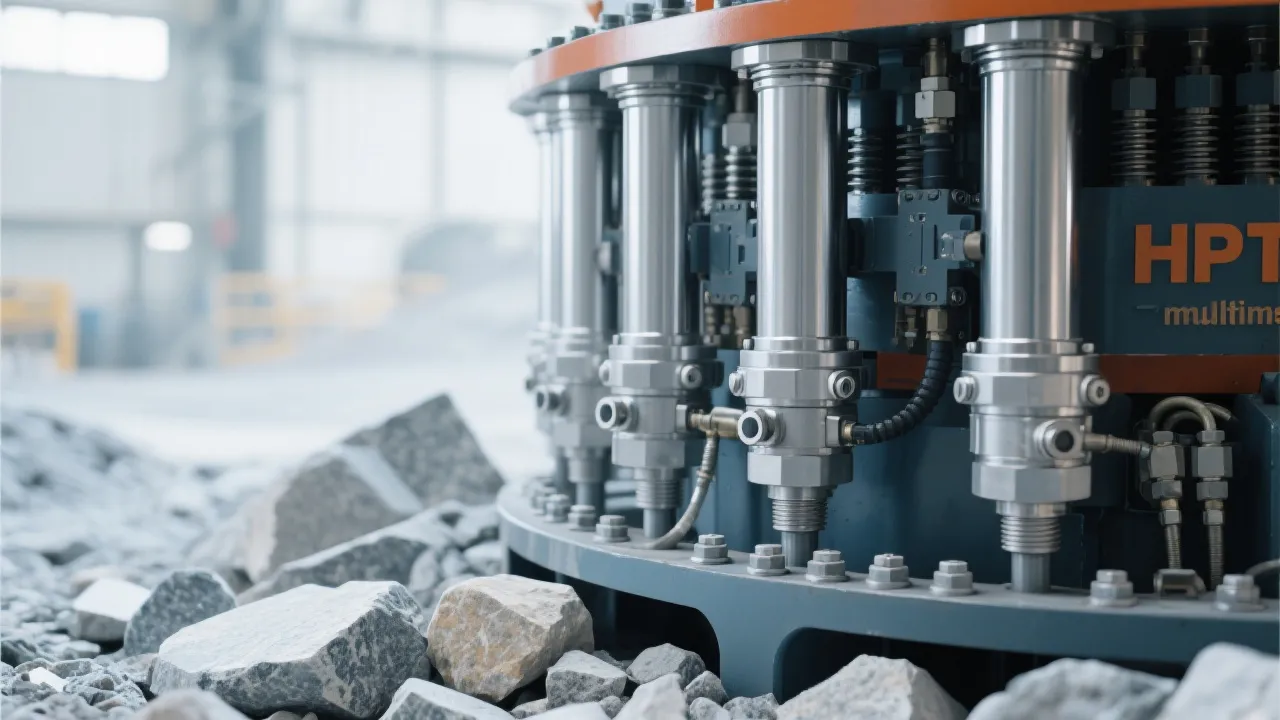
Mobile Steel Platform

A relocatable platform (often on heavy-duty casters/rails or forklift-movable base) used when you need to bring access, staging, or temporary support to different stations—commonly for maintenance, short-run work, or reconfigurable staging zones.

Modular Steel Platform

A system built from standardized beams, decks, stairs, and guardrails that can be expanded, reduced, or re-laid out. You keep structural performance while gaining “layout freedom”—especially valuable for multi-variety, small-batch stone processing.
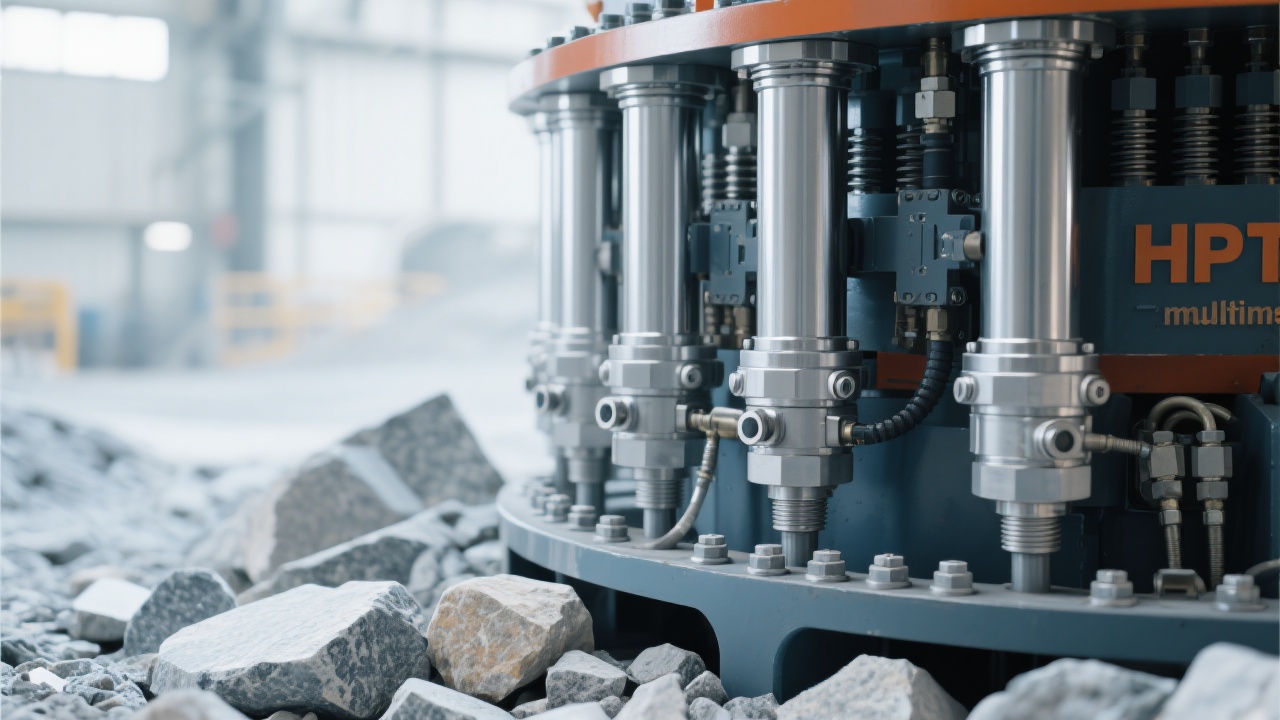
Steel platform selection framework for stone fabrication workflows

2) What Actually Matters: Performance Metrics You Can Compare Without Guessing

When you evaluate steel platform selection for stone processing plants, treat it like a system: floor → anchors → frame → deck → guardrails → access. Compare platforms using metrics that affect throughput and risk, not only steel weight.

Metric Why you care in stone shops What to request in drawings/specs
Load capacity (static) Stone slabs, pallets, tooling carts, and dense equipment concentrate weight. Uniform load (kN/m²) + point load (kN) + safety factor.
Dynamic load & vibration Bridge saws, edge polishers, and hoists create transient forces. Deflection limits (e.g., L/300–L/500 guidance) and damping approach.
Stability (anchoring & base) Wet floors, slurry, and forklift traffic amplify slip and impact risk. Anchor type, embedment, base plates, anti-slip deck rating.
Space utilization Your bottleneck is often staging + turning radius, not machine time. Clear width, access routes, modular expansion plan.
Maintenance & cleaning Stone dust + water = corrosion and slip hazards if details are poor. Drainage, removable panels, corrosion protection, fastener access.

Reference ranges used in industrial mezzanine/staging design commonly aim for deflection control and human comfort in addition to strength; exact values depend on local codes and your machine loads.

3) Fixed vs. Mobile vs. Modular: How They Behave in Real Production

Fixed Platforms: Best-in-class stability, weakest at change

If your workflow is stable (same machine lineup, same material flow, predictable staging), fixed platforms give you the most consistent stiffness and the least “unknown behavior” over time. They also simplify compliance documentation and long-term guarding design.

  • Typical use: permanent operator access around saws, elevated inspection/packing lanes, fixed staging above utilities.
  • Strength: high stability under point loads; easy to engineer around known load maps.
  • Trade-off: re-layout often means downtime, civil work, and re-anchoring.

Mobile Platforms: Flexibility for access and temporary tasks, not for heavy process loads

Mobile platforms shine when your main need is changing access rather than changing structure. In stone plants, they often improve safety for maintenance, short-run finishing, or temporary staging—but they require disciplined controls: locking, floor condition checks, and traffic separation.

  • Typical use: maintenance access near dust collection, temporary work at different lines.
  • Strength: fast repositioning; avoids permanent civil modifications.
  • Trade-off: lower stability under vibration/impact; higher operational risk if lockout habits are weak.

Modular Platforms: The practical answer to small-batch, multi-variety stone jobs

If your production reality is “mixed orders, changing priorities, and frequent layout tweaks,” modular platforms let you keep engineered performance while shifting your footprint. This matters because many stone shops lose time not on cutting, but on moving, waiting, and re-staging.

Operational insight: In many fabrication workshops, internal handling and staging can consume 15%–35% of labor time, especially when SKU mix increases and “where to put the next slab” becomes a daily problem. A modular layout often reduces unnecessary moves by creating predictable, repeatable micro-zones.
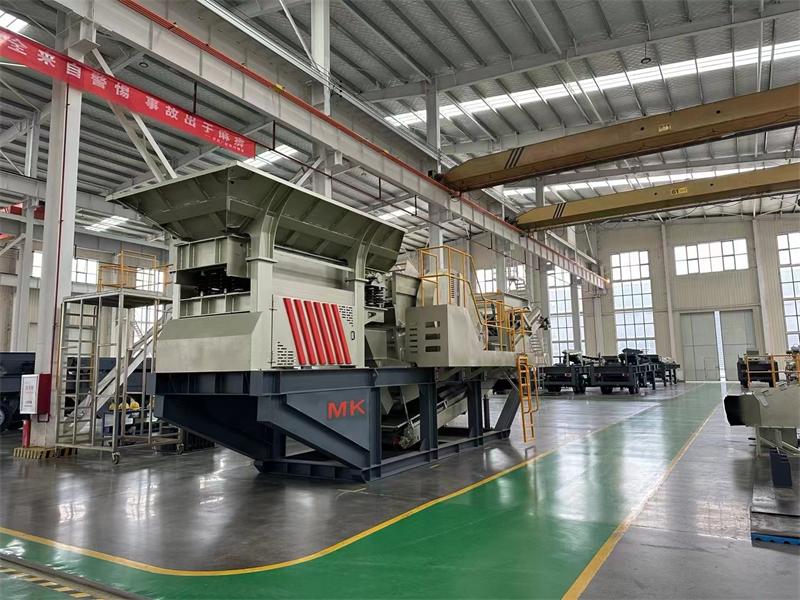
  • Typical use: reconfigurable staging, inspection areas that expand during peaks, flexible operator walkways.
  • Strength: scalable; easier future-proofing when you add a new polisher or change slab sizes.
  • Trade-off: you must manage module interfaces (bolts, deck joints) and keep an update log for changes.
Comparison matrix for fixed, mobile and modular steel platforms in stone workshops

4) A Quick Data-Led Comparison (Use It as a Meeting Slide)

Criteria Fixed Mobile Modular
Stability under point loads High Low–Medium (depends on locking & floor) High (engineered modules)
Layout change speed Low High High
Downtime impact when changing Medium–High Low Low–Medium
Best fit for small-batch/multi-variety Medium Medium (for access) High
Long-term maintainability High Medium (casters/locks wear) High (replace parts, re-bolt)

5) The Common Myth: “Heavier Steel Is Always Better” (What You Should Check Instead)

It’s understandable to equate weight with quality—especially when your material is stone. But platform performance is driven more by stiffness, load paths, joint integrity, and anchoring than by mass alone.
What “overweight” can hide

  • Poor joint design compensated by thicker members
  • Unclear deflection control under dynamic loads
  • Difficult cleaning (slurry traps), harder maintenance access

What you should specify

  • Point-load locations and worst-case slab staging scenarios
  • Deflection targets for decks and beams (serviceability)
  • Surface anti-slip + corrosion protection for wet/dusty zones
Practical selection steps for steel platforms in a stone processing factory

6) A Practical Selection Workflow You Can Follow (Process → Site → Function → Decision)

  1. Map your process flow in minutes, not days.
    Identify where slabs enter, where they wait, and where they leave. In many shops, the highest ROI comes from reducing “double handling” between cutting → edge → surface → QC/packing.
  2. List your real load cases (including the uncomfortable ones).
    Examples: worst-case slab stack on one corner; pallet + tooling cart + two operators; forklift impact nearby; water accumulation; vibration from adjacent machines.
  3. Assess the site constraints that decide everything.
    Floor flatness and strength, anchor feasibility, drainage, crane/hoist travel, and pedestrian-forklift separation. A strong platform on a weak floor is a weak system.
  4. Match platform type to change frequency.
    If your layout changes quarterly or whenever you take on custom projects, modular is usually the safest “future-proof” choice. If change is rare and loads are heavy and predictable, fixed may be optimal. If you mainly need variable access, mobile can fill the gap.
  5. Validate maintenance reality.
    Ask: Can you clean slurry quickly? Can you inspect bolts and anchors? Can you replace deck sections without shutting down half the shop?
  6. Document the decision in buyer language.
    For approval, convert engineering choices into operational outcomes: fewer slab moves, safer walkways, reduced re-layout downtime, and faster maintenance turnaround.

7) Why Modular Platforms Usually Win in Flexible Stone Production

If your workload trends toward customization—mixed finishes, varied thickness, more SKUs—your constraint becomes layout adaptability. Modular platforms reduce friction by letting you restructure staging and access around your changing bottlenecks instead of forcing your bottlenecks to “fit the platform.”

Typical measurable improvements (reference ranges)

  • Handling steps reduced by 10%–25% when staging zones become standardized
  • Layout change downtime reduced by 30%–60% vs. demolition/rebuild cycles
  • Maintenance access time reduced by 15%–40% when removable sections are planned

These are practical planning ranges seen across industrial workshops; actual results depend on your baseline layout, discipline, and equipment mix.

How to make modular work (so it doesn’t become “loose parts”)

  • Keep a module map and bolt-torque check schedule
  • Standardize deck panels and guardrail sections for quick swaps
  • Define “no-change zones” near high-vibration machines

8) Where 矿联 (Kuanglian) Fits: Engineering-Led Platform Planning for Stone Plants

If you want a platform that matches your real shop behavior—wet floors, heavy point loads, frequent staging changes—you need more than a “standard platform quote.” You need a supplier who can translate your process map into a stable load path and an upgrade-friendly layout.

Get a Workshop-Specific Steel Platform Selection Plan

Share your footprint, workflow, and load cases. You’ll receive a practical recommendation (fixed, mobile, modular, or hybrid) with a clear checklist of what to verify before you commit—so your next platform improves throughput instead of locking you into yesterday’s layout.

Request a Modular Steel Platform Configuration for Your Stone Processing Plant

Tip: include your slab sizes, max stack height, equipment list, and whether your layout changes monthly/quarterly.

If you’re deciding today: a calm rule of thumb

Choose a fixed platform when your process is stable and loads are known; choose a mobile platform when you need changing access rather than changing structure; choose a modular platform when your production mix changes and your real cost is internal handling and re-layout time.

Name *
Email *
Message*

Recommended Products

Related Reading

Quarry Crusher Efficiency Assessment: 3 Key Metrics to Diagnose Hidden Output Loss

2026-03-22 | https://shmuker.oss-accelerate.aliyuncs.com/tmp/temporary/60ec5bd7f8d5a86c84ef79f2/60ec5bdcf8d5a86c84ef7a9a/20240305161110/eye.png 351 | https://shmuker.oss-accelerate.aliyuncs.com/tmp/temporary/60ec5bd7f8d5a86c84ef79f2/60ec5bdcf8d5a86c84ef7a9a/20240305160636/lable.png quarry crusher efficiency assessment specific energy consumption kwh per ton hourly throughput stability analysis mean time between failures mtbf for crushers modular crushing system mp module maintenance

How to Solve Fine Material Screening Challenges in Zhengzhou Mining Area? Unveiling Y-Type Vibrating Screen's Exciting Force Design

2026-03-13 | https://shmuker.oss-accelerate.aliyuncs.com/tmp/temporary/60ec5bd7f8d5a86c84ef79f2/60ec5bdcf8d5a86c84ef7a9a/20240305161110/eye.png 37 | https://shmuker.oss-accelerate.aliyuncs.com/tmp/temporary/60ec5bd7f8d5a86c84ef79f2/60ec5bdcf8d5a86c84ef7a9a/20240305160636/lable.png Y-type vibrating screen Zhengzhou mining area fine material screening exciting force design screening efficiency

How to Solve Fine-grained Material Separation Challenges in Zhengzhou Mining Area? Analysis of Y-type Vibrating Screen Efficient Screening Technology

2026-03-11 | https://shmuker.oss-accelerate.aliyuncs.com/tmp/temporary/60ec5bd7f8d5a86c84ef79f2/60ec5bdcf8d5a86c84ef7a9a/20240305161110/eye.png 487 | https://shmuker.oss-accelerate.aliyuncs.com/tmp/temporary/60ec5bd7f8d5a86c84ef79f2/60ec5bdcf8d5a86c84ef7a9a/20240305160636/lable.png Y-type Vibrating Screen Zhengzhou Mining Area Fine-grained Material Separation High-efficiency Screening Technology Exciter Design

Jaw Crusher Feeding Efficiency Improvement: Key Technologies of Vibrating Feeder Explained

2026-03-25 | https://shmuker.oss-accelerate.aliyuncs.com/tmp/temporary/60ec5bd7f8d5a86c84ef79f2/60ec5bdcf8d5a86c84ef7a9a/20240305161110/eye.png 258 | https://shmuker.oss-accelerate.aliyuncs.com/tmp/temporary/60ec5bd7f8d5a86c84ef79f2/60ec5bdcf8d5a86c84ef7a9a/20240305160636/lable.png jaw crusher feeding efficiency vibrating feeder technology vibration frequency adjustment mining feeding optimization continuous stable feeding

Key Technologies and Solutions for Construction Waste Crushing Challenges

2026-03-20 | https://shmuker.oss-accelerate.aliyuncs.com/tmp/temporary/60ec5bd7f8d5a86c84ef79f2/60ec5bdcf8d5a86c84ef7a9a/20240305161110/eye.png 393 | https://shmuker.oss-accelerate.aliyuncs.com/tmp/temporary/60ec5bd7f8d5a86c84ef79f2/60ec5bdcf8d5a86c84ef7a9a/20240305160636/lable.png construction waste crushing modular crushing equipment waste processing efficiency green mine Kuanglian MP module
Popular articles
https://shmuker.oss-accelerate.aliyuncs.com/data/oss/66cfd7603dfc4b7004f304ac/66d56c26c70a712e82152eb9/20240910164800/F5X-Vibrating-Feeder-2.jpg
https://shmuker.oss-accelerate.aliyuncs.com/data/oss/66cfd7603dfc4b7004f304ac/66d56c26c70a712e82152eb9/20240909151641/MK-Modular-Crushing-Plant-2.jpg
https://shmuker.oss-accelerate.aliyuncs.com/data/oss/20250721/6b93d0f0e9b361df95274c4fa06b054a/e445c01a-d13f-4a28-8fd7-105f06101ad0.jpeg
https://shmuker.oss-accelerate.aliyuncs.com/data/oss/66cfd7603dfc4b7004f304ac/66d56c26c70a712e82152eb9/20240910153856/Y-Vibrating-Screen-3.jpg
https://shmuker.oss-accelerate.aliyuncs.com/data/oss/66cfd7603dfc4b7004f304ac/66d56c26c70a712e82152eb9/20240909150350/smp.jpg
https://shmuker.oss-accelerate.aliyuncs.com/data/oss/66cfd7603dfc4b7004f304ac/66d56c26c70a712e82152eb9/20240911180245/news.jpg
https://shmuker.oss-accelerate.aliyuncs.com/data/oss/66cfd7603dfc4b7004f304ac/66d56c26c70a712e82152eb9/20240910153856/Y-Vibrating-Screen-3.jpg
https://shmuker.oss-accelerate.aliyuncs.com/data/oss/66cfd7603dfc4b7004f304ac/66d56c26c70a712e82152eb9/20240910152047/S5X-Vibrating-Screen-1.jpg
https://shmuker.oss-accelerate.aliyuncs.com/data/oss/20250723/0ef79c453df89dda250a2e47afe06ae7/e315a3c0-90c3-45e2-ba0c-345daf2512e4.jpeg
https://shmuker.oss-accelerate.aliyuncs.com/data/oss/20250723/aa378f6043512cf219b7807bb6459f7b/9c1f3022-3b8f-4bf9-8ffd-6402504dbdf5.jpeg
Recommended Reading
Contact us
Crushing machinery, please contact us for details
[email protected]
https://shmuker.oss-cn-hangzhou.aliyuncs.com/tmp/temporary/60ec5bd7f8d5a86c84ef79f2/60ec5bdcf8d5a86c84ef7a9a/thumb-prev.png