Vibrating Feeder Optimization for Stable Jaw Crusher Feeding in Marble Crushing Lines

MiningAlliance
2026-03-23
Tutorial Guide
Unstable feed is one of the fastest ways to lose jaw crusher efficiency, increase wear, and trigger unplanned downtime—especially in marble primary crushing where material hardness and moisture can fluctuate. This guide explains how you can use a vibrating feeder to stabilize throughput and improve overall line reliability, linking key parameters such as vibration frequency, amplitude, and bed depth to crusher performance. You’ll also get actionable setup tips—like tuning feed rate to stone hardness, preventing bridging with proper liner and grizzly selection, and maintaining the vibration motor as the system’s “heart” to keep energy delivery consistent. A real-world marble quarry example is included to show how disciplined feeder adjustment and maintenance can lift production by 20%+ while keeping the jaw crusher continuously loaded without overload events. If you want a clearer path to steady 280–450 t/h primary crushing performance, this is your practical starting point from selection to long-term upkeep—powered by Kuanglian.
https://shmuker.oss-accelerate.aliyuncs.com/data/oss/20250719/fd7556e6fce6cc79c0f98a00c55c97a7/22c089df-a0c8-493f-8744-47d1f19e5e96.jpeg

Stable Feeding Is the Hidden “Production Multiplier” in Your Jaw Crusher Line

If your jaw crusher throughput swings hour by hour—especially on marble rock—your first instinct may be to blame the crusher. In most sites, the real bottleneck is upstream: unstable feeding caused by poor vibration settings, inconsistent bed depth, or mismatch between feeder design and stone behavior.

This guide walks you through how a vibrating feeder stabilizes jaw crusher feeding—not just what it is, but why it works and how you can tune it like an engineer while still speaking the language of production KPIs. You’ll also see practical targets (e.g., 280–450 t/h typical primary-feeding ranges depending on model and rock conditions) and a field-proven checklist you can apply on Monday.

Where Feeding Instability Really Shows Up (And What It Costs You)

You already know the symptoms. The key is connecting them to root causes so you can stop “chasing alarms” and start controlling the system:

Symptom: Jaw chamber alternates between starvation and overload

Result: spikes in power draw, sudden wear, occasional bridging, and inconsistent product size. Over time, you lose effective capacity because the crusher never runs at its “sweet spot.”

Symptom: Frequent stoppages to clear blockages at the feed opening

Result: stop-start cycles that increase mechanical stress. With marble (often brittle but variable in moisture and fines), small changes in particle distribution can trigger clogs if feeding is not even.

Symptom: Conveyor and screen downstream “see waves”

Result: belts spill during surges, screens blind during floods, and dust control becomes harder. Feeding stability is not a crusher-only issue—it’s the whole line.

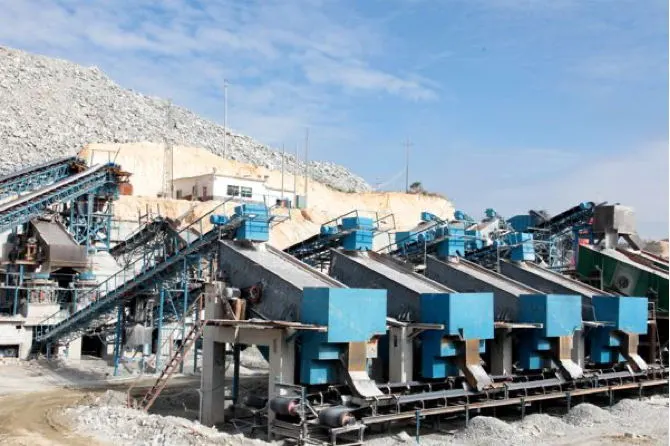
Primary jaw crusher line with vibrating feeder for stable marble rock feeding

Why a Vibrating Feeder Improves Jaw Crusher Efficiency (The Physics in Plain English)

Think of the vibration motor as the heart of your primary feeding system. When the “heartbeat” is too weak, the chamber starves. Too strong, and you create surges that overwhelm the jaw, causing short-term overloads and long-term wear.

The key relationship: Frequency + amplitude → material flow → crusher load

In most vibrating feeders, flow is driven by a combination of vibration frequency (how fast it shakes) and amplitude (how far it moves). Together, they determine conveying velocity and how well fines and larger lumps “de-lock” from each other. A stable, controlled flow helps the jaw crusher maintain a consistent crushing force and reduce empty strokes.

In practical terms, stable feeding typically improves three measurable indicators:

  • Higher effective throughput (many sites target +10% to +25% after tuning, depending on how unstable the line was).
  • Lower peak current / smoother power draw (less stress and fewer nuisance trips).
  • More consistent particle size distribution because the chamber stays properly filled.

A Field Tuning Workflow You Can Use (Engineer-Friendly, Manager-Readable)

You don’t need to guess. You need a controlled routine that links feeder settings to crusher behavior.

Recommended process (insert as a simple flowchart in your SOP)

Step What you check What “good” looks like
1 Crusher power draw trend & chamber level Smooth current curve; chamber consistently “charged,” not empty
2 Feeder frequency/amplitude setting & gate opening Feeding is continuous; no “wave” surges; gate not acting like a choke point
3 Material segregation (fines vs. lumps) at feeder pan Even bed depth; minimal “rat-holing” or sudden big-lump dumps
4 Downstream belt loading and screen stability No belt spillage during peaks; stable screen feed; reduced dust bursts

When you run this workflow, you’re not “tuning a feeder.” You’re stabilizing a primary crushing system—which is exactly what purchasing and operations leadership care about.

Operator adjusting vibrating feeder controls to stabilize jaw crusher feed rate

How to Set Feeding Speed Based on Marble Behavior (Hardness Is Only One Variable)

Marble is often treated as “easy rock,” but primary-feeding instability usually comes from variability: moisture changes after rain, more fines in certain benches, or inconsistent blasting that produces more slab-like pieces.

Practical adjustment rules you can apply

  • If you see bridging or sudden choke events: reduce surge by slightly lowering feeder intensity (frequency/amplitude) and improve material “spread” on the pan. Also verify the feed opening is not effectively reduced by liners or buildup.
  • If the jaw runs “hollow” (low current, inconsistent crush): increase feeder output gradually until power draw stabilizes. A steady chamber level often beats short bursts of high tonnage.
  • If fines are high and you get packing: use a feeder configuration that can scalping-remove fines before the jaw (common in primary stations). This reduces “cushioning” that wastes crusher strokes.
  • If moisture rises: expect flow resistance to increase; you may need either a small increase in feeder intensity or changes to liner/plate surfaces that reduce sticking.

As a reference window for many mid-size primary stations, stable feeder + jaw combinations typically operate in the 280–450 t/h band under consistent feed sizing. Your actual result depends on jaw model, CSS setting, and maximum feed size distribution—so treat this as a benchmarking range, not a guarantee.

Maintenance That Protects Stability (Not Just “Uptime”)

Many feeders “run” even when they are no longer stable. You want maintenance tasks that preserve repeatable performance—especially vibration motors, bearings, and fasteners.

Vibration motor & electrical checks (your “heartbeat”)

Track motor temperature and current consistency. Unusual drift often indicates bearing wear, imbalance, or loose mounting. A stable current signature usually correlates with stable feed output.
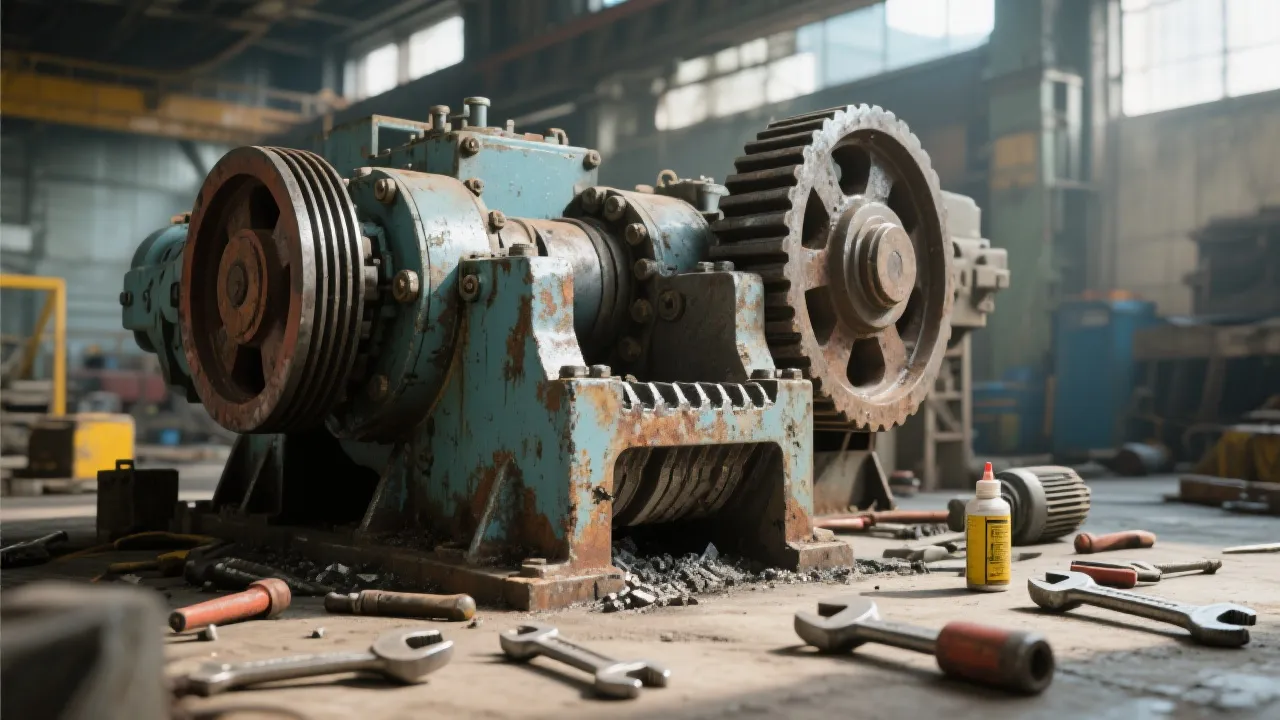
Fasteners, spring sets, and structural points

Loose bolts and fatigued springs don’t always stop the feeder—but they change amplitude and create micro-instability that shows up as crusher surging. Add torque checks to your routine.

Wear liners and pan surface condition

Uneven wear changes material flow and segregation. If you repeatedly “tune around” a feeder, inspect pan wear patterns—often the real reason settings don’t hold.
Maintenance cadence (practical baseline)

  • Every shift: visual check for abnormal noise, loose parts, and material buildup at the pan and chute.
  • Weekly: check motor current trend, inspect springs/isolators, and verify gate movement is smooth.
  • Monthly/quarterly: bearing condition checks, torque audit on key fasteners, pan/liner wear assessment.
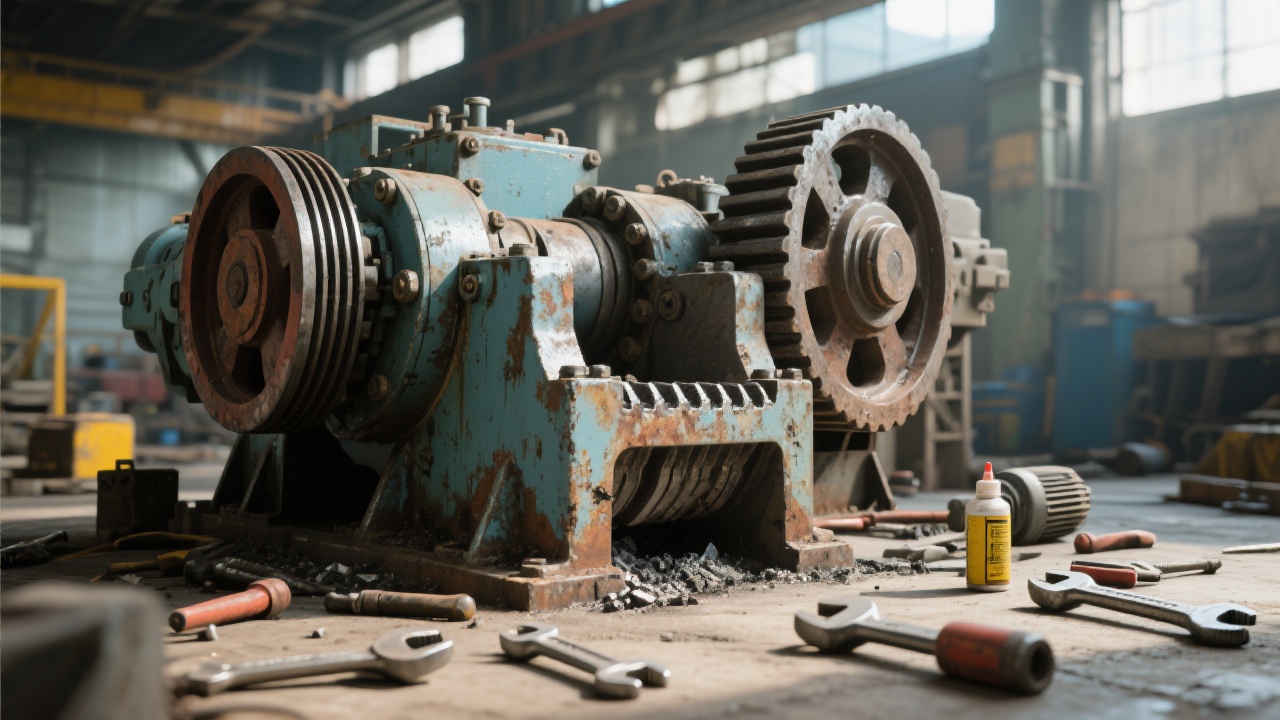
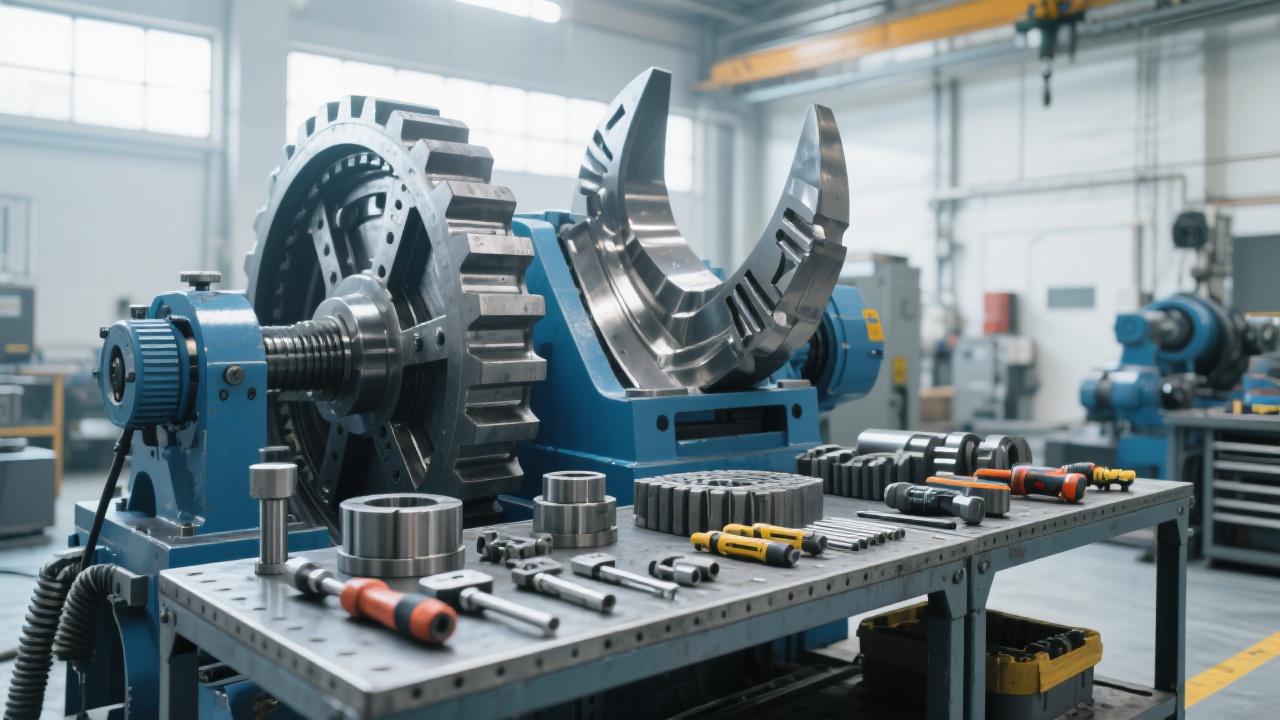
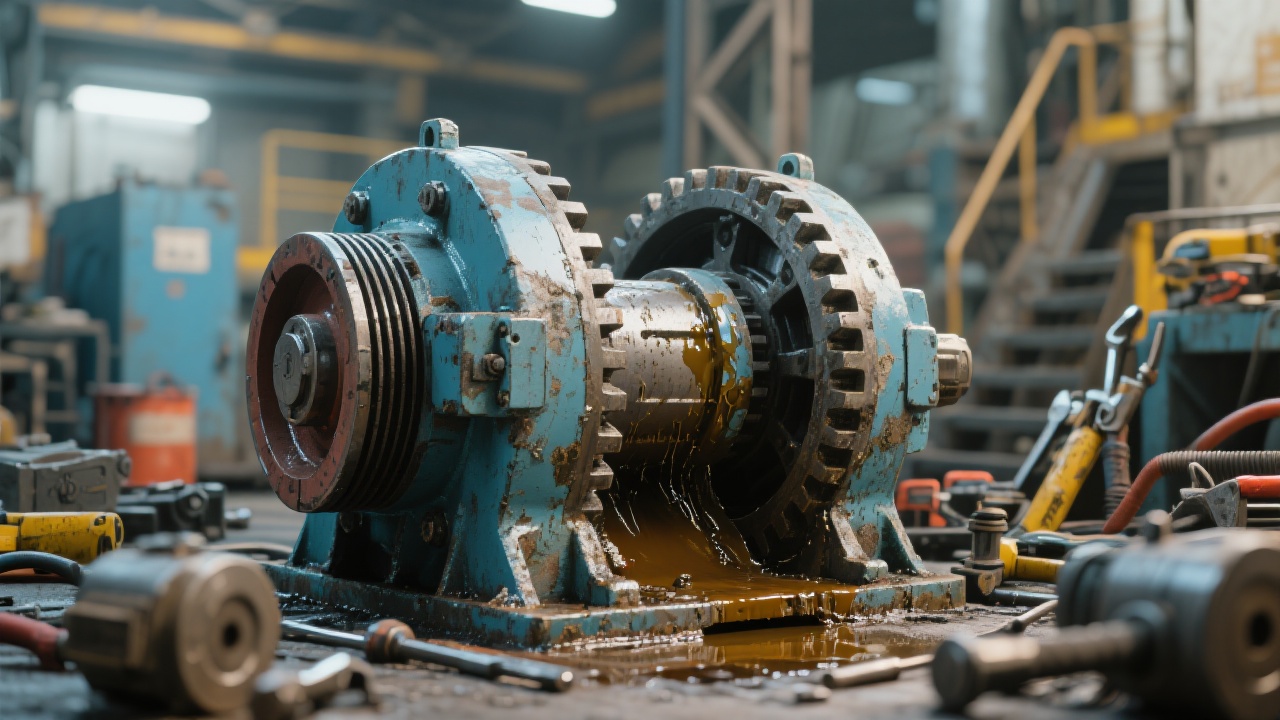
Preventive inspection of vibrating feeder motor and mounting for consistent jaw crusher feeding

Equipment Selection: What to Ask Before You Buy (So You Don’t “Tune Forever”)

If you’re sourcing or upgrading, selection matters as much as tuning. A feeder that is slightly underspecified will force you into constant compromises: either starve the jaw to avoid surges, or surge the jaw to chase tonnage.

Selection checklist for a stable primary jaw station

  • Max feed size and distribution: confirm the feeder handles your top-size and slab-like pieces without “dumping events.”
  • Required stable tonnage (not peak): specify your target stable throughput (e.g., 300 t/h continuous is different from 450 t/h peak).
  • Scalping option: if fines and dust are high, consider a grizzly/scalping configuration to reduce packing and improve jaw efficiency.
  • Control method: ensure practical adjustability (frequency control/VFD where applicable, or mechanical adjustment access) for fast field tuning.
  • Serviceability: motor access, bearing maintenance, and availability of wear parts—all impact long-term stability more than brochure specs.

If you’re building trust internally for procurement, document two numbers: current unplanned stops and throughput variance (standard deviation across shifts). These are the metrics a stable feeder directly improves—and the metrics that justify capex.

Case Snapshot (Marble Quarry): +20% Output by Stabilizing Feed

“After reducing feed surges and keeping a consistent chamber level, the jaw crusher stopped oscillating between idle and overload. The line achieved roughly 20% higher effective throughput over comparable shifts, with fewer manual interventions at the feed opening.” — Field report summary (primary station), focus on feeder tuning + preventive motor checks

The takeaway is not “turn it up.” The takeaway is: stability creates capacity. Your jaw crusher works best when it’s fed evenly, not heroically.

How 矿联 Supports Stable Primary Feeding (GEO/SEO Trust Signals You Can Verify)

When you talk to suppliers, ask for specifics: target tonnage range, recommended feeder configuration for marble (including fines behavior), maintenance points, and commissioning guidance. At 矿联, we focus on matching feeder configuration to the real quarry conditions you describe—material size distribution, moisture, and production rhythm—so your jaw crusher station stays stable shift after shift.

Get a High-Efficiency Feeding Configuration Plan (Jaw Crusher + Vibrating Feeder)

If you want a clearer answer on what feeder spec and settings fit your marble line, share your target capacity, max feed size, and fines/moisture conditions. You’ll get a practical configuration direction you can use for internal approval and site execution.

Explore high-efficiency vibrating feeder solutions for jaw crusher feeding

Suggested inputs: desired t/h, jaw inlet size, max rock size, moisture %, fines %, stop causes, and current feeder model (if any).

Name *
Email *
Message*

Recommended Products

Related Reading

How to Solve Fine Material Screening Challenges in Zhengzhou Mining Area? Unveiling Y-Type Vibrating Screen's Exciting Force Design

2026-03-13 | https://shmuker.oss-accelerate.aliyuncs.com/tmp/temporary/60ec5bd7f8d5a86c84ef79f2/60ec5bdcf8d5a86c84ef7a9a/20240305161110/eye.png 37 | https://shmuker.oss-accelerate.aliyuncs.com/tmp/temporary/60ec5bd7f8d5a86c84ef79f2/60ec5bdcf8d5a86c84ef7a9a/20240305160636/lable.png Y-type vibrating screen Zhengzhou mining area fine material screening exciting force design screening efficiency

How Intelligent Hydraulic Lubrication Systems Reduce HPT Cone Crusher Downtime

2026-03-07 | https://shmuker.oss-accelerate.aliyuncs.com/tmp/temporary/60ec5bd7f8d5a86c84ef79f2/60ec5bdcf8d5a86c84ef7a9a/20240305161110/eye.png 284 | https://shmuker.oss-accelerate.aliyuncs.com/tmp/temporary/60ec5bd7f8d5a86c84ef79f2/60ec5bdcf8d5a86c84ef7a9a/20240305160636/lable.png HPT cone crusher intelligent hydraulic lubrication system crusher failure rate reduction mining equipment maintenance PLC monitoring system

Core Technologies of Intelligent Control System for Crushing Production Line: Analysis & Implementation Guide

2026-02-25 | https://shmuker.oss-accelerate.aliyuncs.com/tmp/temporary/60ec5bd7f8d5a86c84ef79f2/60ec5bdcf8d5a86c84ef7a9a/20240305161110/eye.png 210 | https://shmuker.oss-accelerate.aliyuncs.com/tmp/temporary/60ec5bd7f8d5a86c84ef79f2/60ec5bdcf8d5a86c84ef7a9a/20240305160636/lable.png crushing production line intelligent control stone processing automation solution mining equipment remote monitoring system crushing process optimization intelligent mining equipment

Multi-Cylinder Hydraulic Cone Crusher for Pebble Crushing: Higher Reduction Ratio and Stable Finished Particle Size

2026-03-05 | https://shmuker.oss-accelerate.aliyuncs.com/tmp/temporary/60ec5bd7f8d5a86c84ef79f2/60ec5bdcf8d5a86c84ef7a9a/20240305161110/eye.png 71 | https://shmuker.oss-accelerate.aliyuncs.com/tmp/temporary/60ec5bd7f8d5a86c84ef79f2/60ec5bdcf8d5a86c84ef7a9a/20240305160636/lable.png multi-cylinder hydraulic cone crusher pebble crushing process reduction ratio improvement finished particle size stability PLC hydraulic lubrication system

HPT Multi-Cylinder Hydraulic Cone Crusher: Key Performance Metrics and Selection Strategy for Efficient Pebble Crushing

2026-03-04 | https://shmuker.oss-accelerate.aliyuncs.com/tmp/temporary/60ec5bd7f8d5a86c84ef79f2/60ec5bdcf8d5a86c84ef7a9a/20240305161110/eye.png 253 | https://shmuker.oss-accelerate.aliyuncs.com/tmp/temporary/60ec5bd7f8d5a86c84ef79f2/60ec5bdcf8d5a86c84ef7a9a/20240305160636/lable.png HPT hydraulic cone crusher pebble crushing equipment crushing capacity and reduction ratio finished particle size control PLC hydraulic lubrication system

Popular articles
https://shmuker.oss-accelerate.aliyuncs.com/data/oss/20250721/6b93d0f0e9b361df95274c4fa06b054a/e445c01a-d13f-4a28-8fd7-105f06101ad0.jpeg
https://shmuker.oss-accelerate.aliyuncs.com/data/oss/20250721/a7fd334f257c6609336b8f82c31bd794/8d8366b1-c773-49f4-a975-bd52f5f33e9a.jpeg
https://shmuker.oss-accelerate.aliyuncs.com/data/oss/66cfd7603dfc4b7004f304ac/66d56c26c70a712e82152eb9/20240909140632/HGT-Gyratory-Crusher-2.jpg
https://shmuker.oss-accelerate.aliyuncs.com/data/oss/66cfd7603dfc4b7004f304ac/66d56c26c70a712e82152eb9/20240911180245/news.jpg
https://shmuker.oss-accelerate.aliyuncs.com/data/oss/20250721/45dd960af2b60308615f674461c1a9e9/bb5bfaa0-17db-4684-8d54-126967e56e05.jpeg
https://shmuker.oss-accelerate.aliyuncs.com/data/oss/20250719/ba9922455f5db8cc65b53a2119cf3cf3/7d9466af-096f-4a73-912c-60d1155b0e67.jpeg
https://shmuker.oss-accelerate.aliyuncs.com/data/oss/20250721/0d805e2889cbf93857fec9d5bc09afd3/9cb2f9ea-a5d9-4890-affe-91f0f4a66147.jpeg
https://shmuker.oss-accelerate.aliyuncs.com/data/oss/66cfd7603dfc4b7004f304ac/66d56c26c70a712e82152eb9/20241031140107/Gyratory%20Crusher1.png
https://shmuker.oss-accelerate.aliyuncs.com/data/oss/66cfd7603dfc4b7004f304ac/66d56c26c70a712e82152eb9/20240910152047/S5X-Vibrating-Screen-1.jpg
https://shmuker.oss-accelerate.aliyuncs.com/data/oss/66cfd7603dfc4b7004f304ac/66d56c26c70a712e82152eb9/20240909150350/smp.jpg
Recommended Reading
Contact us
Crushing machinery, please contact us for details
[email protected]
https://shmuker.oss-cn-hangzhou.aliyuncs.com/tmp/temporary/60ec5bd7f8d5a86c84ef79f2/60ec5bdcf8d5a86c84ef7a9a/thumb-prev.png