
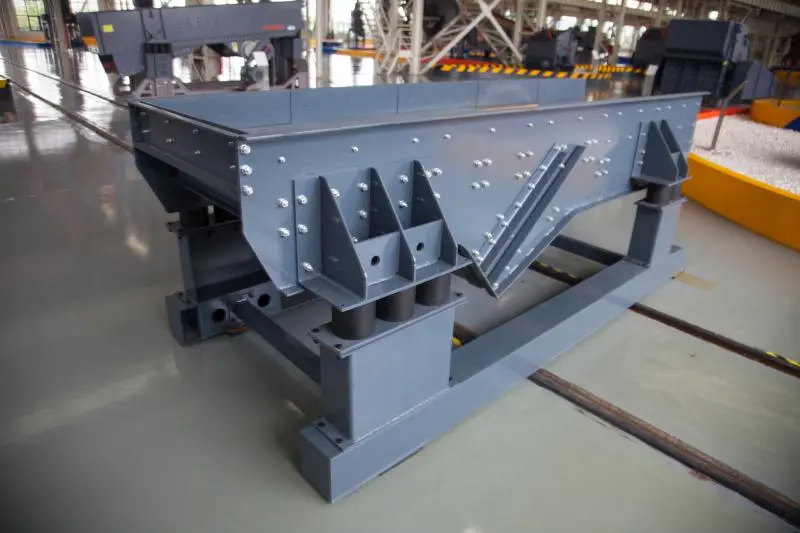
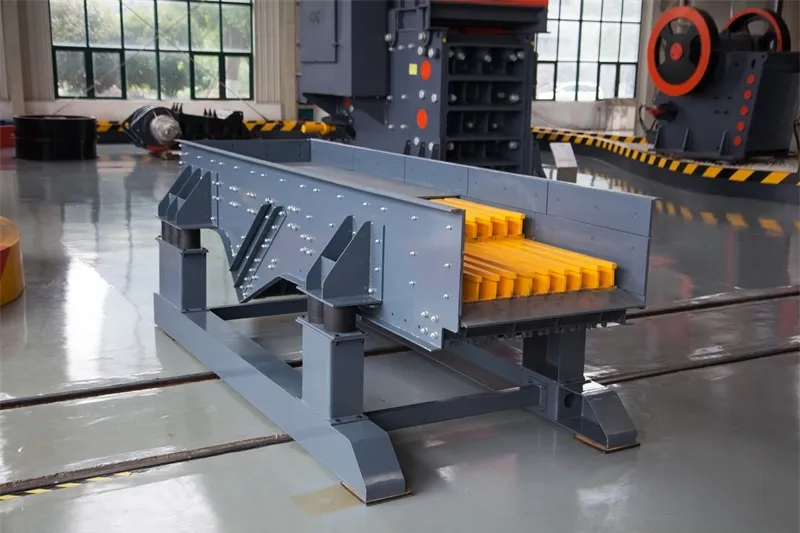
In a typical mining crushing plant, the vibrating feeder is not just a “material mover”—it sets the pace of the whole line. A feeder that is slightly undersized, poorly matched to granite or marble characteristics, or mis-adjusted at the vibration source can trigger unstable throughput, jaw crusher choking, excess wear, and unnecessary shutdowns. This practical guide focuses on how engineering teams and procurement leaders can match feed size, capacity, and rock behavior (granite vs. marble) to the right feeder configuration—while keeping the content actionable for real sites.
Compared with wheel loaders pushing into a hopper or simple belt feeding, a well-chosen vibrating feeder can deliver continuous, metered flow, reduce crusher “surge” feeding, and improve overall stability—especially under variable blast fragmentation. In many granite operations, stable feeding often correlates with a measurable lift in effective crusher utilization (commonly 5–12% in well-tuned lines), mainly because the jaw stays in a productive loading zone rather than alternating between empty and overfilled states.
However, vibrating feeders can underperform if the selection ignores fines percentage, moisture, or a rock’s tendency to “bridge” and build up—issues that are frequently misread during the early design stage.
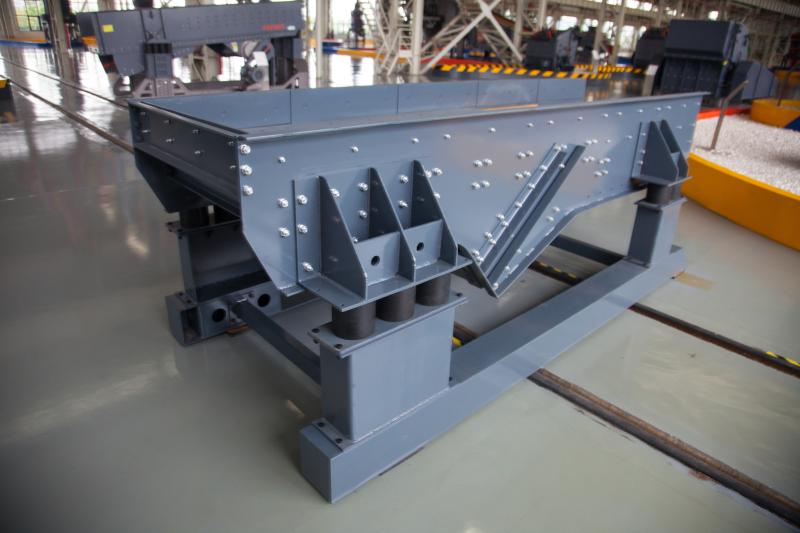
A common selection pitfall is focusing on advertised capacity first. In practice, maximum feed lump size and distribution determine whether the feeder will run smoothly or fight blockages. For jaw crusher circuits, a conservative rule widely used on-site is to keep feeder handling within a lump size that does not exceed roughly 70–80% of the crusher’s inlet width, while also ensuring the feeder trough and bar spacing can pass the largest lumps without wedging.
| Parameter | Granite (typical behavior) | Marble (typical behavior) | Selection implication |
|---|---|---|---|
| Hardness & abrasiveness | High (abrasive quartz content common) | Medium (less abrasive) | Granite needs more wear-resistant liners and robust trough design |
| Fragment shape after blasting | Angular, interlocking | Can be slabby; may create flat stacking | Prioritize anti-bridging geometry and hopper interface design |
| Fines generation | Moderate | Often higher during handling | Higher fines may require pre-scaling (grizzly) or better sealing to reduce dust packing |
| Moisture sensitivity | Moderate | Moderate to high (fine dust + moisture can cake) | Consider liners, anti-stick solutions, and a stable vibration setting |
Note: These are field-oriented tendencies; actual behavior depends on quarry geology, blast design, and moisture. Final selection should reference test runs or historical gradation data.
In real production, the feeder’s effective throughput changes with rock size distribution, hopper drawdown, and how the jaw crusher “accepts” feed. A practical selection approach is to target a feeder that can supply ~10–25% higher than the planned steady-state line capacity, then control output using a VFD or mechanical adjustment. This creates buffer without forcing surge loading into the jaw.
Jaw crusher current draw
Relatively steady with small oscillations, instead of sharp peaks and frequent “empty” dips
Hopper discharge behavior
No repeated bridging; material stream remains consistent, not pulsing in slugs
Grizzly bypass control
Fines bypass is controlled—reducing unnecessary jaw wear and improving downstream screening
Spillage and dust
Lower spillage at transfer points; dust buildup is manageable with standard housekeeping
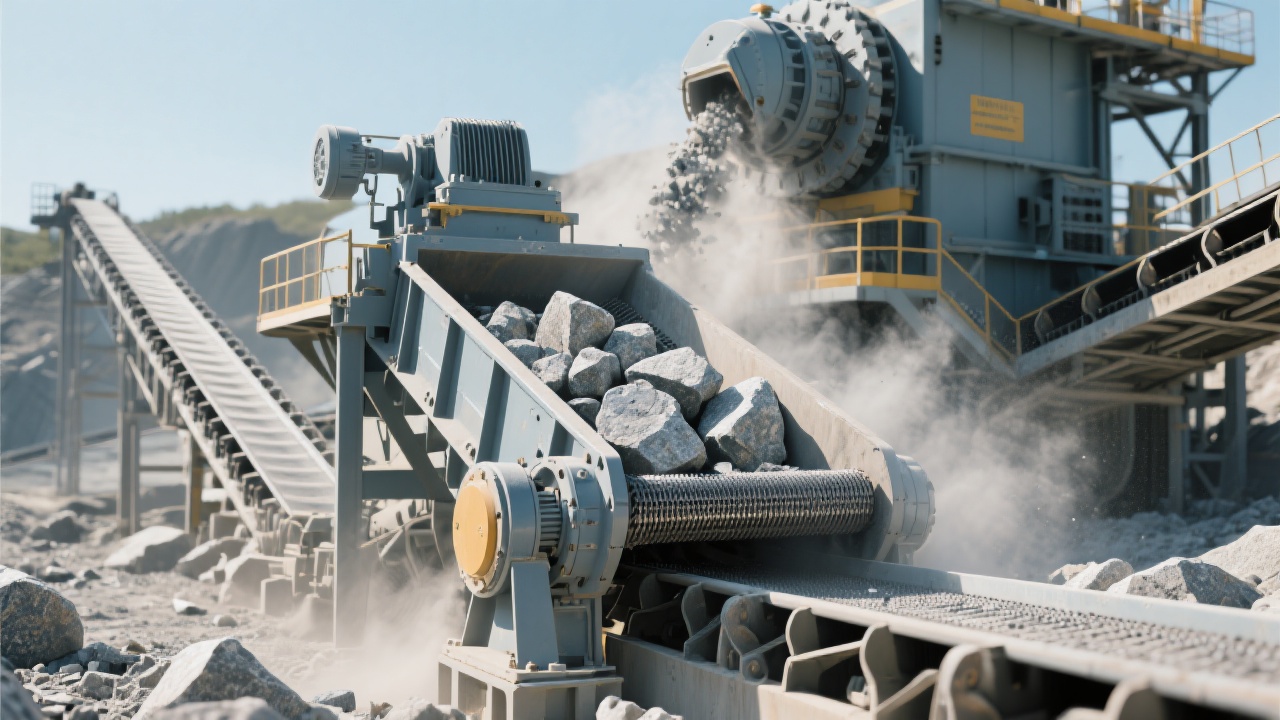
The “same model feeder” can behave very differently between granite and marble sites. Granite often punishes weak wear parts; marble can punish poor anti-bridging design when slabby fragments or dusty fines build up. Selection should consider trough liner strategy, grizzly spacing, and vibration tuning as a combined system rather than separate checkboxes.
Many unstable-feeding cases are not “wrong model” problems, but wrong vibration parameters. In common dual vibration-motor configurations, output is influenced by motor angle settings, synchronization, and operating frequency (where VFD is used). Field teams often see improvement when they treat tuning as a controlled experiment: one change at a time, measured against throughput stability and crusher load.
| Item | Typical field range | Why it matters | What to watch |
|---|---|---|---|
| Amplitude | ~2–6 mm (depending on model/load) | Too low: poor flow; too high: spillage, impact wear | Material “jumping,” excessive noise, loosened bolts |
| Frequency | ~16–25 Hz (VFD applications vary) | Controls convey speed and bed depth | Jaw loading stability; overheating motors |
| Motor synchronization | Tight sync required | Out-of-sync causes uneven motion and fatigue cracking | Abnormal vibration direction; uneven wear patterns |
| Load condition | Avoid running starved or severely overfilled | Both extremes amplify instability and wear | Surge feeding; hopper bridging; spillage |
Safety note: adjustments must follow site lockout/tagout procedures and OEM guidance; vibration systems store energy and can be hazardous during maintenance.
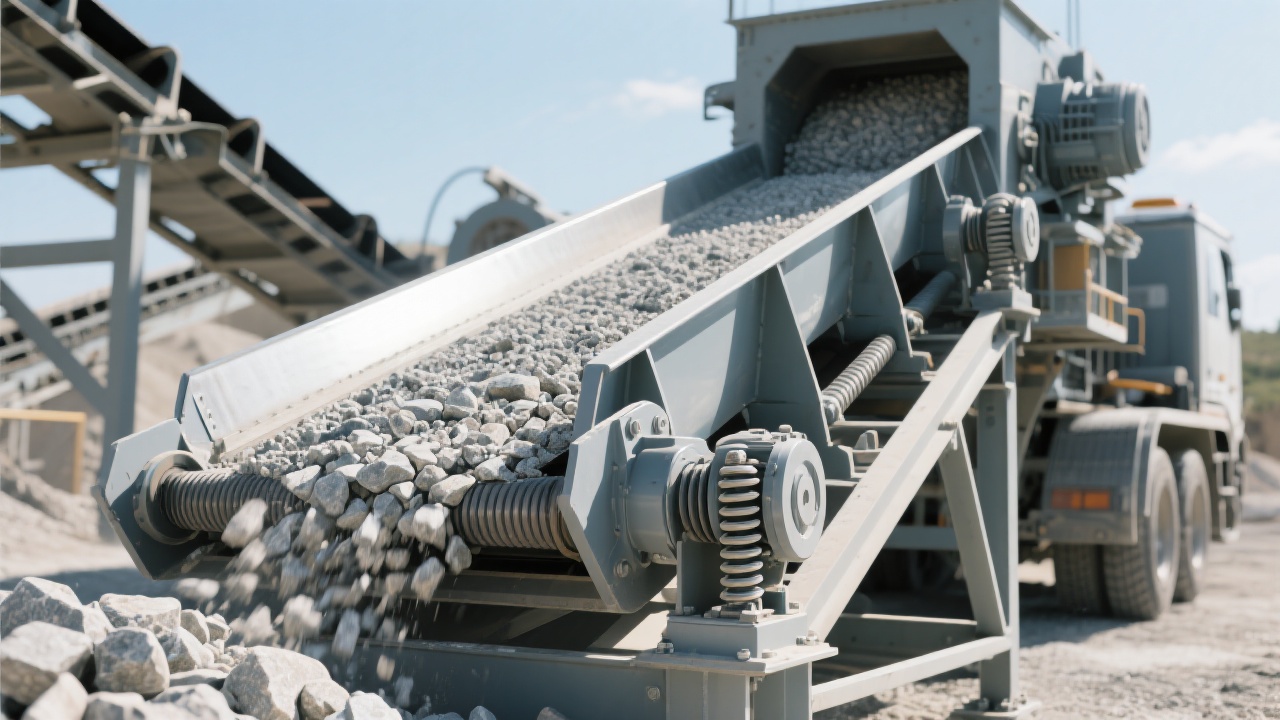
Preventive maintenance for vibrating feeders is less about “doing more,” and more about doing the right checks at the right interval. In crushing lines, many stoppages start as small issues: loose fasteners, worn liners that change flow behavior, or dust ingress into motor components.
Daily (10 minutes)
Weekly
Monthly / Planned Shutdown
For mining contractors and quarry owners, the best feeder is the one that keeps the crushing line calm under real rock variability. Kuanglian focuses on practical matching—capacity buffer, wear strategy, and tuning support—so the feeder works as a controllable “valve” for the crusher, not a random source of surges. In many procurement scenarios, the most valuable cost-performance advantage comes from reduced unplanned stops, predictable wear part planning, and easier commissioning rather than from short-term savings.
Provide your stone type (granite/marble), max feed size, target system TPH, and fines/moisture notes—then request a configuration recommendation for the crushing-line front end.
Request the Kuanglian GF Vibrating Feeder Matching GuideIdeal for EPC teams, quarry managers, and procurement leads planning new lines or troubleshooting unstable feeding.
Which problem shows up most often in your line—hopper bridging, jaw choking, excessive liner wear, or unstable belt loading after the feeder?
If you share your stone type, max lump size, and planned TPH, engineers can usually pinpoint whether the fix is selection, grizzly design, or vibration tuning.
 394
|
394
|
 multi-cylinder hydraulic cone crusher
crushing ratio improvement
product size stability
intelligent hydraulic system
PLC control system
106
|
stone crushing production line
crushing process operation guide
crusher parameter optimization
vibrating screen adjustment
intelligent control systems
284
|
HPT cone crusher
intelligent hydraulic lubrication system
crusher failure rate reduction
mining equipment maintenance
PLC monitoring system
71
|
multi-cylinder hydraulic cone crusher
pebble crushing process
reduction ratio improvement
finished particle size stability
PLC hydraulic lubrication system
371
|
high-force vibrating screen
Y-type vibrating screen
wet muddy material screening
high-frequency anti-blinding screening
vibrating screen excitation force adjustment
multi-cylinder hydraulic cone crusher
crushing ratio improvement
product size stability
intelligent hydraulic system
PLC control system
106
|
stone crushing production line
crushing process operation guide
crusher parameter optimization
vibrating screen adjustment
intelligent control systems
284
|
HPT cone crusher
intelligent hydraulic lubrication system
crusher failure rate reduction
mining equipment maintenance
PLC monitoring system
71
|
multi-cylinder hydraulic cone crusher
pebble crushing process
reduction ratio improvement
finished particle size stability
PLC hydraulic lubrication system
371
|
high-force vibrating screen
Y-type vibrating screen
wet muddy material screening
high-frequency anti-blinding screening
vibrating screen excitation force adjustment













 Facebook