

In mining, aggregate, and industrial processing operations, vibrating screens play a critical role in material classification. According to industry research, screen mesh replacement accounts for approximately 30% of maintenance costs and can cause up to 45 hours of production downtime annually if not managed properly. This comprehensive guide explores practical techniques for mesh replacement, strategies to extend service life, and material selection between stainless steel and polyurethane options—essential knowledge for maintenance teams aiming to optimize equipment performance and reduce operational costs.
The selection of screen mesh material directly impacts durability, screening efficiency, and overall operational costs. Two primary materials dominate the industry, each with distinct advantages depending on application requirements:
Characterized by high tensile strength (typically 500-800 MPa) and excellent corrosion resistance, stainless steel mesh excels in applications involving abrasive materials or high-temperature environments up to 500°C. Its open structure provides superior screening precision, making it ideal for applications requiring accurate particle size separation. However, stainless steel options generally cost 30-40% more than standard carbon steel alternatives.
Offering up to 3-5 times longer service life than traditional steel meshes in wet applications, polyurethane mesh provides exceptional impact resistance and noise reduction (typically 10-15 dB lower than metal alternatives). Its flexibility reduces clogging by up to 40% in sticky material applications, though it has temperature limitations (maximum continuous use at 80-100°C). Polyurethane options often provide better long-term value despite higher initial costs.

Incorrect installation is responsible for approximately 65% of premature mesh failures. Following precise installation procedures ensures maximum mesh lifespan and screening efficiency:
Optimal mesh selection depends on material characteristics and separation requirements. For example, when processing wet sand with particle sizes ranging from 0.5-5mm, a 2-layer configuration with 3mm aperture polyurethane mesh typically achieves 92-95% separation efficiency while minimizing clogging.

The V-belt drive system transmits power to the vibrating mechanism, and its proper maintenance directly impacts screen performance. Misalignment or worn belts can reduce screening efficiency by 15-20% and increase energy consumption by up to 12%.
Key maintenance practices include monthly tension checks (maintaining 15-20mm deflection under moderate pressure), quarterly alignment verification using laser alignment tools, and immediate replacement of cracked or glazed belts. Using matched belt sets from reputable manufacturers ensures uniform load distribution and prevents premature failure.

Implementing a structured maintenance program can extend screen mesh life by 40-50% and reduce unplanned downtime. Below is a recommended schedule based on industry best practices:
| Maintenance Task | Frequency | Expected Benefit |
|---|---|---|
| Visual inspection of mesh condition | Daily | Early detection of wear patterns |
| Tension verification | Weekly | Prevents mesh slippage and premature wear |
| Belt tension and alignment check | Monthly | Maintains optimal power transmission |
| Complete mesh inspection and rotation | Quarterly | Ensures even wear distribution |
| Bearing lubrication | Bi-annually | Reduces friction and extends component life |
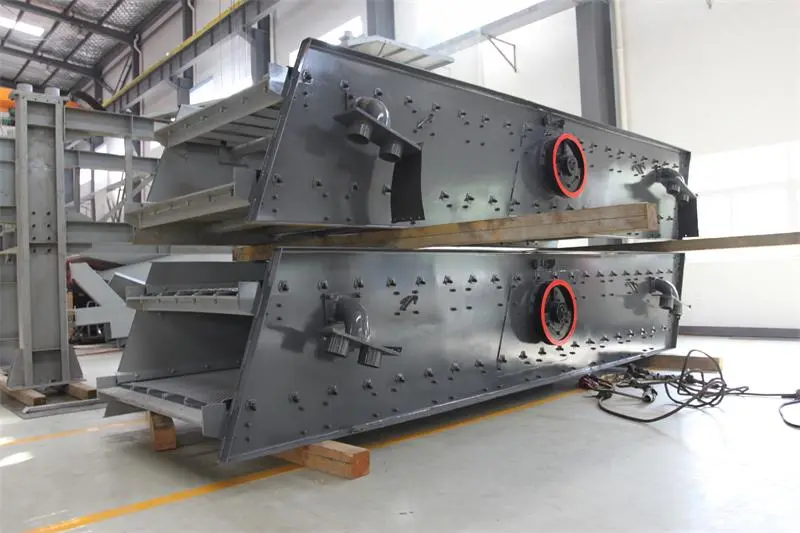
Experience up to 30% higher screening efficiency and 40% longer mesh life with 矿联's advanced Y-type vibrating screen technology. Engineered with precision-balanced mechanisms and optimized vibration parameters, these screens deliver consistent performance even in the most demanding industrial environments.
Discover 矿联 Y-Type Vibrating ScreensBy implementing these mesh replacement techniques, material selection guidelines, and maintenance practices, operations can significantly improve screening efficiency, reduce downtime, and lower overall operational costs. Remember that each application has unique requirements—regular monitoring and adjustment based on actual performance data will ensure optimal results.
For operations processing over 500 tons per day, investing in high-quality components and following these best practices typically results in ROI within 3-6 months through reduced maintenance costs and increased production output.
 167
|
167
|
 intelligent gyratory crusher maintenance
mining equipment operation
intelligent diagnostic system
remote monitoring for mining equipment
crusher maintenance strategy
254
|
jaw crusher wear analysis
metal ore crushing efficiency
PEW jaw crusher technology
mining equipment maintenance
ore hardness impact on crushing
451
|
PFW impact crusher
chemical plant crushing equipment
modular crusher design
reduce unplanned downtime
centralized lubrication system
336
|
Jaw crusher efficiency
Crushing cavity design optimization
Construction waste recycling crushing solutions
PEW jaw crusher practical cases
Ore crushing technology
338
|
VSI6X Sand Making Machine
patent technology
sand production
efficiency
quality
Zhengzhou Mining Alliance
operational safety
feeding modes
intelligent gyratory crusher maintenance
mining equipment operation
intelligent diagnostic system
remote monitoring for mining equipment
crusher maintenance strategy
254
|
jaw crusher wear analysis
metal ore crushing efficiency
PEW jaw crusher technology
mining equipment maintenance
ore hardness impact on crushing
451
|
PFW impact crusher
chemical plant crushing equipment
modular crusher design
reduce unplanned downtime
centralized lubrication system
336
|
Jaw crusher efficiency
Crushing cavity design optimization
Construction waste recycling crushing solutions
PEW jaw crusher practical cases
Ore crushing technology
338
|
VSI6X Sand Making Machine
patent technology
sand production
efficiency
quality
Zhengzhou Mining Alliance
operational safety
feeding modes


.jpg?x-oss-process=image/resize,h_800,m_lfit/format,webp)
.jpg?x-oss-process=image/resize,h_800,m_lfit/format,webp)
.jpg?x-oss-process=image/resize,h_800,m_lfit/format,webp)







 Facebook